How do we study the brain in the laboratory?
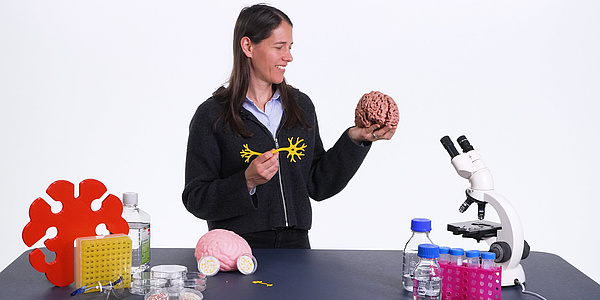
Theresa Rienmüller cultivates nerve cells in the laboratory at TU Graz to gain a better understanding of the brain and to help people following accidents.
Based on EEG data and heart rate, the system adjusts the intensity of the exposure to the anxiety level of the participants.
One topic, but a multiplicity of angles and perspectives.
Researching cybersecurity at TU Graz.
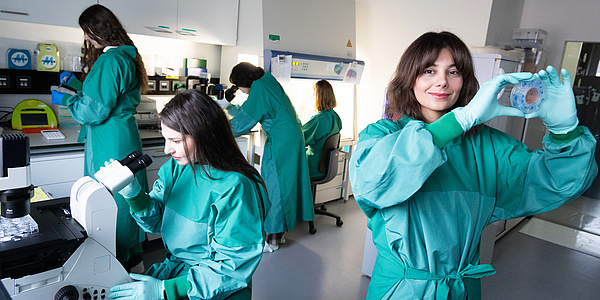
Research on pregnancy complications or the human placenta is difficult. Researchers at TU Graz want to change this by using mini-organs grown in the laboratory, simulations and models.
An enhanced computer model is now helping to provide fresh insights into cancer-cell growth and how it can be stopped. The digital cell model represents another step towards individualised cancer…
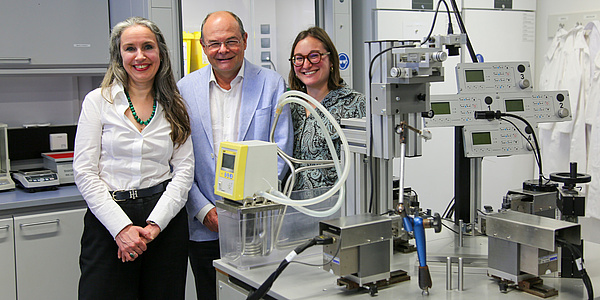
In addition to cholesterol, the amino acid homocysteine also plays a role in aortic stiffening. Researchers from Graz University of Technology, the University of Graz and the Medical University of…
The two TU Graz researchers have been awarded the prestigious European funding prize of around 1.5 million euros each for their projects on improved therapy for traumatic brain injury and 3D…
Alexander Lex is looking at the question of how interaction between humans and computers can be improved – particularly in visualisation and accessibility.
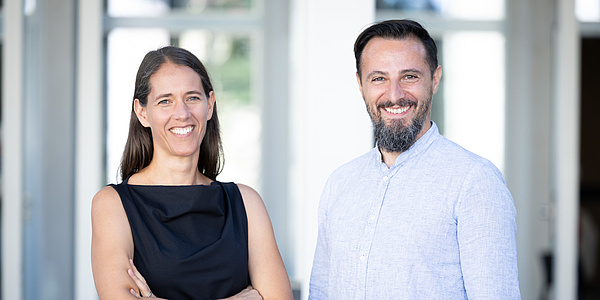
Barbara Schuppler and Martin Hagmüller are working on the human voice at TU Graz – from very different perspectives and with a particular focus on the female voice.
The European Research Council is funding a consortium consisting of the Helmholtz-Zentrum Hereon, ETH Zurich and TU Graz with a total of 10 million euros. TU Graz researcher Gerhard A. Holzapfel…
Monthly Newsletter about current Researchtopic at Tu Graz. Follow now.
TU Graz | Communications and Marketing
Rechbauerstraße 12, 8010 Graz
+43 316 873 6005
kommunikation@tugraz.at