Lecture hall triad: teaching staff, students and AI
‘Artificial intelligence has arrived and is here to stay. This is a cultural technique that will become central to teaching and learning,’ says Verena Schwägerl-Melchior with certainty. The university didactics expert heads the Teaching Academy at TU Graz where teaching staff can receive further training. ‘For this reason AI is integrated as a topic in all our courses.’
Since the launch of ChatGPT at the end of 2022, AI has turned our everyday lives upside down and also teaching, research and administration at our university. As early as 2023, TU Graz drew up a Guideline for the use of AI-supported tools in teaching which is updated on an ongoing basis. In essence, the following applies: At TU Graz, students are only allowed to use AI-based tools for spell-checking, translation and stylistic-grammatical improvement of their texts. Teaching staff can allow the use of AI-supported tools beyond this, but can also restrict their use. AI tools are not permitted in examinations unless they are explicitly authorised.
On the TELucation website there are helpful articles for teaching staff, for example on Course preparation with AI support, the Use of AI in courses or on Exams in times of AI. The podcast ‘Teaching – Learning – Listening’ also dedicates several episodes to the topic of AI, for example in the current edition Benedikt Brünner from the Institute of Human-Centred Computing talks about AI-assisted teaching (in German).
The fact that artificial intelligence is changing how students’ skills acquisition can be meaningfully assessed is an issue for many teachers. ‘The topic of performance assessment also requires teaching staff to analyse the learning process and the intended learning outcomes in their own courses,’ says Schwägerl-Melchior. ‘In the form of AI, a third player has now joined teachers and students – we should use the resulting opportunities in a didactically well-considered way.’
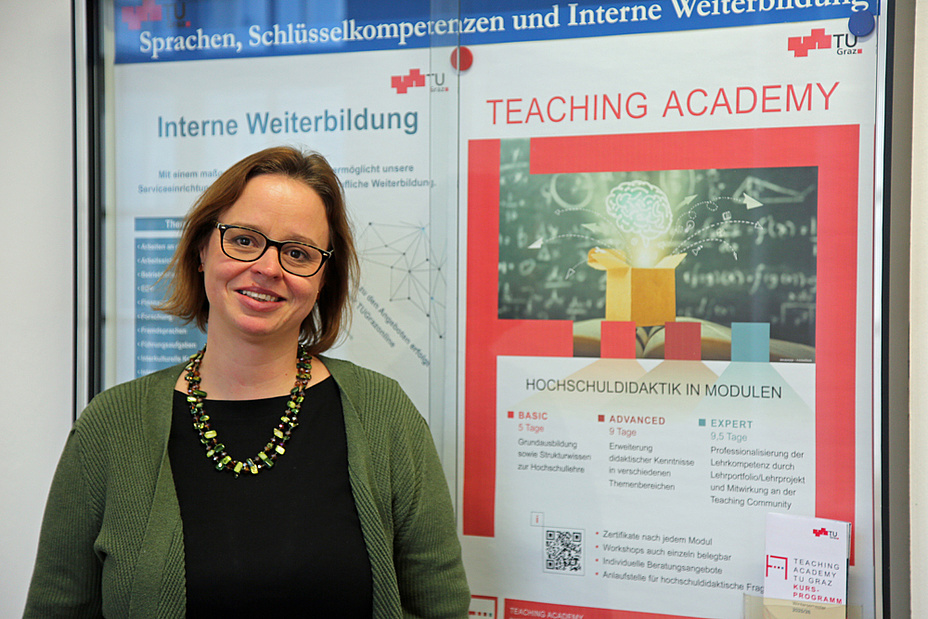
Schwägerl-Melchior emphasises that when teaching staff use AI, they should primarily focus on the didactically reasonable use of AI for their courses. The possibilities are many and varied: ‘On the one hand, AI can support the planning of courses or the formulation of learning outcomes. On the other hand, teachers can also use AI directly in the course – for example, by having students compare the output of an AI tool with their own work.’ The most important thing is that students learn to interact critically with AI and always check the results themselves. And a situation where students no longer acquire the necessary subject-specific skills through the premature use of AI should be avoided at all costs.
TU4U page for teaching staff: AI-Tools in teaching
TU4U page for students: AI-Tools in Your Studies
Research data: How much AI is in FAIR?
TU Graz has also recently published an AI Guide for Researchers which outlines principles for dealing with AI-based applications. In order to remain competitive, it is important that researchers actively utilise the possibilities of AI in their research process. The principles are succinctly formulated as the ‘AI – TU rule’: Analyse the data. Interpret the results critically. Truth-check the results. Use the results responsibly.
And how is AI changing the way research data is handled? This question was part of the Symposium ‘FAIR & AI’ at TU Graz, where over 100 participants exchanged views in November 2025. The FAIR Data principle is an established practice at our university and states that research data should be findable, accessible, interoperable and reusable. ‘FAIR Data remains very relevant – but with regard to AI, the FAIR principles alone are not enough,’ summarises Ilire Hasani-Mavriqi, who heads the Research Data Management Team (RDM Team) at TU Graz. ‘For example, the FAIR principles alone say nothing about whether research data contains a bias and could therefore distort results.’ Conversely, AI can help to simplify research data management, e.g. by automatically generating metadata. However, when it comes to legal or ethical questions about the data, those require analysis by people.
The RDM Team at TU Graz is organisationally anchored in the Library and Archives OU. It also provides tips on literature research with AI – as in this blog post: Search smarter: AI as a Research Assistant.
The RDM Team provides all TU Graz academics with a range of tools that support the management of research data throughout the entire life cycle: from the creation of a data management plan to the sharing of research data and publication in the TU Graz Repository. These tools also help to prepare ‘AI-ready data’ – in other words, data that can subsequently be processed very well by machines because it is documented accordingly.
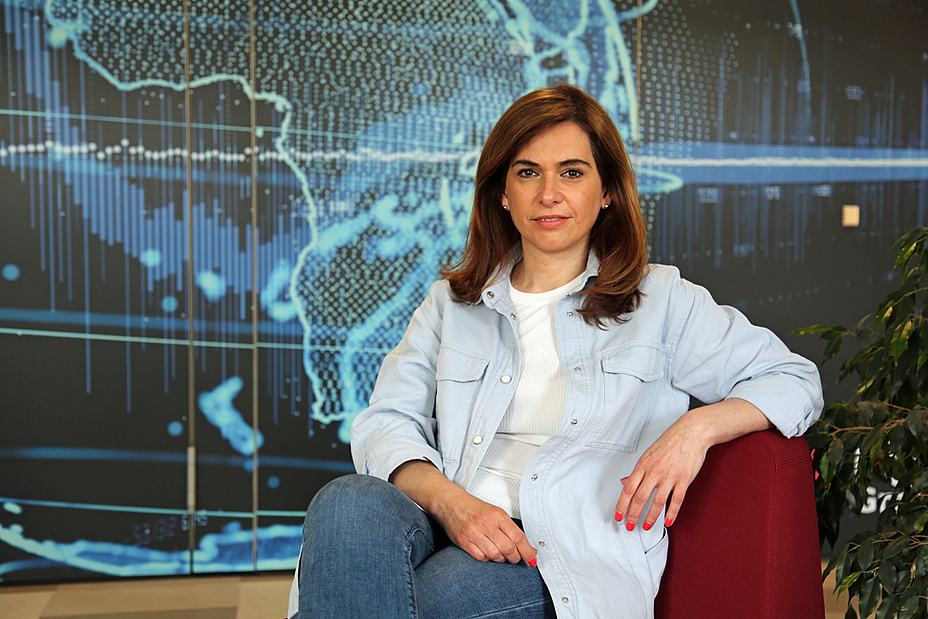
The RDM Team will be happy to advise you on all aspects of research data management: ‘Our data stewards offer tailor-made support for individual researchers or research groups,’ says Hasani-Mavriqi. ‘We also offer recurring training courses as part of our in-house training programme as well as specific webinars and in-person events.’ The RDM Team at TU Graz works together with other Austrian institutions on a case-by-case basis, such as the AI Factory Austria.
Artificial intelligence is not only an integral part of almost all research activities at TU Graz, but also an independent field of research. Find out more here:
Current TU Graz News about Artificial Intelligence
Podcast Talk Science To Me: Season 5 with episodes 20 to 23 (in German) was dedicated to artificial intelligence
Artificial intelligence as a key topic in TU Graz Dossier #8
Academic AI for all
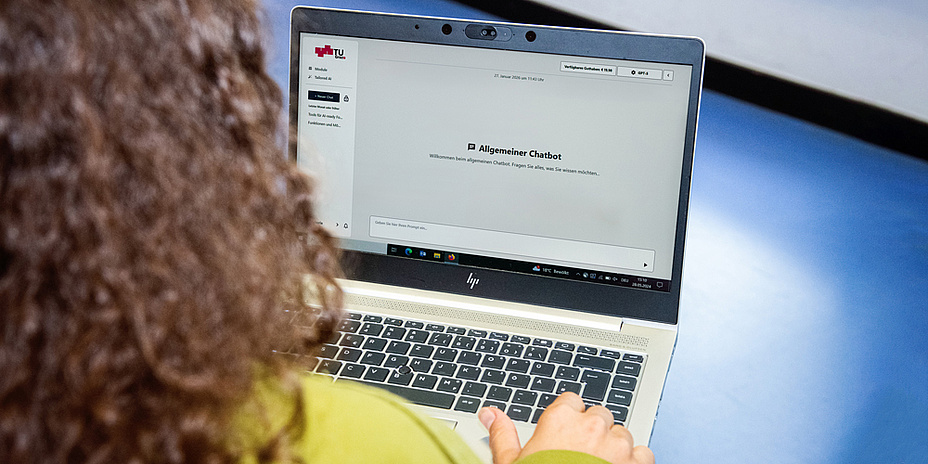
AI is not only used in teaching and research; since December 2025, all TU Graz staff have had access to the tool Academic AI. Not only can you use a chatbot, but you can also analyse documents and create your own knowledge database for your specialist area. Within two months, almost 800 TU Graz staff have already signed up to Academic AI, which is around a fifth of all the employees. But what do they use the new tool for?
Data protection: Data entered on Academic AI and uploaded documents are processed within the EU, they do not leave the platform and are not used for AI training purposes. Of course, the GDPR still applies: personal data may not be entered without consent. When processing personal data, please also ensure that it is anonymised or pseudonymised wherever possible.
‘I use Academic AI as a sparring partner to restructure information, develop ideas and concepts and shed light on topics from different perspectives,’ reveals Lena Neureiter from the International Office – Welcome Center OU. Georg Url from the Central Information Technology OU uses Academic AI ‘to analyse patterns in large amounts of data such as log data or to abstract large documents, among other things.’
‘Here’s a tip from me: If you are not satisfied with the output from Academic AI, ask the AI to optimise the prompt and provide the precise context (role/expertise, target audience, desired format).’
Lena Neureiter, International Office – Welcome Center OU
Ilire Hasani-Mavriqi uses Academic AI to help formulate and structure general text passages in project proposals and reports. Verena Schwägerl-Melchior sees great potential in the ‘Tailored AI’ module: This allows TU Graz employees to create their own knowledge database by uploading up to 150 documents to fill the AI with the information it contains. ‘This is an exciting function, for example for courses that are held by several people – because the Tailored AI models can be shared among colleagues.’
Margit Schwarz from the Central Information Technology OU has one wish for future versions of Academic AI – the tool is being constantly refined: ‘I would be delighted to have the option of analysing graphics as well – specifically, that Academic AI transcribe the flip-chart minutes from workshops so that I can continue working on this documentation.’
Of course, the output of the AI must also be critically scrutinised with this tool; answers from Academic AI may contain errors or inaccuracies. Please always verify the information provided with additional sources and critically review AI-generated content.
In-house training and AI
Anyone who is now interested in trying out Academic AI for themselves or integrating AI more strongly into their own everyday working life will find various support programmes at TU Graz: With the prompting.schule (prompting school) you can learn effective prompting strategies free of charge and achieve even better results (in German). On the iMooX platform, TU Graz and the University of Graz also offer the online course ‘Generative AI: understand, design, take responsibility‘, which provides a practice-orientated introduction to the subject area (in German). Both programmes are open to anyone interested.
TU Graz employees can also browse through the In-House Training Programme to find AI courses that are relevant to them. The Human Resource Development service department has also set up the TU4U page with ‘Future Skills’ all about digital competence which you can use for personal development. In addition, the Future.Work.Skills programme and the Future Skills Nuggets workshop series offer further practical formats that specifically address AI and other topics relevant to the future.
Studying AI: In autumn 2025, TU Graz launched Austria’s first extension programme in artificial intelligence. The degree programme Artificial Intelligence Engineering offers master’s students and graduates the opportunity to learn the basics of computer science and apply AI methods to their area of expertise.
TU Graz offers university courses as well as part-time master’s programmes and university programmes on the subject of AI for all those interested. Members of TU Graz receive a discount on selected offers. You can find the full programme of university continuing education on the website: Life Long Learning.
Bundled AI information: TU Graz promotes the responsible use of AI-supported tools in teaching, research and administration. TU Graz employees can find out about support and continuing education opportunities on the TU4U intranet, while the TU Graz website provides information for all interested parties: AI at TU Graz.
You can find this article and other articles to browse through in TU Graz people #95, the magazine for TU Graz employees and interested parties.