Trying to decide between studying at home in Romania or moving to Austria? Discover the key differences in academic structure, expectations, and daily student life to make an informed choice.
When I moved from Romania to Austria to study at Graz University of Technology (TU Graz), I expected differences like language and paperwork. But what surprised me most was the study culture. It’s not necessarily harder or easier, it’s just different. And if you know what to expect, the transition becomes much smoother.
Here are the biggest differences I noticed between studying at university in Austria and studying in Romania.
More freedom brings more responsibility
I remember my first semester at TU Graz I felt a bit lost because nobody reminded me about course registration or exam dates. I quickly realised that planning was not optional and that I had to organise myself. However, it’s really not as complicated as it seems. International Student Ambassadors, the Welcome Center, and the TU Graz checklists are there to guide you.
At universities in Austria, it’s mostly up to you to keep track of courses, deadlines, and exams.
You usually decide:
- which courses you take this semester,
- how many exams you do,
- and how fast you move through the programme.
That freedom is great, but it also means you need to be organized. If you don’t plan your semester, it’s easy to fall behind without even realizing it.
In Romania, you usually receive a fixed timetable at the beginning of the semester, and you don’t need to register yourself for individual exams, it is done automatically, and everyone in your year follows the same schedule. This means you attend the same lectures, seminars and labs together with your group, and you sit the same exams at the same time as your colleagues. There is less personal planning involved compared to Austria.
It’s not always one big final exam
In Romania, the pressure is usually concentrated around the exam session, when most exams take place within a few intense weeks. This means you can go through the semester with fewer intermediate requirements, but you end up studying a lot in a short period of time, and your final result depends largely on those written exams.
In Austria, things are more diverse. Depending on the course, you may have:
- one final exam,
- midterm exams,
- homework or projects,
- laboratory work,
- presentations,
- or a mix of all of these.
For me, this was a good thing. You don’t always feel like everything depends on one single exam. At the same time, it requires more consistency. You can’t ignore a course until the end since some courses have weekly assignments, lab reports, or deadlines that count towards your final grade.

The university system is built around self-study
Many courses have fewer contact hours than you might expect, and a large part of the learning process happens outside the classroom. You are expected to read materials on your own, solve exercises, prepare assignments and study from slides or textbooks without someone checking on you constantly. Lectures and tutorials give you the structure, but the actual learning happens at home or in the library.
In Romania, attendance is usually mandatory for most labs and, in many cases, even for lectures or seminars. This means you spend more hours physically present in classrooms, and the pace of learning is guided more closely by the teaching staff.
This doesn’t mean that the Austrian system is “less supportive”. It’s just built on a different expectation: you are supposed to take control of your learning earlier. If you need help, you have access to tutors, lecturers, office hours, and learning resources but unlike in Romania, no one will make sure you attend or study because that’s your responsibility. The upside is that you become more independent and learn how to manage your own academic progress, which is a valuable skill later on.

It’s normal to take longer
This was one of the biggest cultural differences I noticed. In Austria, it’s perfectly normal for students to take longer than the standard three-year duration of their bachelor's degree. Many people work part-time, do internships, take exchange semesters, change programmes, or simply spread out difficult courses over several semesters. Because of that, finishing “on time” is not the universal expectation. Some students finish earlier, some later, and nobody treats it as a failure.
In Romania, there is often more pressure to graduate within the official timeframe. If you need an extra year or semester, it can feel like you are “behind” or doing something wrong, and that impression sometimes comes not only from university, but also from family, friends, or society in general. There’s this idea that you must follow a strict timeline: finish school at 18, finish university in three to four years, get a job immediately, and so on.
In Austria, the timeline is more flexible and individual. Students focus on building experience, improving skills and planning their career steps at their own pace. Taking longer is seen as part of the process, and nobody judges you for it.
International students are really part of daily life
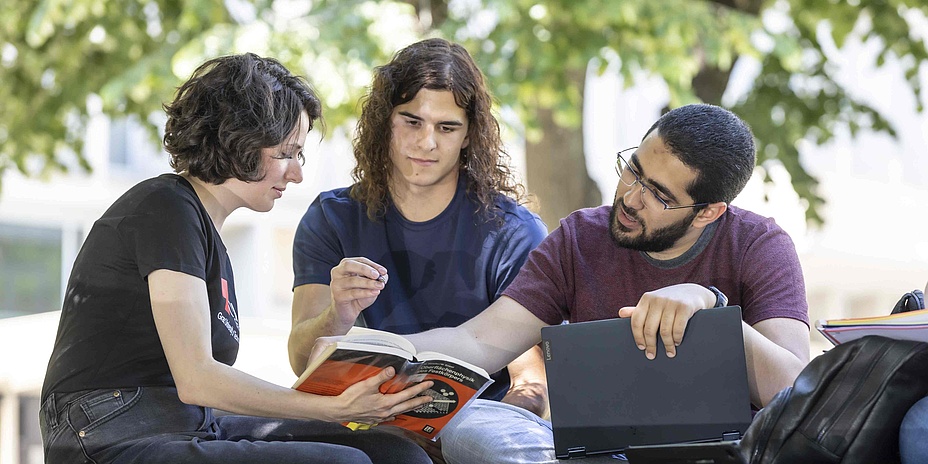
One thing that stood out to me is how visible and integrated international students are in Austria. It’s not just about diversity being promoted, you actually experience it every day. At TU Graz, you meet people from all over the world in group projects, lectures, student associations, halls of residence, and even in administrative offices, where English is commonly spoken. This creates an environment where multicultural interactions are simply normal.
In Romania, international students exist too, but in many universities the experience feels less integrated. International groups often remain separate, and it’s less common to have mixed teams or English as a working language in daily tasks.
For students who enjoy meeting new people and building connections, this is a very enriching experience. And if you’re not used to it yet, you will adapt quickly, because here being international isn’t the exception, it’s part of normal university life.
Tuition Costs in Austria vs Romania
One important difference between Austria and Romania is how tuition fees work.
In Austria, most EU/EEA students pay no tuition fees at all and only cover a small semester contribution (the “Austrian Student Union fee” usually around 25 euros). Tuition fees are usually charged only if you take significantly longer than the expected duration, and even then the rules are fixed, transparent and easy to look up. Non-EU students generally pay tuition from the start, but the amounts and conditions are clearly stated by each university and do not change suddenly.
You can find the latest information on tuition fees and the Austrian Student Union fee on the Graz University of Technology website.
In Romania, the situation is structured differently. Public universities offer a limited number of state-funded places (“buget”), which you can lose or gain depending on performance and ranking. If you don’t have a funded place or lose it along the way, you pay tuition fees that vary by university and field of study. So while both countries have free study options, Austria feels more stable in terms of who pays what, whereas in Romania tuition can depend on competition and results.
As for bureaucracy in Austria, deadlines and registration steps are usually clear, scheduled, and rule-based. The information you need is almost always available online, and if you follow the instructions, things work out.
If you would like to start as a degree-seeking student at TU Graz visit the website Becoming an International Student at TU Graz and check the FAQ for International Students. If you need further help with your stay in Austria even before arrival, contact the Welcome Center. To get an idea of what Graz is like, visit the Living in Graz website.
What I would tell a Romanian student before coming to Austria
Studying at university in Austria and Romania feels different because the systems are built on different expectations. Austria offers more freedom, flexibility and international exposure, but also relies heavily on self-study, personal planning, and managing your own deadlines and paperwork. Romania provides a clearer structure, synchronized schedules, and more classroom guidance, but often with more social pressure to finish “on time”. So if you’re a Romanian student coming to Austria, the most important skill isn’t perfect German or being a maths genius, it’s being responsible and committed to your studies.
If you organize your semester, keep track of deadlines and build your own study routine, the system becomes not only manageable, but genuinely enjoyable, and this extra freedom can turn into one of its biggest advantages.

Working as a student in Austria: eight big tips
![[Translate to Englisch:]](https://www.tugraz.at/fileadmin/_processed_/a/e/csm_Working-as-a-student-by-fotogenia-tugraz_f8f6811020.jpg)
Ekrem Toroman is an international student at TU Graz. He supports himself and knows what it’s like to work alongside his studies. In this article you’ll learn how to successfully finance your studies.
Studying in Austria: University life for Hungarians

Are you Hungarian and thinking about studying in Austria? Discover the Austrian university system with all its challenges and immerse yourself in everyday student life in Graz with a Hungarian…
Studying in Austria vs Romania: Key Differences

Trying to decide between studying at home in Romania or moving to Austria? Discover the key differences in academic structure, expectations, and daily student life to make an informed choice.