Not least in the project fund, the introduction of artificial intelligence into teaching has been clearly evident in recent years. But even aside from this, our teaching staff once again impressed with high-quality submissions.
Five years after the first call for proposals in 2020, the "Project Fund for Teaching" 2025 received a record number of 48 submissions. It was launched in 2020, when there was a strong focus on online teaching due to the pandemic, with 19 submissions. The total volume of the 48 submissions was around €324,000, with the fund providing €75,000 in funding. Adding up all the submissions over the years, the total funding volume requested in 2025 came very close to the €1 million mark.
In order to select projects in a competitive tender, clear criteria and a selection committee are needed to decide on submissions. The committee consists of the Vice-Rector for Academic Affairs, Stefan Vorbach, and members of the Didactics Steering Group, made up of representatives from the organisational units of the Vice-Rectorate for Academic Affairs and, more recently, from the Equity, Youth and Care Unit. Here we present the projects that were particularly impressive in 2025.
The total funding requested for all submissions to the 2025 Project Fund was €324,000, more than four times the fund's endowment (€75,000).
Similar to the 2024 winners, the award-winning submissions can be roughly divided into three areas: AI use in teaching (e.g. for actively engaging students with AI or providing automated feedback on generated code to better support large student groups), hardware/software purchase and use to increase student centricity, and conversion or redesign of teaching concepts (e.g. introduction of flipped classrooms or development of new experiments). The winners are listed below in alphabetical order by chapter.
AI use in teaching
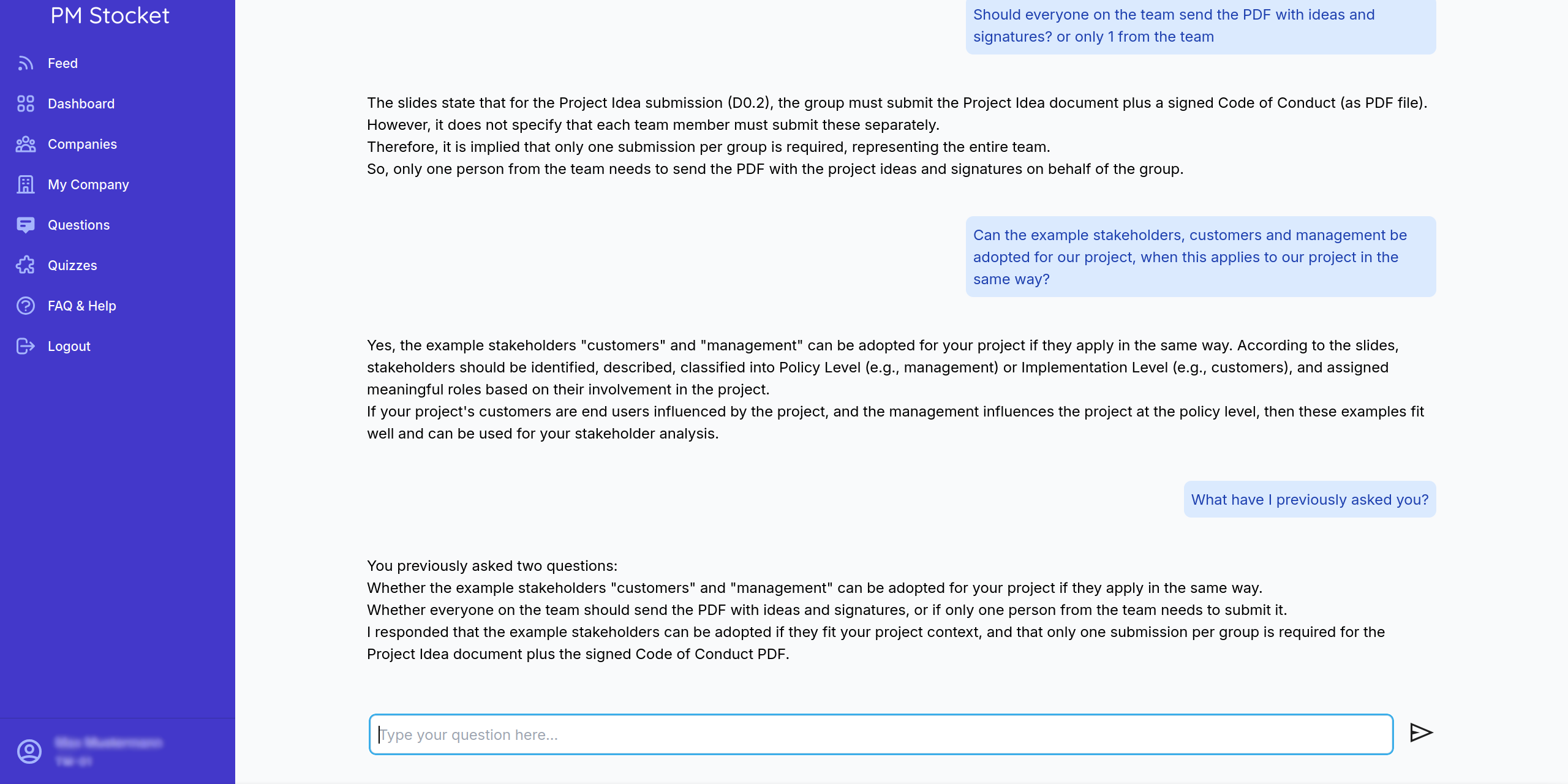
Christian Gütl, Daniel Scharf, Marcus Gugacs and Sebastian Gürtl, Course "Project Management in Software Engineering" (VO und UE): The starting point is 250 students in the lecture and around 180 in the exercise of the same name, who ultimately form groups of four and work on a software project from the initial idea to the software prototype. This results in around 45 groups, which require a corresponding amount of supervision. For this reason, a locally hosted LLM, for which student assistants and hardware have been provided by the fund, is to remedy the situation in future: the model is being developed independently and is available to students to assist them, for example, in generating and evaluating ideas, checking the clarity and completeness of requirements, or reflecting on the design and appropriateness of a proposed system architecture. This is not intended to replace the support services provided by teaching staff, but rather to supplement them with a tool that is available to students anytime, anywhere.
Lukas Imhof, Patrick Jan Pazdzior and Jenas Klaaßen, course "Integral Design Studio Content" (UE, Design Studio Lightweight & Solid Construction): The use of AI is no longer something that can be confined to the field of computer science. In the "Integral Design Studio Content" exercise, students have always used classic drawing techniques themselves. These are now being expanded to include the image-generating AI "Midjourney". "The advantage of rapid image generation is offset by a need for reflection, comparability and critical analysis", states the project proposal. This reflection takes place manually through drawing with Jaxon crayons, so that, on the one hand, initial inspiration is gathered through the use of AI and, on the other hand, personal design options are incorporated into the final product through the use of innovative materials. A guest speaker who is considered a pioneer in the discipline will be invited to talk about working with these materials, which have been tried and tested for decades but are not widely used. In this way, the interplay between generative AI in art and self-generated works in architectural studies will be demonstrated in a variety of ways.
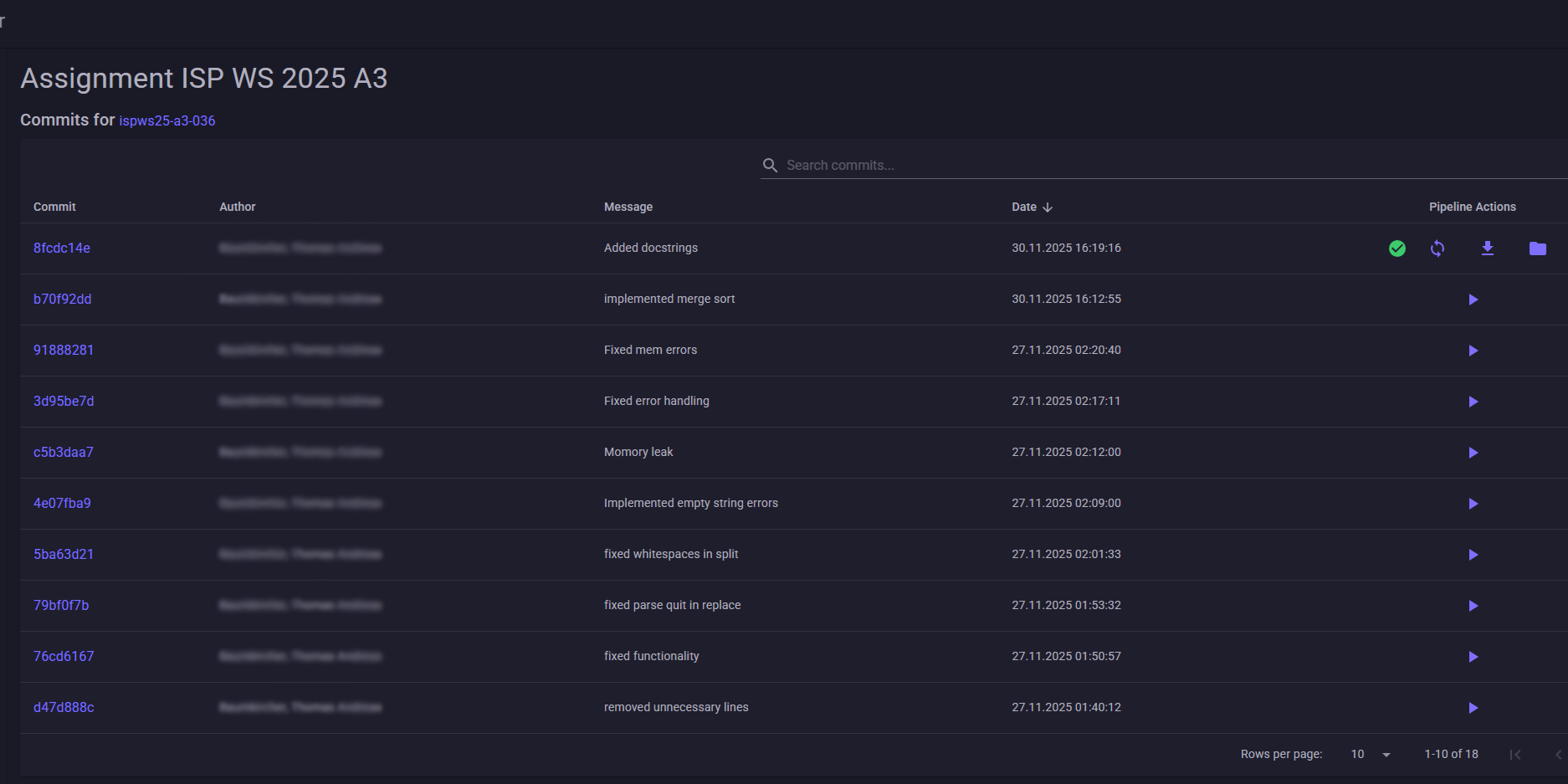
David Kerschbaumer, Sebastian Gürtl, Lukas Eberhard as well as the tutors Julia Herbsthofer and Michael Guttmann, courses "Introduction to Structured Programming" (KU, in German until winter semester 2024), respectively „Introduction to Structured Programming“ (KU, in English since winter semester 2025) and “Object-Oriented Programming 1” (KU): The courses listed are taken at the very beginning of the academic journey of hundreds of students each year and form the basis for all further courses with programming content. Similar to Gütl et al., teachers face a familiar challenge: extremely high student numbers make it difficult to provide individual and personal feedback, which is often necessary at this stage of study. Previously, students had to complete 3-4 programming tasks individually per semester. In the past, providing feedback and corrections repeatedly pushed staff and hardware to their limits. Therefore, a test system is to be established on a newly purchased server infrastructure that provides immediate feedback on code uploaded by students, instead of having to wait up to 2 hours as was the case with the previous system. The interactive system thus supports the further development of the code and the learning process of students in real time.
Roxane Koitz-Hristov and Martin Stettinger, course "Automata Theory" (VU): In "Automata Theory", a course first offered in the 2025/26 academic year, tasks set as part of the implemented project will not only be checked using AI, but the task sheets themselves will also be generated using AI. Specifically, student assistants will use LLM to create task sheets for students to solve. The examples for the midterm exam will be generated in a similar manner. Various LLMs such as ChatGPT or Gemini Pro will be used, and their effectiveness in terms of usability in teaching will be evaluated at the same time. Nevertheless, personal support is not neglected: close to the submission deadlines, tutors and teachers hold question and answer sessions, for which there is more time thanks to the AI support in creating task sheets. In addition, there is an asynchronous online forum in the TeachCenter, which is also supervised for questions.
Elisabeth Lex, course "Computational Methods for Statistics" (VU): With an average of 400-500 participants, the VU is in line with other courses in the field of computer science presented here. A special feature is that it is scheduled for the 5th semester of computer science bachelor's programmes, at which point students already have some programming knowledge. In addition, however, it is a compulsory course in the first semester of the Computational Social Systems (CSS) master's programme and provides many students at TU Graz with their first contact with the Python programming language in the interdisciplinary master's programme offered in cooperation between TU Graz and University of Graz. The desire expressed in course evaluation results to receive immediate feedback on generated code is to be fulfilled by setting up an automated testing and correction system with the help of a student assistant. In addition, Python tutorials will be created. By promoting self-study and eliminating manual corrections, lecturers will have more time to focus on the content of the course, for example for question and answer sessions.
Hardware and software solutions
Max Cichocki (Projekt 2026 übernommen von Christian Landschützer), courses "CAD" (VU), "CAE" (VU), "Project mechatronic systems" (PT), "Laboratory Logistics Engineering" (LU), „Laboratory Logistics Engineering“ (LU), "Drives and Control Technologies" (VO): The use of a biomass gripper will significantly increase the practical relevance of the courses listed in future. The gripper itself is made from recycled parts from previous projects instead of being purchased new and is also integrated into teaching as a digital twin model, enabling students to actively experience a product development cycle from conception and simulation to implementation. While the simulation part is made possible by software such as "SimulationX" and "Hexagon ADAMS", student assistants support the construction of the grabber.
Dženita Džafić, Theo Gasteiger and Carlo Alberto Boano, courses "Computer Engineering" (LU) and "Low-Power Wireless Localization Systems" (VU): In the laboratory of the Electrical and Electronics Engineering programme, students develop firmware for wireless audio systems independently for the first time, focusing on real-time speech processing and Bluetooth Low Energy (BLE) audio communication. In doing so, they gain practical experience with state-of-the-art technology that is becoming increasingly important for accessible audio applications such as hearing aids, in-ear headphones and public announcements. To implement their ideas, students use the open-source operating system Zephyr and develop their software solutions directly on small microcontrollers.
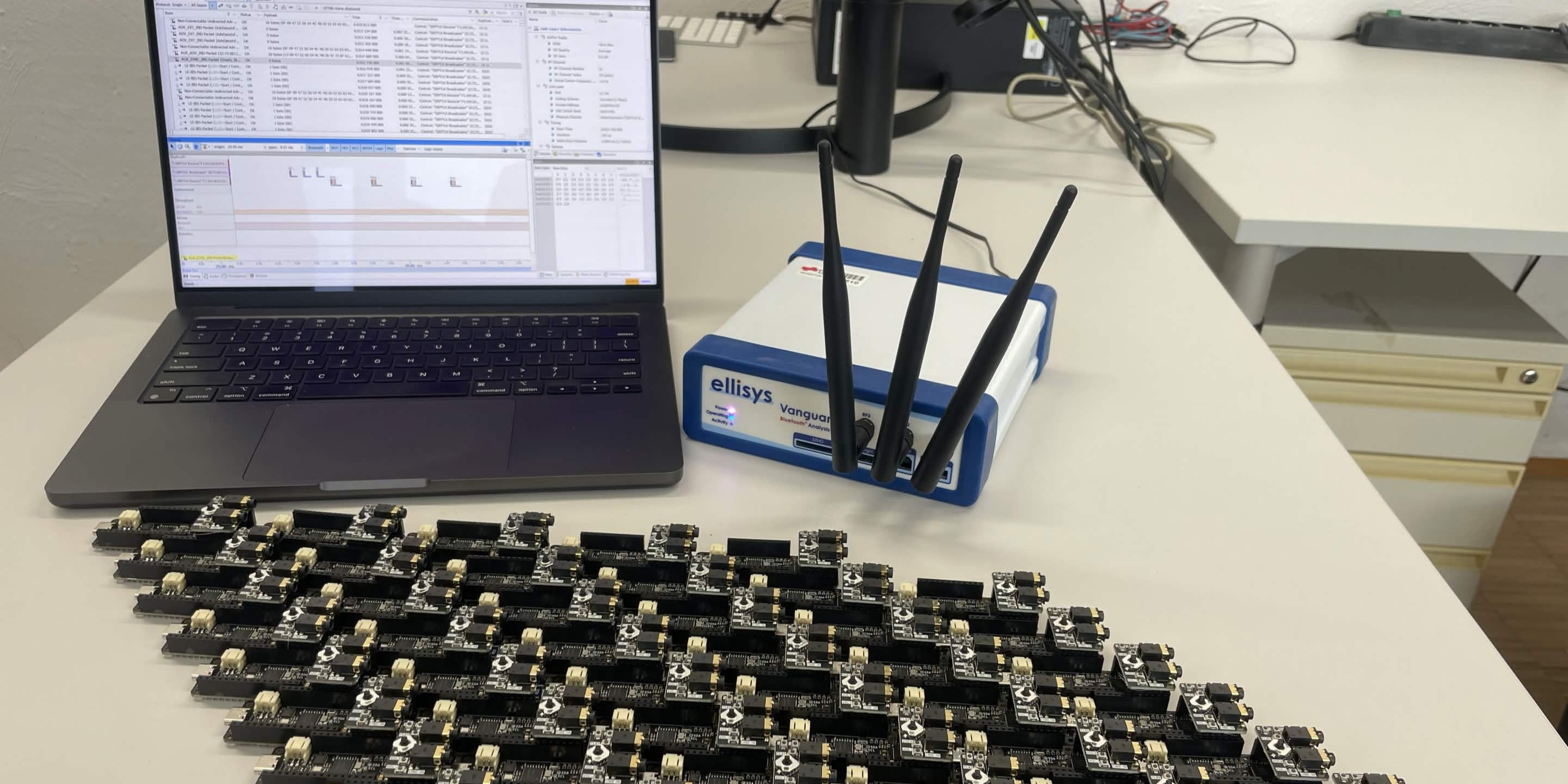
Zephyr and small embedded boards will also be used in the new course "Low-Power Wireless Localization Systems", which will be offered from the 2026/27 academic year onwards in both the Electrical and Electronics Engineering and Information and Computer Engineering degree programmes. This course focuses on the localisation of small, energy-efficient wireless systems using two of the most advanced technologies: BLE 6 Channel Sounding and Ultra-Wideband (UWB). With funding from the fund, students program the specially manufactured embedded boards themselves and learn basic methods for measuring distances in practice and determining positions from them. They compare the strengths and limitations of the two technologies in terms of accuracy, energy consumption and range, using real-time data from the institute's own motion capture system as millimetre-precise reference values. A playful competition rounds off the exercise and creates a motivating learning atmosphere.
Domenik Kaever and Harald Steinkellner, course "Modelling and simulation in material flow technology“ (VU) and „Material Flow Planning and System Design“ (VU): With the purchase of a Motion Mining sensor set and accompanying analysis software, students can analyse and optimise material flow processes themselves in a realistic manner in both courses (e.g. transport vehicle movements, walking routes of people). Instead of working exclusively with theoretical data, "existing use cases and simulation environments can be expanded to include realistic, human-centred input data or adapted to current technological developments". Motion Mining technology uses wearable sensors and AI-supported algorithms to automatically collect and evaluate human movement data and process data, such as that from transport vehicles. The aim is to identify potential for optimisation in workflows – in this case, entirely hands-on by the students themselves.

Matthias J. Rebhan and Florian Thurner, course Soil Mechanics Laboratory" (LU): The composition of soil, which consists of a three-phase mixture of solids, air and water, has a significant influence on its mechanical, thermal and hydraulic properties as a building material. The safety of structures therefore depends entirely on the respective subsoil. In order to give students the best possible understanding of the interactions between the three phases, a soil mechanics construction laboratory is being set up. This will enable them to gain practical experience of the interaction between soil and building materials. The joint evaluation of the experiments carried out in the laboratory itself will also contribute to their understanding of the subject area.
Lehrkonzeptadaptionen und -Erneuerungen
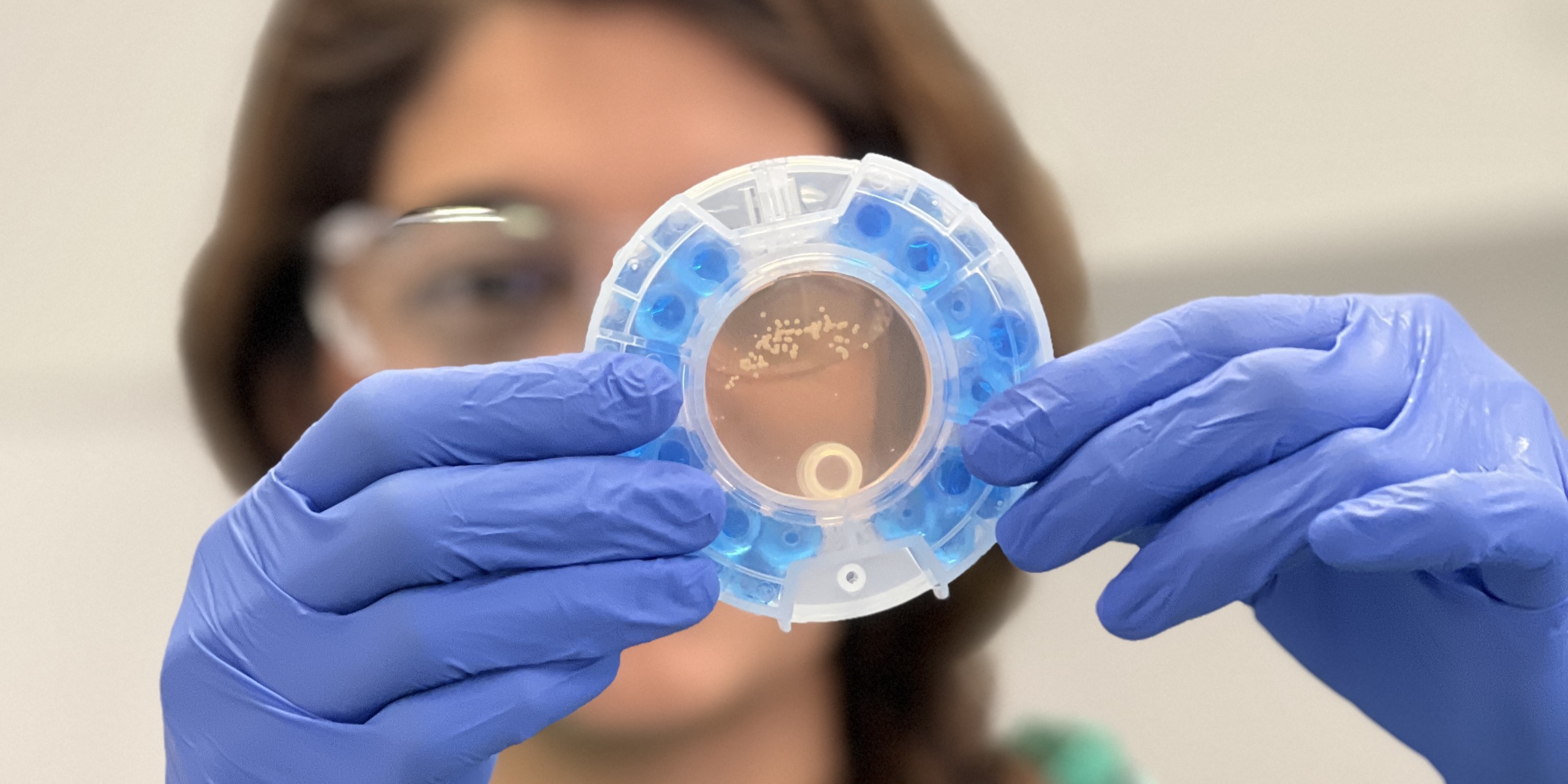
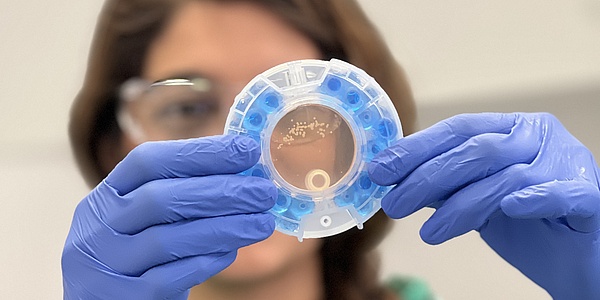
Sahar Ghorbanpour, course "Introduction to Biomaterials and Tissue Engineering" (VU, initially held in summer semester 2026): The newly funded course Introduction to Biomaterials and Tissue Engineering introduces a research-driven learning format that connects fundamental concepts with real-world biomedical applications. Through lectures, interactive workshops, and an intensive laboratory block, students work hands-on with 3D human organoid disease models to investigate cell–material interactions, analyse experimental data, and test drug responses in vitro – mirroring how modern biomedical research is conducted. Supported by workshops on literature analysis, experimental planning, and ethical considerations, the course enables students to move beyond textbook knowledge into data-driven problem solving. The funding enabled the purchase of human primary cells, biomaterials, and essential laboratory consumables, creating an authentic, practice-oriented learning environment that closely reflects contemporary biomedical research and translational drug development. The cover image of this blog post shows a bioreactor used for this course, containing a human mini-organ grown in the laboratory and cultivated in this system for four weeks.
Lukas Maier, Stefan Radl and Johannes Khinast, courses "System Dynamics and Basics of Process Technology" (VU) and "Particle Technology I" (VO): The two courses have been more theory-based up to now, and the programming examples worked on in the VU have primarily been based on fictional examples. As part of the redesign, measurements from a permeability tester, that is, a technical measuring device that determines how permeable materials such as films, packaging or soils are to gases or liquids, will be included. This will give students the opportunity not only to develop hypotheses and simulate them on the computer, but also to test them in small groups in a real-life setup using the tester. With the help of student assistants, an existing permeability tester will be adapted so that it can be used for a wide range of experiments.
Tobias Schreck, Peter Houska and Benedikt Kantz, course "Object-oriented programming 2“ (VO+KU): Lectures are still naturally structured as traditional frontal lectures in many places. However, in object-oriented programming, the emergence of LLMs means that interactivity will be promoted not only in the KU but also in the VO in the future. To this end, smaller examples will be developed and new learning materials designed in such a way that they can be implemented in the spirit of a flipped classroom and collaborative group work on site is encouraged in both courses. LLMs are permitted tools for code generation for the programming tasks themselves, while the courses are intended to contribute to the critical evaluation of the results produced by the LLMs. Although students can choose and compare the AI tools used themselves, special attention is paid to open and local coding models. Test servers are purchased and instructions are developed for setting up such an instance. The purchase of a new server also enabled the implementation of an LLM-based "digital tutor". This is a chatbot that has been trained on the knowledge base of forum discussions from previous courses. This digital tutor was accessible to participants via Discord, allowing them to access knowledge from previous years. At the same time, this ensured support during off-peak hours.
Great diversity and new opportunities
Almost 50 submissions in 2025 and just under €1,000,000 requested from the project fund between 2020 and 2025 show one thing above all else: Despite the diverse tasks involved in daily business in the areas of teaching and research, the search for creative, new approaches to teaching that are high-quality and student-centred is a high priority for many. It is a wonderful task to review the dozens of submissions each year and thus observe the innovative development of teaching in many places, even though the large number of high-quality applications does not always make it easy to decide between projects. Nevertheless, all members of the selection committee eagerly await the submissions for the upcoming call, which will start in early March 2026 as usual and bring new opportunities for financial support for teachers. TU Graz employees can find all the information they need on the TU4U intranet!
LLMs, Digital Twins, Flipped Classrooms and more: The Project Fund for Teaching 2025
Not least in the project fund, the introduction of artificial intelligence into teaching has been clearly evident in recent years. But even aside from this, our teaching staff once again impressed…
International collaborative teaching – a win-win situation for students and teachers!
Four practical examples within the Unite! University Alliance, a consortium of nine leading technical universities from nine different European countries, demonstrate the success and added value of…
Working as a student in Austria: eight big tips
![[Translate to Englisch:]](https://www.tugraz.at/fileadmin/_processed_/a/e/csm_Working-as-a-student-by-fotogenia-tugraz_f8f6811020.jpg)
Ekrem Toroman is an international student at TU Graz. He supports himself and knows what it’s like to work alongside his studies. In this article you’ll learn how to successfully finance your studies.