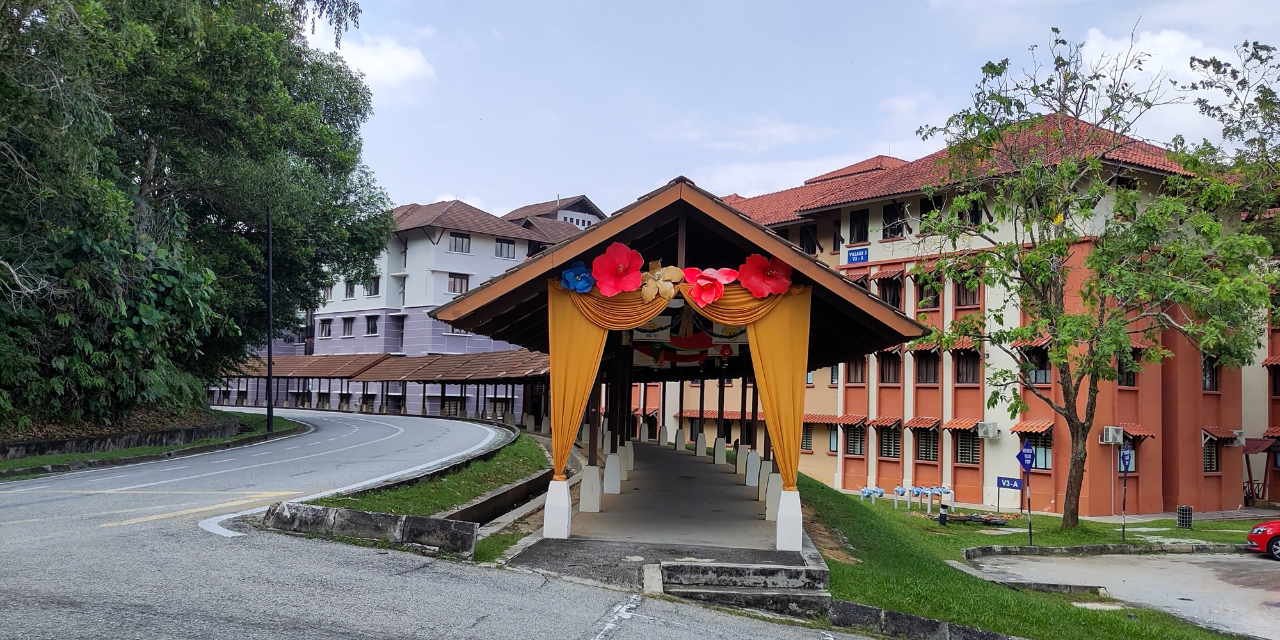
The right accommodation has a significant impact on your semester abroad. This article shows you what to look for when making your choice.
One of the biggest differences between studying at most European universities and studying in other parts of the world is how the daily student life is organised. In most cities, you will be able to choose between living on campus in dormitories and rooms provided by the university and living off campus in your own accommodation.
When planning a semester abroad, in my case it was the Universiti Teknologi PETRONAS in Malaysia, housing was an important decision I had to make early on. As this is also what I would recommend to others, here is my guide to help you decide which option is right for you!
The illusion of choice
Before you start making your decision, it is worth checking if you even have both options available to you. Some universities may have special rules in place about where their students can live. This holds true especially for undergraduate students. The reason for this regulation is that some higher education institutions spend a lot of their budget on building student housing and would therefore like to recoup some of these costs. The other reason is - of course - the greater amount of control and surveillance over students.

Universities like the "Universiti Teknologi PETRONAS" in Malaysia dictate that all students pursuing an undergraduate degree must be housed on campus in the accommodation the university provides for them. Graduate students and above are permitted to live off campus. To circumvent this rule some particularly wealthy students might choose to "officially" register for a dorm on campus, but actually live in a rented apartment off site since it is almost impossible to check where students live without enforcing a curfew.

Price
The most important factor for most outgoing students to consider when choosing a place to stay for the duration of their semester is the price, of course. Generally speaking, housing provided by the university is considerably cheaper than renting.
Another thing to consider is the necessity for a deposit. Most rental property businesses require potential renters to provide a deposit of one to three months' worth of rent. This deposit might be held for a long time (even after completing your stay) and greatly increases the up-front cost of an exchange semester. This comes in addition to the fact that most exchange programmes require a deposit as well and flights must also be booked before the journey.
Student dormitories owned by the university typically don't require a deposit from their students and if they do, it is often considerably lower by comparison. The risk of the deposit not being returned is very low since universities are typically less likely to go bankrupt or to change owners.

Important things to consider
If your desired university has multiple campuses in the same city, you should find out in which building(s) your classes are being taught as soon as possible. Please note that it might not even be the university’s main campus, so choose your accommodation accordingly.
In hotter climates it is also very important to check if the room you are renting is equipped with air-conditioning. This applies to both on and off campus living.
With the rise in exchange students and the increasing ease of studying internationally, many companies have also popped up who have made it their goal to prey on inexperienced travellers and students. They claim to offer an easy way to search for student dorms and rooms specifically, cheap rent with no need for a deposit and stress-free transactions, while really just being a scam. For this reason, it is essential to check the reviews of any company you plan on entering a contract with. But keep in mind that these reviews can also be bought or faked.
Types of accommodation off campus
If you decide to stay off campus during your exchange semester, there are many options to choose from when it comes to accommodation. The most common way of living is of course just renting an apartment outright, as you would in your home city. The main problem (apart from higher costs) with this approach is that an exchange semester is typically for six months (or less) in duration, which many landlords don't consider long enough to draft a contract for.
In fact, in most places in the world rental contracts are bound by a minimum of twelve months, though there are exceptions, so it could always be worth checking the norm of your destination.
A practical way to enjoy the benefits of living off campus without the hassle of having to sign a proper rental agreement on your own is to simply sublet a room in a flat share or even a shared house. Shared houses are especially common in Asia (especially in Japan). In such an arrangement, the entire house is managed by a company, features one or more shared kitchens and bathrooms, while only the room you sleep and study in is rented to you. Flat shares are also a nice cost-effective way to live, with typically much less formal rental agreements and rules (depending on your flat mates your mileage may vary of course). Every country typically has its own website that allows incoming students to find apartments. The most popular portal serving this purpose in German speaking countries is "WG gesucht", while most people in Spain for example rely on a site called "Idealista". A quick Google search or asking your fellow students who have returned from their semester abroad typically tells you the best option to choose.
In some rare instances, particularly in cities considered very expensive, it might also be worth checking the prices for long-term hostel rental. Depending on the duration of the stay, this can be a very economical way to spend your semester, if you can stomach having changing roommates throughout your time abroad and no kitchen. Though depending on your on-campus accommodation, you might encounter the same conditions there as well.

Commute
The main downside to staying off campus is having to manage your own commute and having to take it every single day you have classes. Before choosing an area to live in, it might be greatly beneficial to check the local traffic and public transportation websites to see how long it takes for you to get to university and refine your search from there. If your city is smaller or more rural you might not be able to rely on Google Maps for this information, as smaller transportation firms often do not integrate their services into Google's. Depending on when your classes start and how many activities you plan on doing in the city centre in the evening, you might also want to check when the first and last connection to and from your place of stay occurs.
Afterword
As outlined, both on and off campus living has its pros and cons, so it is a tough choice that you need to make early on. How you live really dictates the overall atmosphere of your time abroad, so do consider it carefully.
I hope I was able to give you some food for thought in this article and that it has made your decision at least a tiny bit easier. As with most things surrounding your exchange semester, talking to returning students can be a great way to figure out what you should do as their experience can yield more information than any Google search or blog entry could ever give you.
Would you like to hear more testimonials from students who have already completed a semester abroad? Then take a look in the TU4U intranet, where you can find more testimonials on the OverSEAs programme page for the respective partner universities.
You also have the opportunity to network personally with returning exchange students and exchange students currently at TU Graz at the annual Go! International Fair, which takes place every October.

Tips for choosing on- vs. off campus accommodation
The right accommodation has a significant impact on your semester abroad. This article shows you what to look for when making your choice.
Between Pasta and Panic

My semester abroad in Turin was a childhood dream come true—but alongside the wonderful experiences, there were also unexpected challenges.
Student teams: Learning where technology comes to life

Student teams at Graz University of Technology combine theory with practice: whether it's rocket construction, IT security, or Motorsport, dedicated students develop cutting-edge projects, win…