
Are you Hungarian and thinking about studying in Austria? Discover the Austrian university system with all its challenges and immerse yourself in everyday student life in Graz with a Hungarian student.
My name is Orsolya Patonai, I am 21 years old and I am currently a physics student at Graz University of Technology (TU Graz). I take part in the university’s international ambassador programme representing Hungary. As a Hungarian student ambassador, I have set myself the important goal of helping as many Hungarian students as possible to integrate in Austrian student life, and this is also the main aim of this post. I have been studying in Graz for almost two years now, and this has given me the advantage of being able to easily compare the Austrian education system with the one at home, based on what I hear from my Hungarian friends. Now I would like to share my own experiences and impressions, as well as give tips on how it is possible to integrate easily and smoothly into Austrian university life as a Hungarian student.
In general, if you’re considering becoming a degree seeking student at TU Graz and need any help with your stay in Austria even before arrival, contact the TU Graz Welcome Center.
Differences between the Austrian and Hungarian university education systems
When I started secondary school, I did not think that I would later study in Austria. In the meantime, I tried to get to know the specifics of the Hungarian education system, which I had heard about from my older friends. However, when I decided to choose TU Graz, it was not difficult to switch to the Austrian system, since in many cases it is similar to the Hungarian one.
For further details about the Austrian university education system, visit the blog post “Studying in Austria – Austrian university education system”.
What is perhaps the most important thing to mention is that the Hungarian secondary school leaving examination fully corresponds to the Austrian one, so with an appropriate language certificate, a large part of the admission process can more or less be completed easily.
Regarding the application process and admission requirements, I would recommend the website “Overview Admission of International Degree Programme Applicants”. If you have further questions as an international student, the “FAQs for international students” may also be useful.

However, I would still like to describe the differences that I have specifically observed over the years:
- While in Hungary there is a separate teaching period and a separate exam period, in Austria, besides distinct teaching and exam periods, there are many more opportunities to take exams, for example during the teaching period or even before the semester starts.
- In Hungary, if a course is not completed successfully, it often has to be retaken – not only the exam but also the lecture – whereas in Austria, a course often consists of two different credits, so it is not necessary to repeat both parts.
- In Hungary, there is often a preference for more midterm tests and fewer assignments, while in Austria this is exactly the opposite. Alongside several weekly assignments, there are fewer exam-like assessments.
- As a student of the natural sciences, I would like to especially highlight the importance of the NAWI Graz collaboration. As part of this cooperation, TU Graz and the University of Graz jointly offer Bachelor's and Master's degree programmes in the five subject areas of Bioscience, Chemistry, Earth, Space and Environmental Sciences, Mathematics and Physics. This is an excellent opportunity for students in these fields to get to know the curriculum at two universities at the same time.
Challenges I faced when I arrived in Graz
I was around 19 years old, when I moved to Graz on my own, although at that time I had only just started the German language preparatory course (Vorstudienlehrgang). Even though my hometown is close to the Austrian-Hungarian border and I already knew several Hungarians who were studying in Graz, it was of course not the case that everything went easily and smoothly right away.
The language
Perhaps the biggest challenge was the language, and within that, especially the dialect. At the beginning, it was difficult for me to get used to the fact that High German, which I had learnt as the standard, is often not used at all. Instead, I encountered regionally different dialects and sometimes completely different words that not only I, but occasionally even a dictionary, had never heard of. This was probably the most frustrating part when I had to deal with official matters, but what was a great relief was that they were also able to help in English everywhere. Surprisingly, however, the German technical terms in my studies – which I was genuinely afraid of – stuck with me very quickly: within just a few weeks, I had practically learnt all the important mathematics and physics terms in German.
Traditions and communication
Even though the Hungarian and Austrian worlds have crossed paths at times throughout history, they obviously differ from each other in many ways. This can be understood in terms of holidays and traditions, but also clearly in the way people communicate. Some things felt unusual to me at first, and even to this day I am still learning new things, but this is also part of the beauty of studying abroad.
Homesickness
Last but not least, I would also like to mention homesickness. In the beginning, it felt strange to manage all my everyday tasks in another language, and I often missed my friends and family back home. The feeling itself was also unfamiliar – living in another country – even though in terms of distance I was not far from my hometown at all. What helped me was trying to get to know as many people as possible and spending as much time with them as I could. This way, I was able to practise the language, and it is always a good feeling to hear from others how they coped with the challenges of being an international student.

Life in Austria vs life in Hungary
Since living and studying in Graz, I increasingly feel how different everyday life and the university environment can be in another country. Although Hungary is not far away, many small differences stand out as a student. Based on my own experiences, I would like to highlight a few of them:
- In general, life is calmer and more predictable in Austria; apart from the exam period, I feel less stress in everyday life.
- I can get everywhere comfortably by public transport within Graz.
- So far, I have had mostly positive experiences with the administration. I have been able to deal with all official documentation quickly and smoothly.
- You must know that shops close earlier, and Sunday really is a rest day.
- Austrian people place great emphasis on punctuality and on following rules properly, and they also try to pay more attention to environmental protection.
- As a woman, it is especially important to me that I feel safe in public spaces, even in the evening, which I do to a large part in Austria.
- There is a multicultural environment with a large number of international students.
- The university curriculum is well organised, the requirements are transparent, and the examination system is more predictable.
- There are numerous opportunities for individual study: beautiful libraries and comfortable learning centres with flexible opening hours.
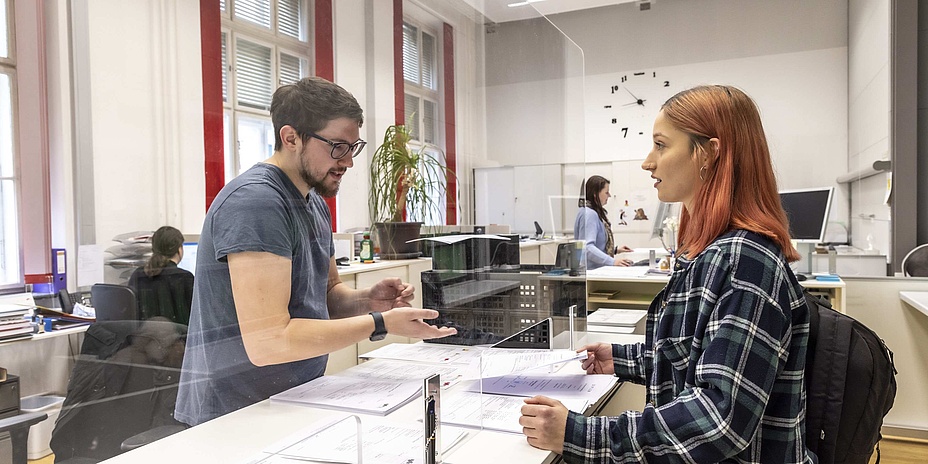
At the beginning, I had to consciously pay attention to deadlines, to how I communicated, and to how I handled everyday matters. Today, these things come almost automatically. Not everything has necessarily become easier, just more predictable and transparent, which matters a great deal in Austrian everyday life. These experiences have shaped the way I now live and move through my daily life here.
Leisure time in Graz
Apart from the demands of university life, social life and relaxation are also very important to me. Often, the easiest way to get through a difficult period is by spending quality time with my friends.
Our favourite activity – what else could it be if not enjoying a good coffee with a piece of cake while having long conversations. Graz is perfect for this: it is full of cozy cafés and cute pastry shops, so we have happily become regulars at a few of them. Afterwards, we often enjoy walking through the city centre and discovering its beautiful streets, or if we feel like being more active, we like climbing the Schlossberg, from where there is a perfect panoramic view of the entire city.
As a university student, I would also like to highlight the TU Graz spritzer and mulled wine stands. One of the university groups organizes small gatherings on one of the campuses almost every week where we can buy drinks and often even food. This is especially nice because only people from the university come here, which makes it a great opportunity for building connections and strengthening the sense of community.
If we have had enough of eating and drinking and feel like doing something more active, the best choice is the University of Graz’s Sports Institutes (USI) courses, where you can choose from a wide range of different sports activities. The gyms are also great and are especially worth it with student discounts. In addition, there are language courses offered at the university as well, which can even count towards earning credits.

Hungarian Students in Graz
Before I moved to Graz, many people advised me that because of the language, I should try to get to know Austrian students rather than only seeking out Hungarian ones. I have to admit that this actually worked during the language preparation course, since in my group there were no other Hungarians besides me at all. This surprised me a bit, but it helped my language learning a lot. At university, I also tried to talk to and make friends with as many people as possible in order to practise German as much as I could, but of course, whenever I could speak Hungarian with someone, it was a special kind of joy. Even on trains, if I hear students speaking Hungarian, I like sitting down with them, and I always feel this mutual happiness in others as well – this feeling of “how nice, you’re Hungarian too, let’s have a good chat”.
There are Hungarian community groups in Graz on Facebook, and it is definitely worth joining them. I have already used such a group, for example, to try to find a dishwasher repair person. There is also a smaller Hungarian student group on WhatsApp. Sometimes they organize small meet-ups, but what is even more common is asking questions and offering help.
My personal opinion is that, if you really want to find Hungarians in Graz, it is not difficult at all – sometimes it is enough to travel just a few stops by tram.
My satisfaction with my studies in Graz
My friends back home and my family often ask me how my university studies are going. Of course, not only because it is about me, but also because they are curious about how things work differently in Austria compared to Hungary. Was the extra work and invested time worth it? My answer to this is always a very definite YES. The open day at TU Graz convinced me that it was worth first learning the language in which I would later continue my studies. It is true that during the semester I often feel that things are more challenging, and it may take me more time to complete my tasks. But this is not without reason. All of my courses are interconnected, and I honestly could not name anything unnecessary that I have had to learn during the past semesters. Everything always had its own place and timing.
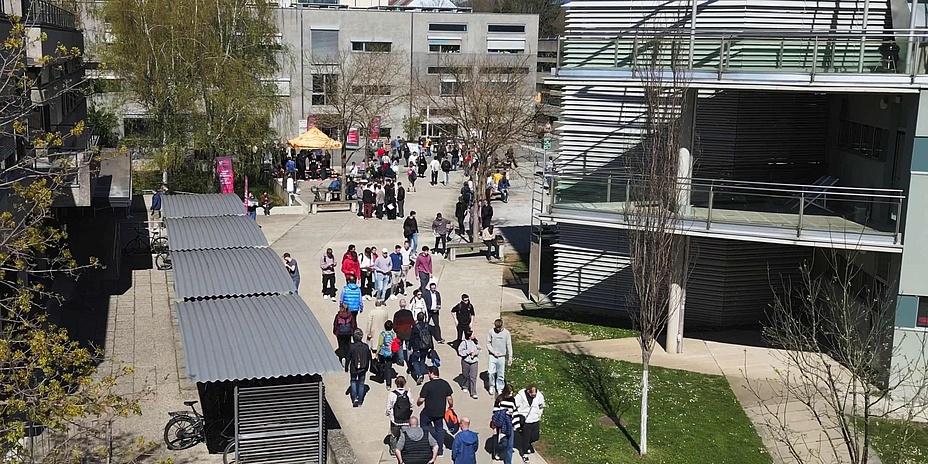
Moreover, when something goes well, the joy is even greater, because I know that compared to my fellow students I always start from a slight disadvantage due to the language. But very often, this is exactly what motivated me to bring out the maximum from myself. A modern environment, excellent opportunities, and high-quality education: this is TU Graz.
Costs and accommodation
This topic is usually one of the first things that comes up in parents’ minds, but as a student, it is also extremely important to talk about it. I do not want to go into specific numbers here, but the financial topics on the TU Graz Blog and the TU Graz website Financial Matters can be a great help.
As a short summary, I would recommend first of all looking into different types of financial support, such as study, family or housing benefits. At the beginning, I sent many emails to the offices responsible for these, asking what I was eligible for and what the conditions were in each case. If this is organized smartly, it is practically possible to reduce costs to a minimum.
When it comes to accommodation, it is also advisable to look around carefully and consider all the options. I currently live in a rented apartment, but from many friends who live in a hall or residence, I have heard almost only positive things. The rooms are very clean and well maintained, and many of them do not even have the typical dormitory feeling – rather, it feels much more like living in an apartment with friends.
In Austria, most EU/EEA students pay but a small semester contribution (the “Austrian Student Union fee” around 25 euros). The TU Graz website provides information on tuition fees and on the Austrian Student Union fee as well as on overall aspects about living in Graz.
Conclusion
Overall, studying in Austria – and within that, student life in Graz – brought me many challenges, but also many opportunities. I am not claiming that every moment was easy, especially at the beginning, when everything was new: the language, the university expectations, and even the smallest everyday situations. There were days when I felt a little lost, but over time, these turned into the most valuable lessons – and many times now I can only laugh about them.
Along the way, I learnt to be more independent, to organize my days better, to handle stressful periods better (yes, even exam periods), and to move more confidently in an unfamiliar environment. I could also say that, what was difficult at the beginning has now become part of my everyday life.
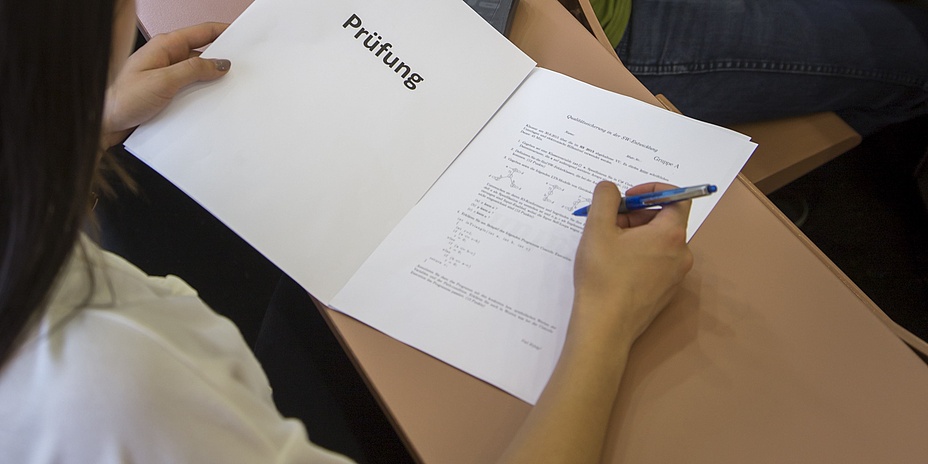
These few years in Graz have meant much more to me than simply a foreign university experience. After a while, I was no longer wondering whether coming here was the right decision, but rather how much I had learnt along the way and what I would take with me from this period.
I hope that through my experiences I was able to bring a little closer to others what it is like to be a student in Graz, and that it might help them decide whether this is the place where they would also happily start their university years.

From Serbia to Styria: My TU Graz Journey
Planning to study in Graz, Austria? Get tips on admission, student life, leisure and costs. Discover how to navigate the system, and why TU Graz is the perfect place for your science and engineering…
Working as a student in Austria: eight big tips
![[Translate to Englisch:]](https://www.tugraz.at/fileadmin/_processed_/a/e/csm_Working-as-a-student-by-fotogenia-tugraz_f8f6811020.jpg)
Ekrem Toroman is an international student at TU Graz. He supports himself and knows what it’s like to work alongside his studies. In this article you’ll learn how to successfully finance your studies.
Studying in Austria: University life for Hungarians

Are you Hungarian and thinking about studying in Austria? Discover the Austrian university system with all its challenges and immerse yourself in everyday student life in Graz with a Hungarian…