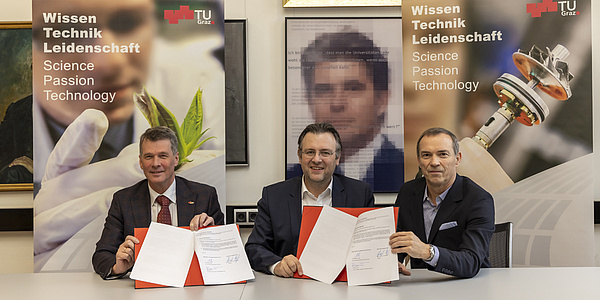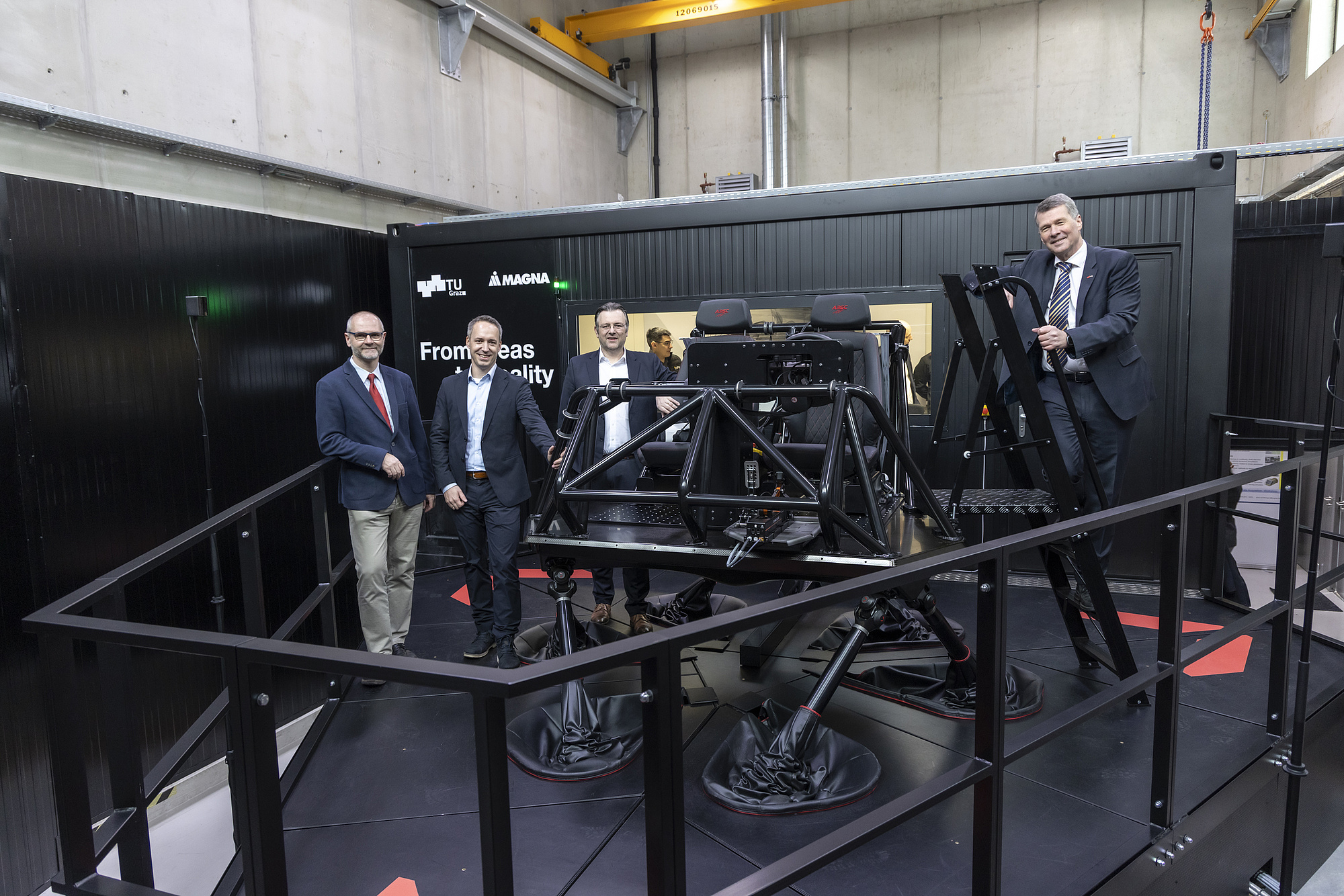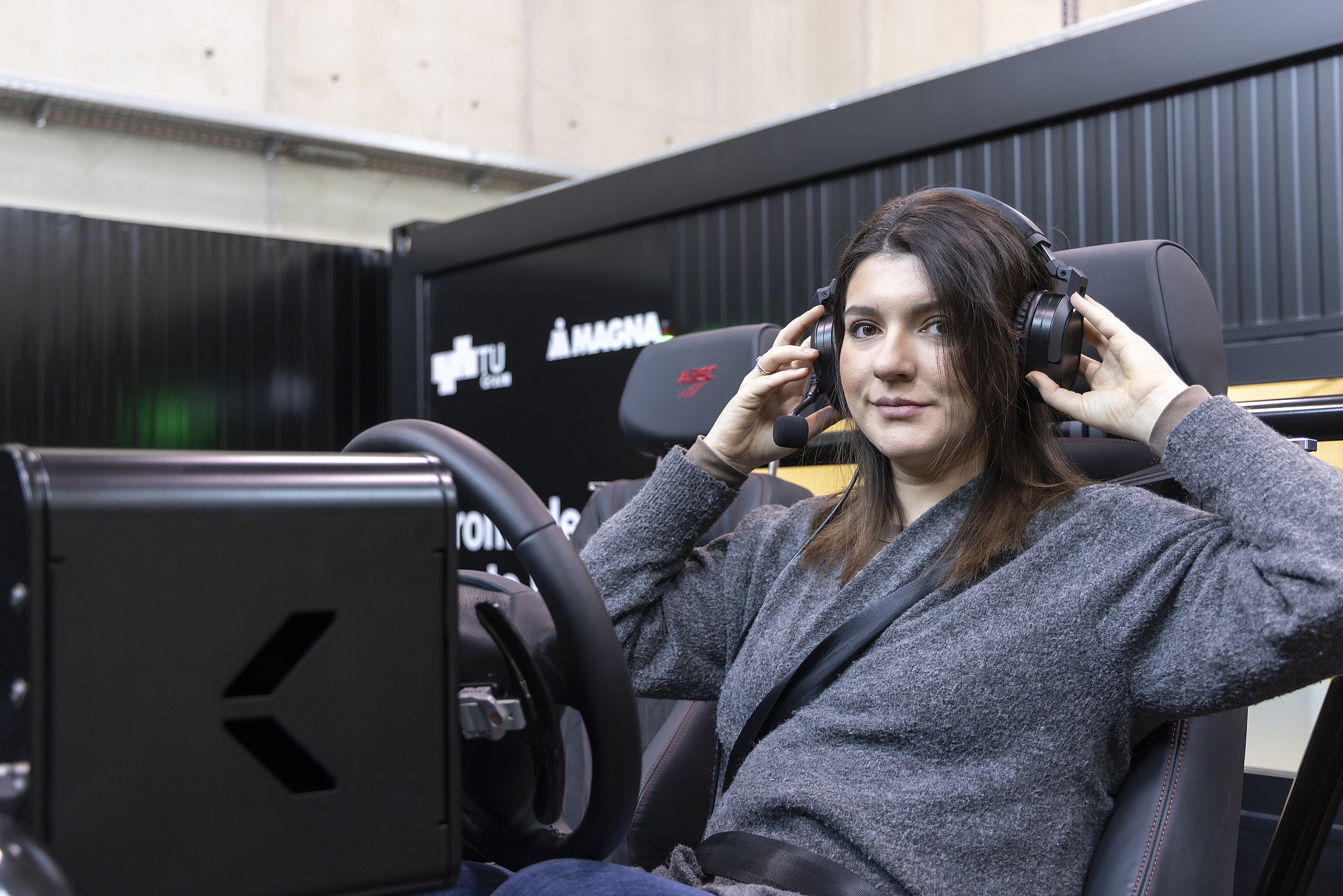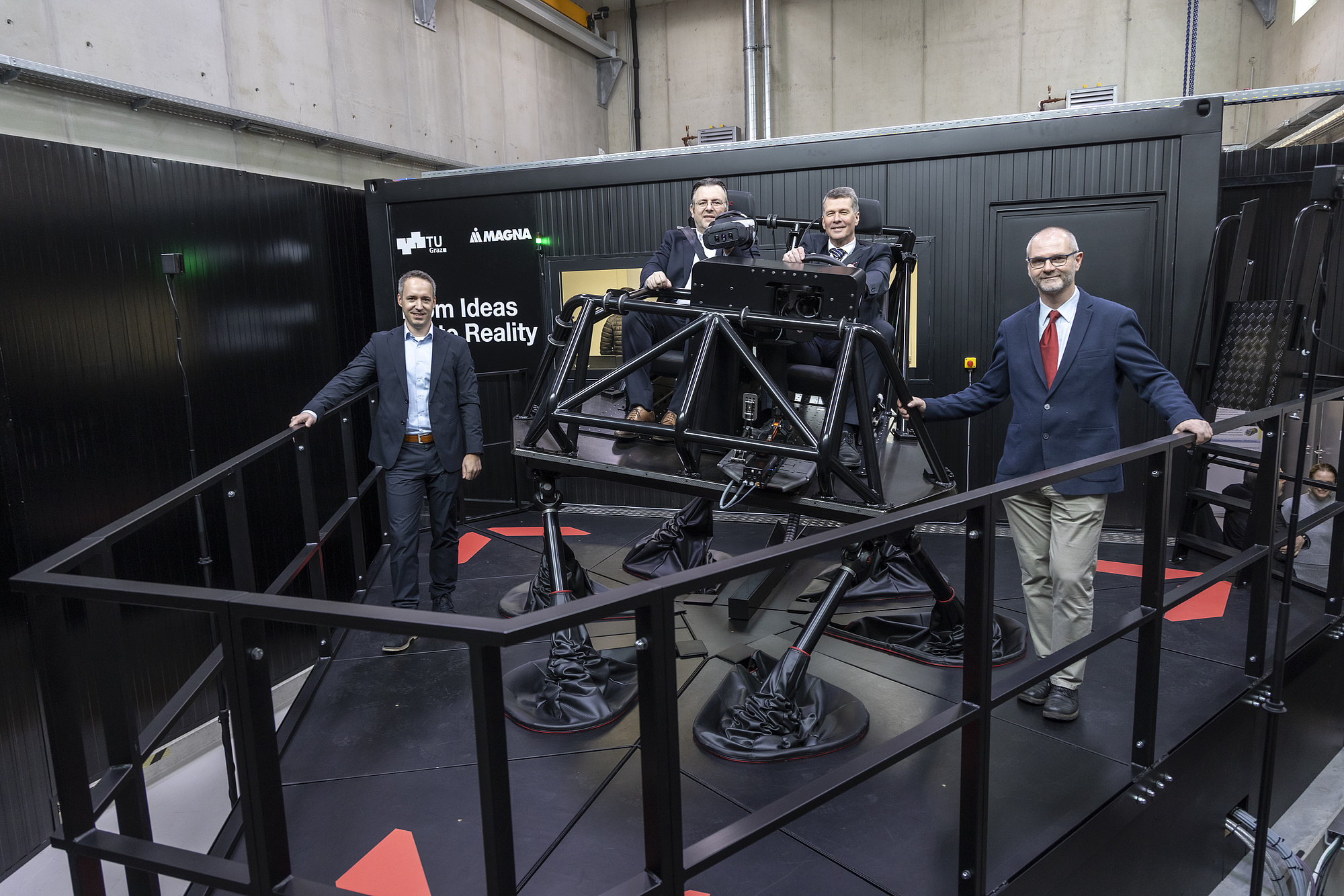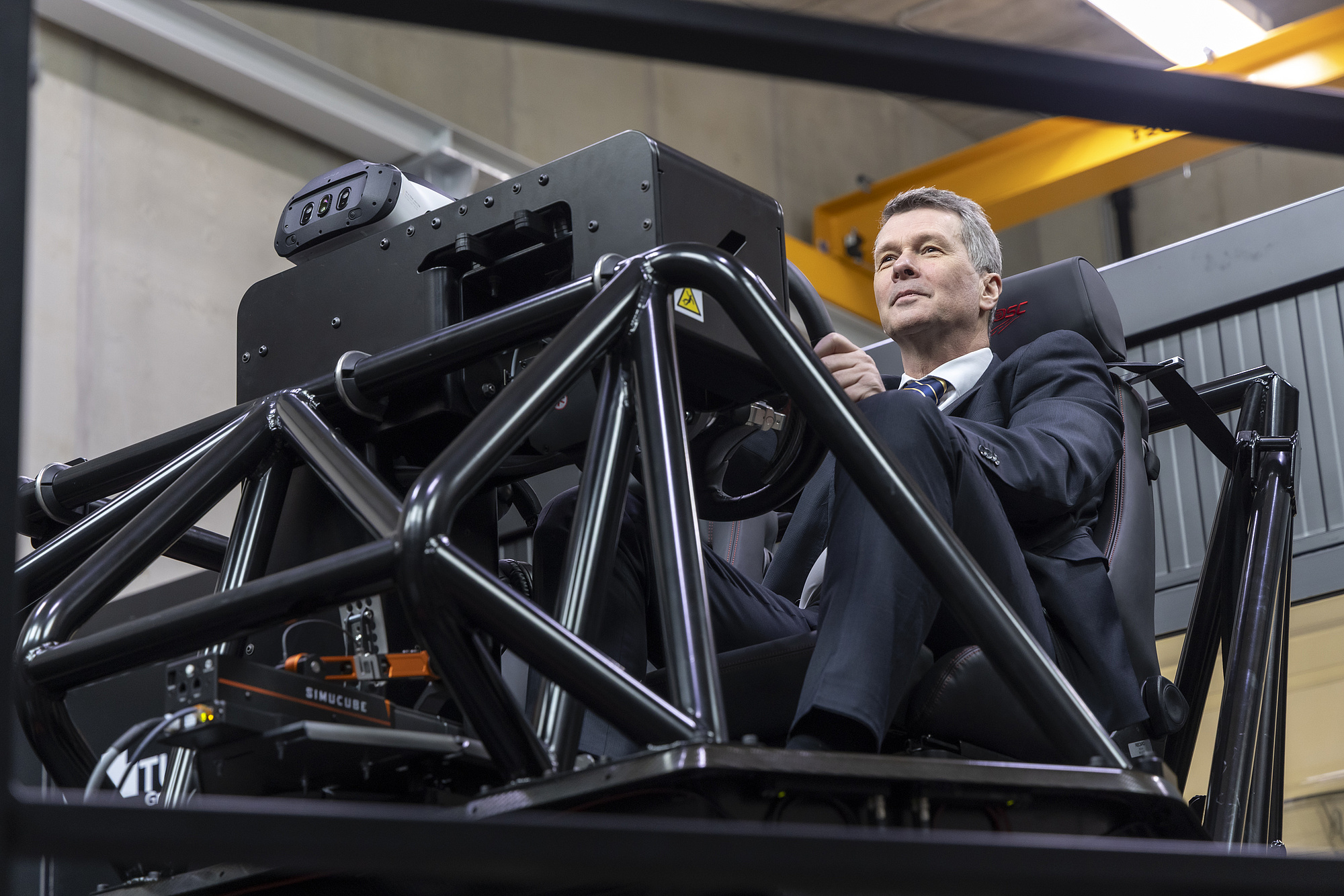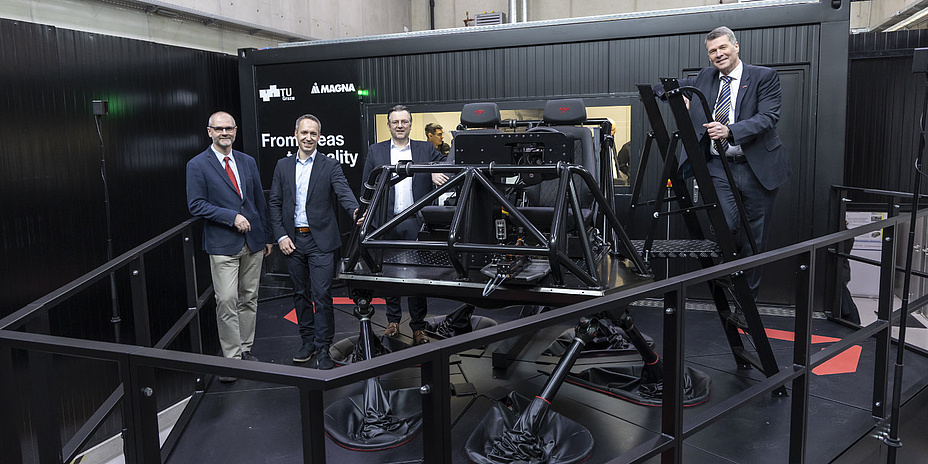
Graz University of Technology (TU Graz) and the mobility technology company Magna have unveiled one of the most sophisticated driving simulators in the world at the new Advanced Driving Simulation Center on Campus Inffeldgasse. The simulator reproduces an extremely realistic driving experience in a unique way. Research and development teams can use the simulator to realistically test and optimise different vehicles, chassis and tyre set-ups as well as various advanced driver assistance systems (ADAS). Magna covered the acquisition and installation costs, while TU Graz is financing the ongoing running of the Advanced Driving Simulation Center.
“The Advanced Driving Simulation Center is a result of the decades-long innovation partnership between Magna and TU Graz,” says TU Graz Rector Horst Bischof. “With this driving simulator, we now have a research infrastructure that is unique in Europe and will sustainably enhance Austria as an automotive and mobility centre.”
Simulator closes the gap between modelling and human perception
“The Advanced Driving Simulation Center allows us to conduct vehicle studies with results that precisely match the physical conditions of the real world,” says Arno Eichberger, Head of the Institute of Automotive Engineering and responsible for the scientific operation of the testing facility. “With the new simulator, we are closing the gap between theoretical vehicle modelling and the real human perception of our test drivers.”
Added value for vehicle development
Magna will use the Advanced Driving Simulation Center in development projects with international car manufacturers and promote innovation in general. “The most important areas of application include optimising and tuning the chassis and tyres of a wide range of vehicle types in the early phases of development projects, long before real vehicle prototypes are available. This accelerates development processes and creates additional space for innovation,” says Severin Stadler, who as Head of R&D at Magna is responsible for the implementation of the centre.
Development of advanced driver assistance systems through to autonomous vehicles
“Thanks to its high bandwidth, the simulator can generate even the finest vibrations that are triggered by different road surfaces in the vehicle. This is essential for the optimisation of electric vehicles, as passengers perceive these vibrations much more strongly than in cars with with combustion engines due to the lack of engine noise,” says Arno Eichberger. With VR technology, the Advanced Driving Simulation Center will also play an important role in the development of advanced driver assistance systems through to autonomous vehicles.
Technical details of the vehicle simulator
- High bandwidth: With a frequency of over 100 Hz, the simulator can transmit even the finest vibrations. Drivers can feel the smallest bumps, road markings or changes in tyre traction.
- Six degrees of freedom: The cockpit is controlled by six movable struts. This means that vehicle movements in all directions (forwards, backwards, lifting, lowering, turning, tilting, pitching) are precisely simulated.
- VR integration: Virtual reality (VR) systems are used to simulate a wide variety of driving and traffic situations in a photorealistic manner. Drivers can test new display, operating and assistance systems in the cockpit.
- Extremely low latency: The very fast system response of three to four milliseconds enables a realistic driving experience with a lower risk of motion sickness for test drivers.
Arno EICHBERGER
Assoc.Prof. Dipl.-Ing. Dr.techn.
TU Graz | Institute of Automotive Engineering
Phone: +43 316 873 35210
arno.eichberger@tugraz.at
Severin STADLER
Dipl.-Ing.
Director Advanced Engineering, Cooperations & Strategy
MAGNA STEYR Fahrzeugtechnik GmbH & Co KG
severin.stadler@magna.com