My semester abroad in Turin was a childhood dream come true—but alongside the wonderful experiences, there were also unexpected challenges.
For me, my semester abroad at Politecnico di Torino was the fulfilment of a childhood dream. Finally living in Italy—not just for a vacation but for six whole months! Still, there were many challenges along the way that are usually not mentioned in Erasmus+ brochures.
Codice Fiscale
Every Italian citizen and anyone working or studying in Italy needs an Italian tax code called Codice Fiscale. Although it’s often linked to taxes, it’s necessary for much more than that. It is issued once, valid for life, and essential in daily life. You need the Codice Fiscale to rent an apartment, buy a SIM card, enrol at the university, and for many online purchases (such as event tickets or discounts). Of course, you can get it easily for free and at your host university, but I recommend applying for it several months before your stay, as it makes finding accommodation much easier. The easiest way is to contact the Italian embassy in Vienna directly.
Further information on the Codice Fiscale and detailed instructions on how to apply for one can be found on the website of the Italian Embassy in Vienna under “Italian tax number (Codice Fiscale)” (in German or Italian only).
Finding Accommodation
Probably the biggest challenge for me, besides the Learning Agreement, was finding a place to live for six months in Turin. I have to admit, this was a bit self-inflicted, since I was a little late with my preparations and also didn’t have my Codice Fiscale yet. Many private landlords, for example on platforms like Immobiliare.it, prefer long-term leases and often don’t rent to Erasmus+ students.
On the website of Politecnico di Torino “Welcome@PoliTo”, you can find a list of student dorms — I highly recommend contacting them as early as possible. Another useful resource is Cerco Alloggio, an organisation that supports students in finding accommodation.
Unfortunately, I didn’t find a suitable place there. If you want to rent a shared flat room quickly and easily, I can also recommend Joivy. Everything is managed through a user-friendly app in which contracts are available in multiple languages and they also help with the Codice Fiscale if needed — this is why I booked my room through them. The catch: for Italian standards, the rents are relatively expensive on the app, and if you want to leave early, you must pay at least one month’s rent as a penalty because only yearly contracts are officially offered.
About my apartment: I had both luck and bad luck. On the one hand, I had a large, bright room with a private balcony in a modern shared flat. On the other hand, it was quite far from the university and my flatmate turned out to be a problem. As wonderful as it is to meet people from all over the world, living together in an international shared flat can be challenging. Sometimes it’s just small things like different eating or sleeping habits. In my case, I lived with an Indian flatmate, and things became complicated: neglected cleanliness, a loud lifestyle, and very different ideas about respect made daily life difficult. Even though some of my fellow students in Italy had similar experiences with flatmates from this cultural background, there are certainly many positive examples out there as well.
My advice: try to clarify your living situation before moving in and agree on clear house rules (if necessary, with the help of the landlord) to avoid stress later on.

Language
As beautiful as the Italian language is — rhythmic, emotional, and expressive — it is also challenging to learn. Italian is very different from German: sentence structure is much more flexible, and the language lives through its verb forms. Since many Italians, even younger ones, speak limited English, it’s essential to learn the basics before your stay. I took an A2 Italian course at TU Graz, which I can highly recommend. Both my prior knowledge and the additional language course at Politecnico helped me a lot to get along better in daily life and to start conversations with locals more easily. Although many Italians are very open, they tend to be a bit reserved at first if they see you don’t understand a single word in their native language.
Learning Agreement
To give you context: I study Industrial Engineering and Mechanical Engineering in my Bachelor’s at TU Graz, but I was officially enrolled in the Master’s programme “Engineering and Management” at Politecnico di Torino for my Erasmus+ semester. This is because the agreement between TU Graz and PoliTo officially applies only to Master’s programmes.
Since I also had the honour of being the first student from TU Graz to go to Turin, there was quite a lot of paperwork beforehand that needed to be done. As the Erasmus+ agreement between Graz University of Technology and PoliTo was still very new at the time of my mobility, there were no established processes in place for the prior recognition of PoliTo courses at TU Graz, which is a necessary process before you can start your mobility. I therefore had to organize and research a number of things myself. For example, I had to contact the respective professors to have the provisional credits confirmed. Some responses took longer than expected, and due to the requirements of PoliTo (to take at least eighteen ECTS in the respective programme), I had to completely change my study plan several times. The whole process took me several weeks. Needless to say, my clear advice is: start early!
In the end, everything worked out well. I want to especially thank the International Office at PoliTo —especially Francesca and Alice — and our TU Graz International Office, especially Manuel. They were patient, helpful, and a real support at every step. Without this cooperation, this great experience wouldn’t have been possible, and I am very grateful!
At PoliTo itself, everything went smoothly. Changes to the Learning Agreement were possible until early March, and all information was very well organized in the PoliTo app.

Public Transport
The public transport system in Turin is a bit chaotic. It’s worth visiting the GTT ticket shop near Porta Susa on your first day, where you can easily get a monthly pass for twenty-five euros. It’s generally smart to catch an earlier train or bus, as punctuality is not a Turin's strength. Trains and buses can be five minutes early or up to ten minutes late. Routes change monthly, and during demonstrations or events in the city centre, lines are often cancelled instead of being rerouted. So keep checking Google Maps regularly and plan some extra time. Despite all this, the network is well developed, and you can get around the city quite easily.

Final Thoughts
All in all, I faced some challenges—but honestly, it would be quite boring without them and they also help you grow as a person! In the end, the countless positive experiences clearly outweigh the obstacles and my stay was truly unforgettable. I really hope my tips can help future students in Turin a little bit!
Would you like to learn more about my semester abroad at Politecnico di Torino? Then read on in my blog article “My Erasmus in Turin – Between Daily Life, Adventure, and Aperitivo”.
One more thing: In the 2026/27 academic year, if you do a semester abroad at Politecnico di Torino, you'll get a one-time Unite! Top-Up for stays abroad at partner universities of the Unite! alliance of 1,000 Euro in addition to the Erasmus+ funding to support mobility within the alliance - further information in the intranet TU4U.

The R in Erasmus Stands for Roaming

I'll take you on my discovery tours away from the classic destinations and share personal recommendations from my Erasmus stay in Turin.
International collaborative teaching – a win-win situation for students and teachers!
Four practical examples within the Unite! University Alliance, a consortium of nine leading technical universities from nine different European countries, demonstrate the success and added value of…
Where Mountains meet Minds: The Unite! Research School 2025
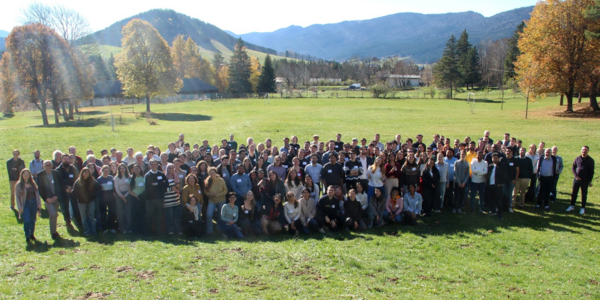
Five intense days in the French Alps brought together cutting-edge research, inspiring people, and unforgettable moments — here’s why you should not miss the next Unite! Research School.