![[Translate to Englisch:]](https://www.tugraz.at/fileadmin/_processed_/5/6/csm_Crashtest-left-view-by-VSI-tugraz_ed2631efe0.jpg)
Cars have become increasingly safe over the past few decades. However, not all groups of people benefit equally from this. Researchers at the Institute of Vehicle Safety at Graz University of Technology (TU Graz) have now analysed Austrian accident data for the years 2012 to 2024 and reconstructed individual accidents in detail. The results of the study show that when two occupants of different sex are in the vehicle, women are significantly more likely to suffer injuries than men. In concrete terms, their risk of injury is greater by a factor of 1.6.
Same speed, more serious consequences
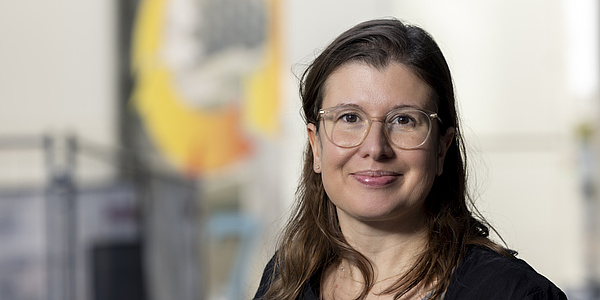
Women suffer noticeably more severe injuries than male occupants even at lower collision speeds. The risk of being seriously injured or killed is more than twice as high for them in these cases. “Our analyses show that women are injured disproportionately more often, especially in the chest, spine, arms and legs,” says the project coordinator, Corina Klug from the Institute of Vehicle Safety at TU Graz. The higher injury risk for women is particularly evident in the 50+ age group.
In the study, real accidents were reconstructed and simulated with virtual human models in different sitting positions. This made it possible to objectively compare the stresses that affect the female and male body. In addition to the significantly higher risk of injury for women, the study shows that the seating position on the passenger side has a massive influence on the risk of injury. This applies to both women and men, but women are more likely to ride in the passenger seat than men. “We’ve all seen a passenger seat positioned far back or even reclined. However, airbags and seat belts are not designed for such non-standard positions,” explains Corina Klug. The good news is that consumer protection (Euro NCAP) has already taken up this issue and has been carrying out tests on both dummies and human models in different seat positions since the beginning of the year.
“Women are not little men”
It is clear that there is a need to catch up with regard to the safety of women in vehicles. For decades, the 50th percentile man – the statistical “average man” – was defined as the global benchmark for safety. This male reference figure is deeply rooted in the historically evolved vehicle approval procedure and still shapes the test methods today. Models that correspond to the average male body are primarily used for the vehicle approval procedure. Even the so-called “female” dummy is merely a scaled-down version of the male model and also corresponds to a very small woman – 95 per cent of women are taller and heavier than this reference point. This also applies to the improved dummies whose use is currently being discussed. Specific anatomical characteristics of average women – such as pelvic width, chest circumference and shoulder geometry – are currently not realistically represented by any dummy for frontal or side crashes. Currently, there are only dummies of the average woman for rear-end collisions; these were developed as part of EU projects. But, they are not yet in use.
The biomechanical differences therefore remain largely unconsidered methodologically, which limits the transferability of the test results to the actual injury risk of women. “Women are not little men. And models of very small, petite women are often unable to represent what we observe in the accidents,” Corina Klug summarises.
Recommendations: intelligent safety systems, more realistic tests
TU Graz derives clear recommendations from the study. Safety systems such as seat belts and airbags must become more intelligent. So-called adaptive belt-force limiters limit how strongly a belt restrains people in the event of a collision and automatically adapt these forces to the severity of the accident, the occupants’ physique and sitting position. In order for such systems to be available in more vehicles, they must also be evaluated in consumer protection and ideally in vehicle approval procedures. More realistic tests are also needed. Future approval procedures should stipulate different body shapes and more realistic seating positions. “Virtual, biomechanically realistic human models are a key component here. We can use computer simulations to significantly expand the historically male-centred and rigid test procedures,” says Corina Klug. The virtual models are able to not only simulate a wide variety of body shapes, but also enable different seating positions in the vehicle to be analysed without additional tests in the crash laboratory.
Positioning belts correctly
An often underestimated factor is the position of the belt on the body and the friction between the person in the car and the seat or belt. Thick winter jackets or blankets impair the transmission of force, which means that the body can slip under the belt in the event of an impact. This so-called ‘submarining’ can lead to serious internal injuries, as the belt does not act on the stable pelvic bone but in the region of the vulnerable soft tissue. “In addition to design measures to ensure that safe seating positions are also comfortable seating positions, more information is needed on the correct seat adjustment and belt position,” emphasises Corina Klug. “It is important not to sit too far back, to straighten the backrest and to position the belt so that the lap belt lies on the pelvic bone and the shoulder belt runs over the collarbone. This is the best way for the restraint systems to fulfil their function and, in the case of an accident, to slow the person down as gently as possible.”
The study “DIVERSE: Differences between men and women in vehicle occupant protection” was financed by the Austrian Road Safety Fund (VSF) and carried out under the leadership of the Institute of Vehicle Safety at TU Graz. Download the barrier-free final report of the entire study at the Website of the Federal Ministry for Innovation, Mobility and Infrastructure
![[Translate to Englisch:]](https://www.tugraz.at/fileadmin/_processed_/5/6/csm_Crashtest-left-view-by-VSI-tugraz_b471c4e72d.jpg "[Translate to Englisch:]")
![[Translate to Englisch:]](https://www.tugraz.at/fileadmin/_processed_/6/3/csm_Crashtest-onboard-by-VSI-tugraz_c2bdce7548.jpg "[Translate to Englisch:]")
![[Translate to Englisch:]](https://www.tugraz.at/fileadmin/_processed_/0/a/csm_Fahrzeugsicherheit-Corina-Klug-by-Lunghammer-tugraz__21__c6ec93926a.jpg "[Translate to Englisch:]")