Coherent Sensing
Welcome to our group website!
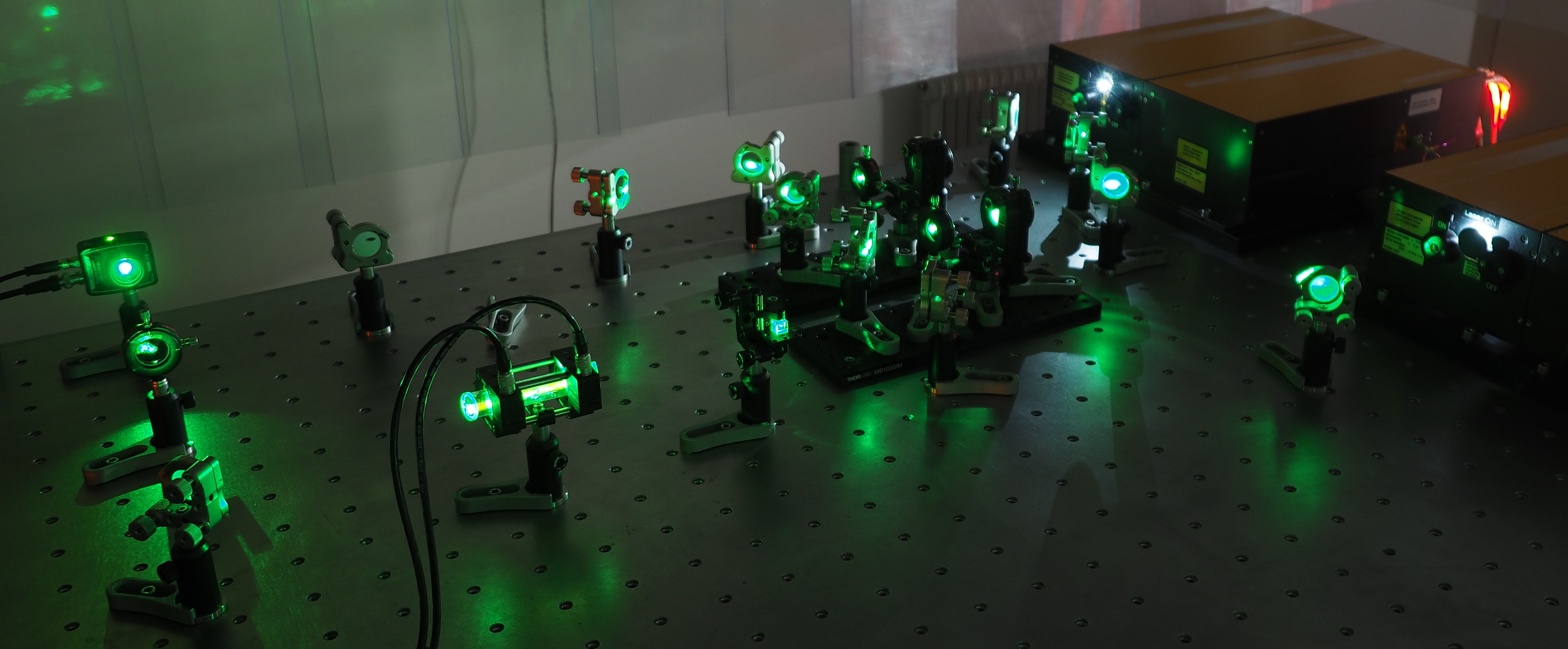
Our work is dedicated to laser spectroscopy and coherent sensing. We use ultrashort laser pulses on the femtosecond time scale to learn more about the optical properties of atoms and molecules, so far mostly in the gas phase. Recently, we have extended our research focus to applications of photochemical and biophysical relevance.
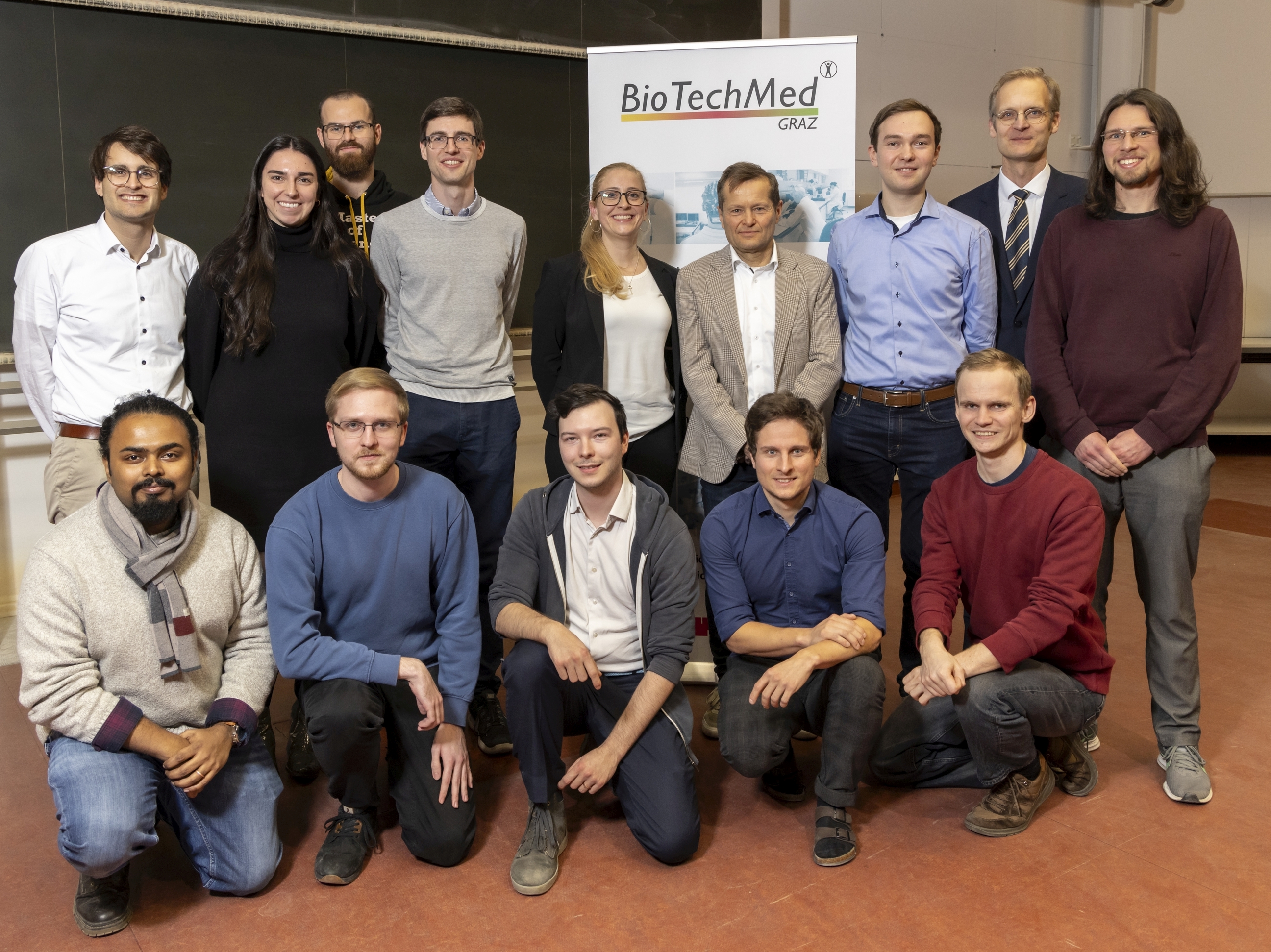
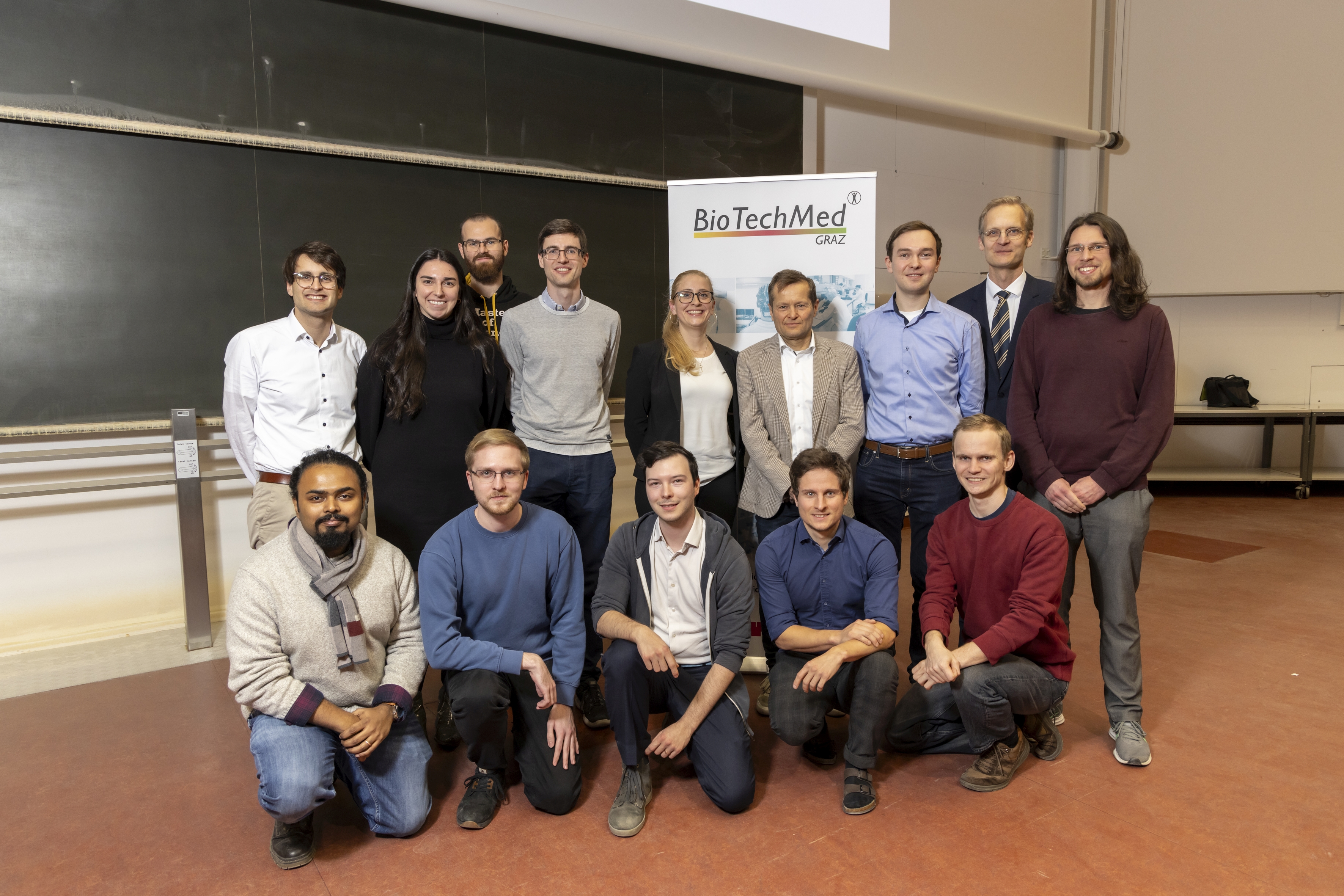
Additionally on the photo: Marcus Ossiander, Raphael Dorner, Martin Schultze and one Nobel laureate.
From left to right: Mithun Pal, Elias Ehl, Robert Di Vora, Armin Speletz, Christoph Gruber, Marcus Ossiander, Emily Hruska, Raphael Dorner, Alexander Eber, Birgitta Schultze-Bernhardt, Ferenc Krausz, Lukas Fürst, Martin Schultze, Adrian Kirchner
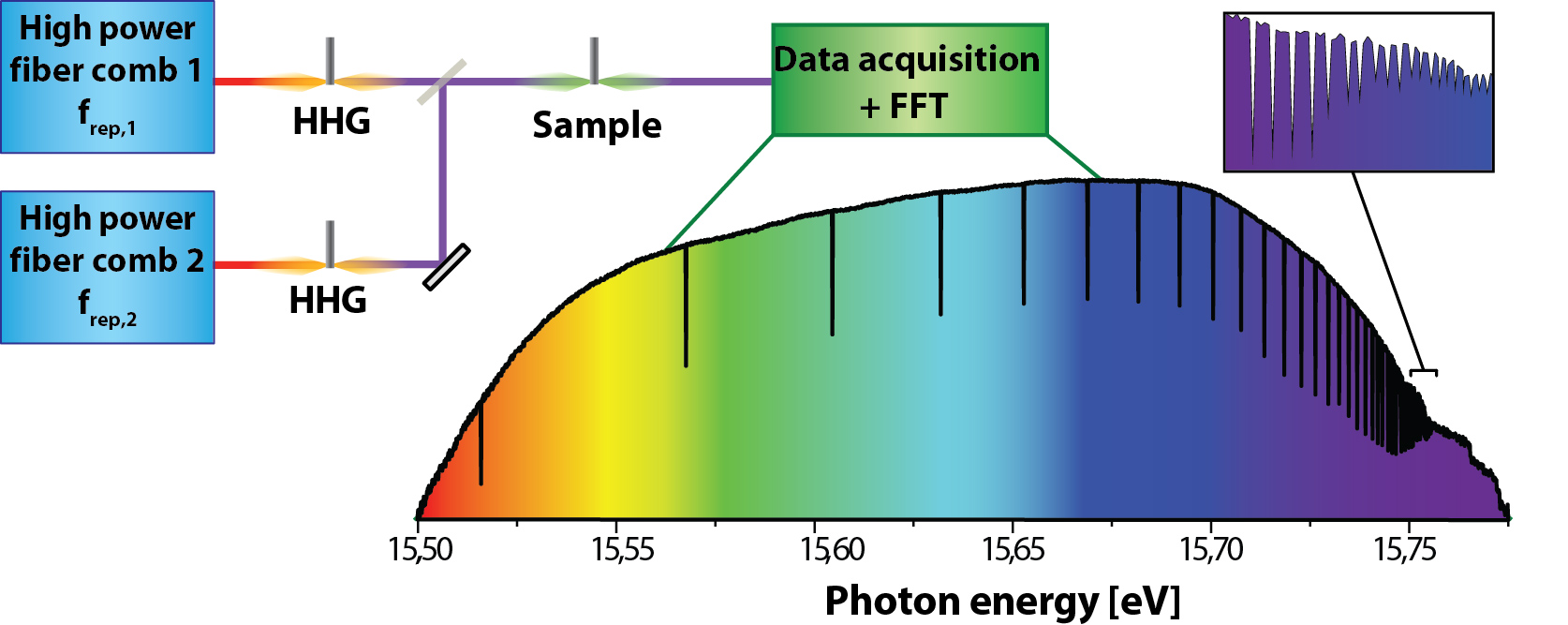
Figure 1: Extreme Ultraviolet (XUV) Dual Comb Spectroscopy yielding ultra-broadband (>150 THz) absorption spectra of atoms and molecules with an unparalleled spectral resolution on the order of µeV. This resolution is hitherto unprecedented for XUV table top sources but mandatory for example for the resolution of high principal quantum numbers in Rydberg series (the example shows the Rydberg series in argon converging against the ionization limit at 15.76 eV).
Bachelor, Master and PhD theses
For potential projects in the field of laser spectroscopy, please contact
bernhardt@tugraz.at
June 3rd 2026
TU Graz Physicist Presents Mobile Device for High-Precision Measurement of Air Pollutants
The UV dual-comb spectrometer detects harmful gases with unrivalled accuracy and sensitivity. The compact design allows mobile use for monitoring air quality with a range of several kilometres.

March 20th 2026
New Paper Out!
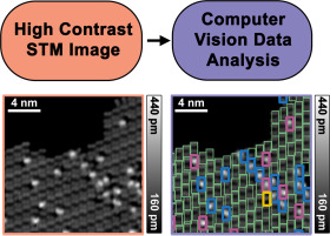
Our frequency combs have entered the fascinating world of Surface Science!
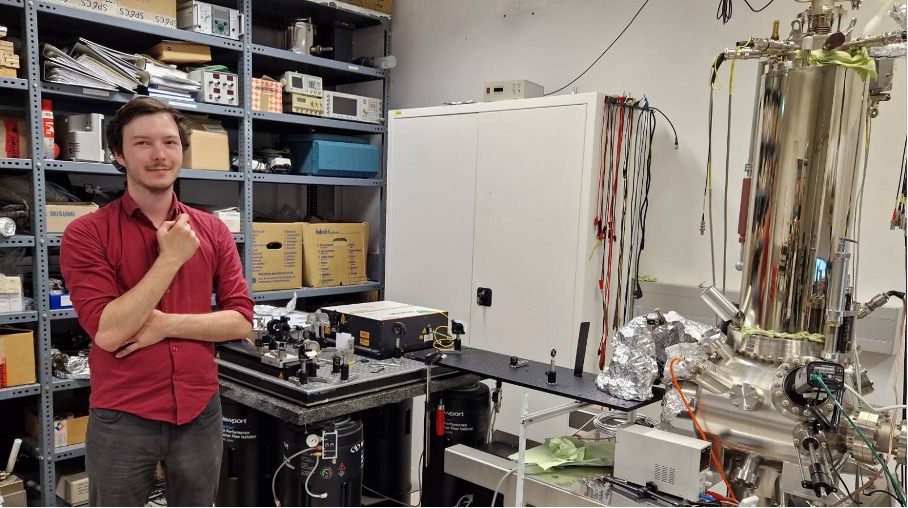
So far, our combs enabled "just" superior spectral resolution. In our most recent work, one of our combs helped to shed light onto the complex switching behavior of azobenzene molecules - with single molecule resolution. Special thanks go to our Coherent Sensing team mate Robert di Vora for his powerful computer vision algorithm and to Matthew Timm and Leonhard Grill for introducing us to their STM realm!
Check out our joint publication in Surface Science: https://doi.org/10.1016/j.susc.2026.122971
#FrequencyCombs #ERCStartingGrant #CoherentSensing
January 15th 2026
New Paper Out!
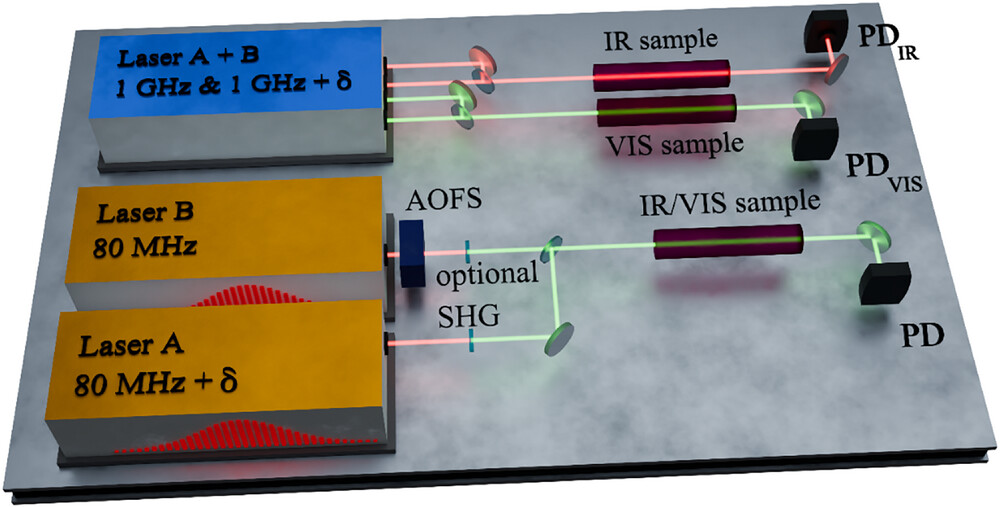
Our work on NIR/VIS dual comb spectroscopy with low and high repetition rate regimes is published in Lasers & Photonics Reviews!
In this paper, we have compared two dual comb systems operating at 80 MHz and 1 GHz repetition rates. Both have their advantages - depending on the envisioned applications
check out the details here:
12th October 2025
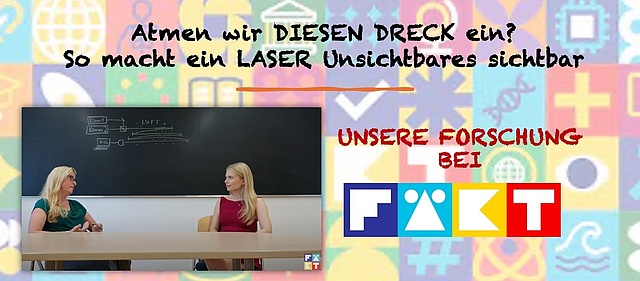
Our research at FÄKT!
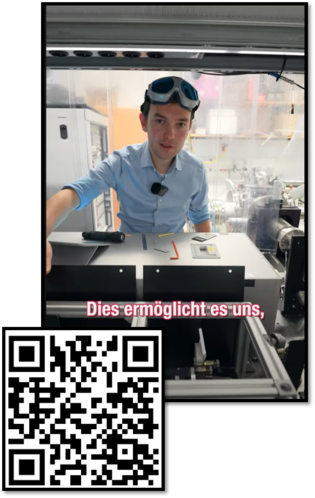
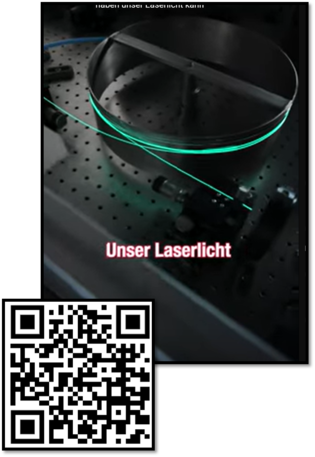
This time, we were visited by Julia and the FÄKT team and had a great time showcasing our lasers in action!
How do our measurements actually work, and what are we discovering about the air quality in Graz?
FÄKT is a science communication project by the Austrian Academy of Sciences (ÖAW), aimed especially at a young audience. Curious? Then check out the result from Graz here:
14th July 2025
Measuring Air Pollutants in Real Time: ERC Proof of Concept Grant for TU Graz Physicist
Birgitta Schultze-Bernhardt receives funding from the European Research Council for the development of a portable device that measures several pollutants simultaneously in a fraction of a second.
TUG Pressemitteilung
June 18th 2025
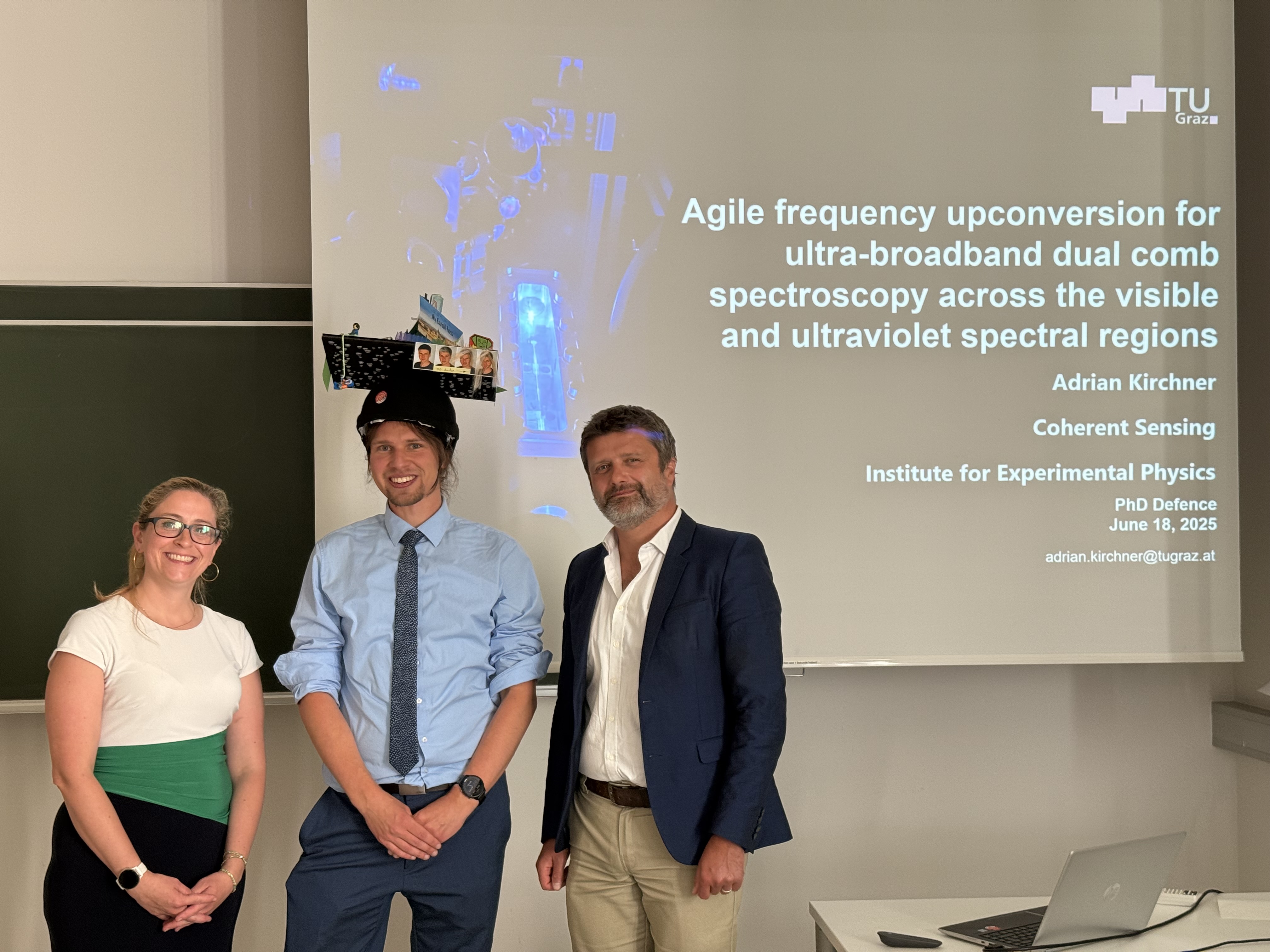
RIGOROSUM
Adrian KIRCHNER
Agile frequency upconversion for ultra-broadband dual comb spectroscopy across the visible and ultraviolet spectral regions
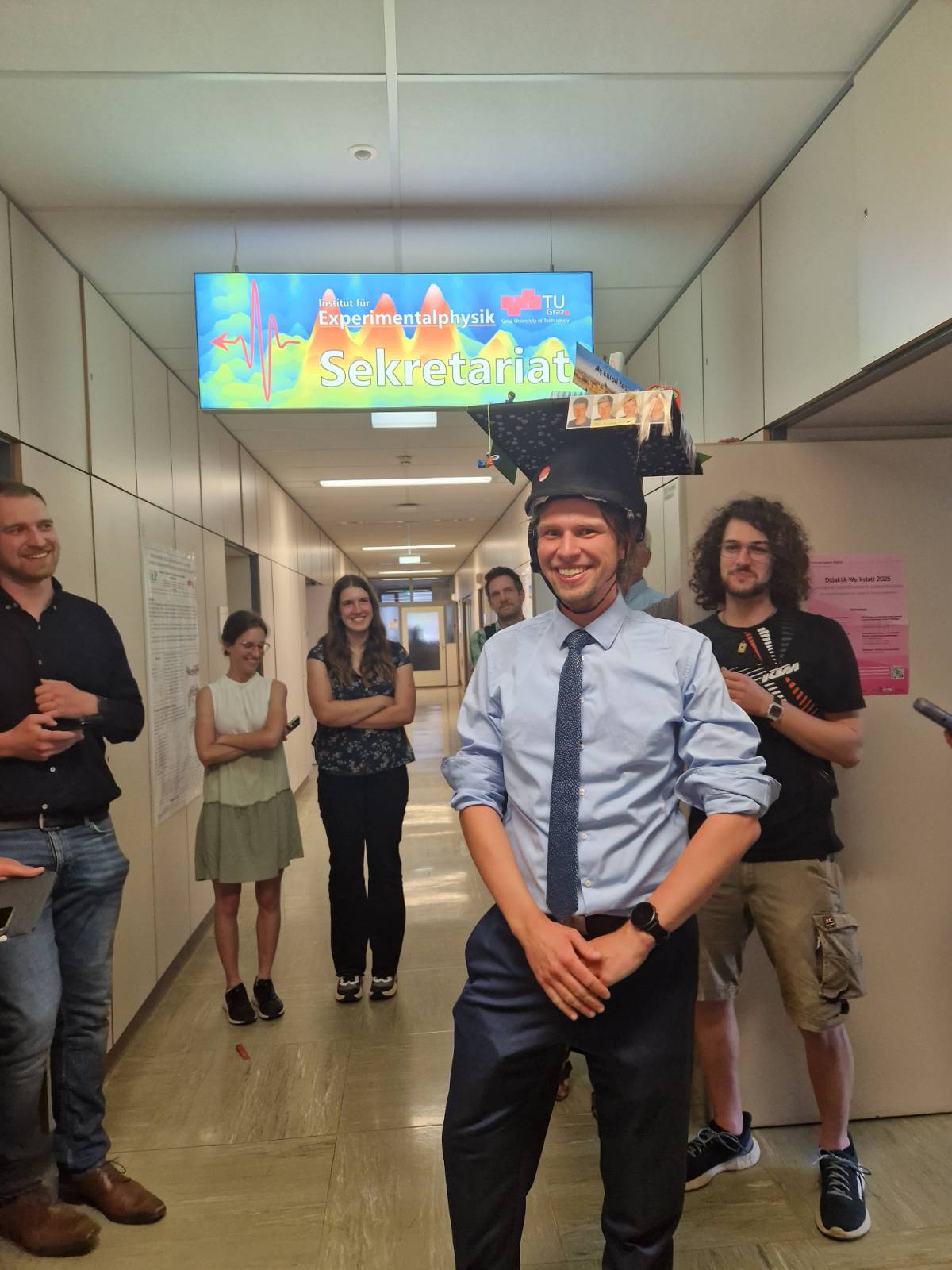
Adrian Kirchner successfully defended his doctoral thesis „ Agile frequency upconversion for ultra-broadband dual comb spectroscopy across the visible and ultraviolet spectral regions“ on June 18th 2025. We could invite our collaboration partner Prof. Arnaud Mussot, University of Lille, to Graz as second reviewer who is an expert on EOM frequency combs including all-fiber frequency agile triple-frequency comb light sources.
Congratulations, Adrian!
May 5th 2025
New Paper Out!
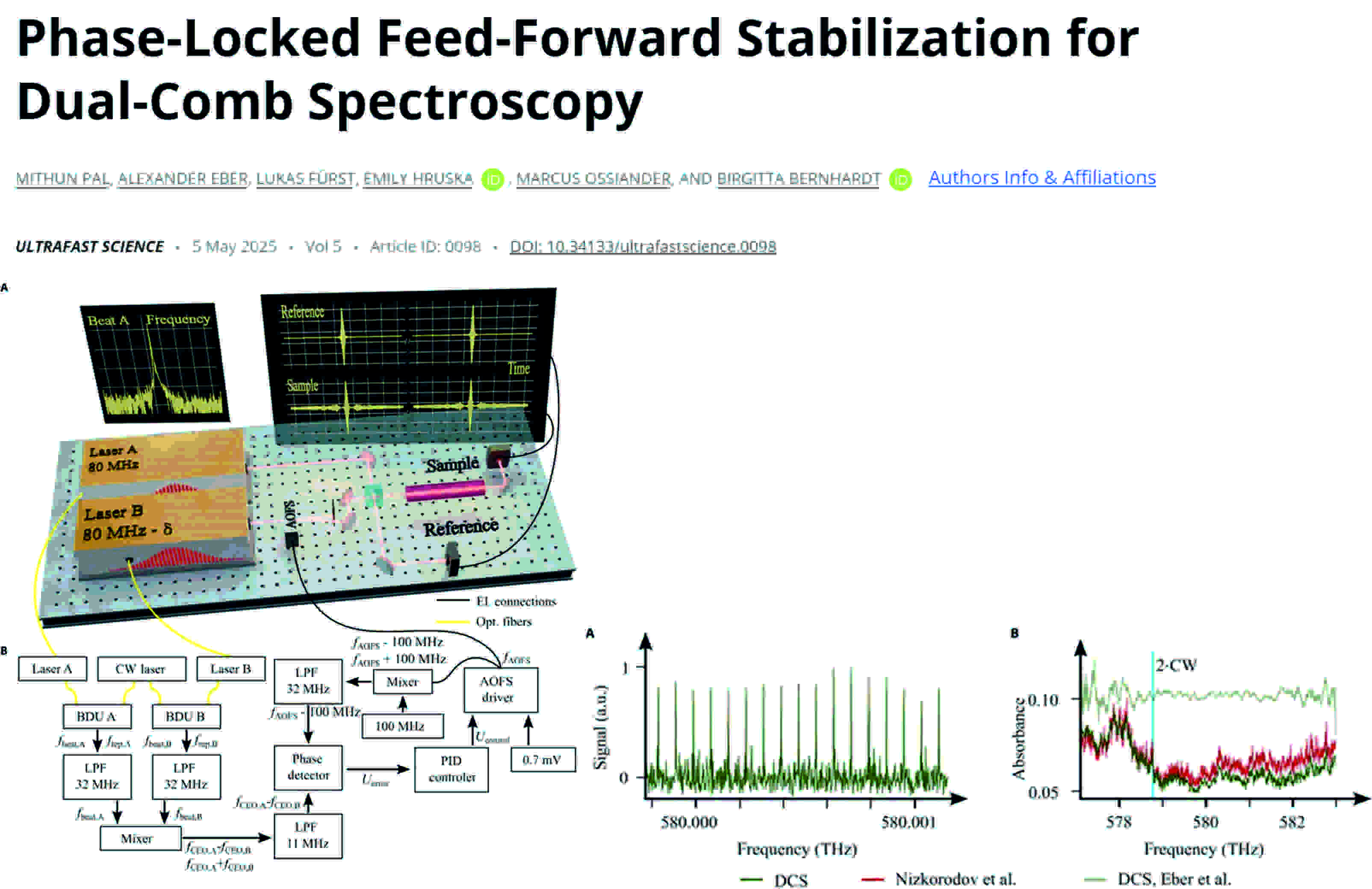
Our work on a phase locked feed forward stabilization scheme for dual comb spectroscopy is published in Ultrafast Science Journal.
It improves our existing IR/VIS dual comb spectrometer operated at 80 MHz in terms of spectral resolution (three orders of magnitude) and sensitivity (one order of magnitude). For our NO2 field measurements, this means an improved detection limit down to 1 ppb!
Check it out:
Phase-Locked Feed-Forward Stabilization for Dual-Comb Spectroscopy | Ultrafast Science
Special thanks go to Marcus Ossiander for the inspiring team work!
March 26th 2025
RIGOROSUM
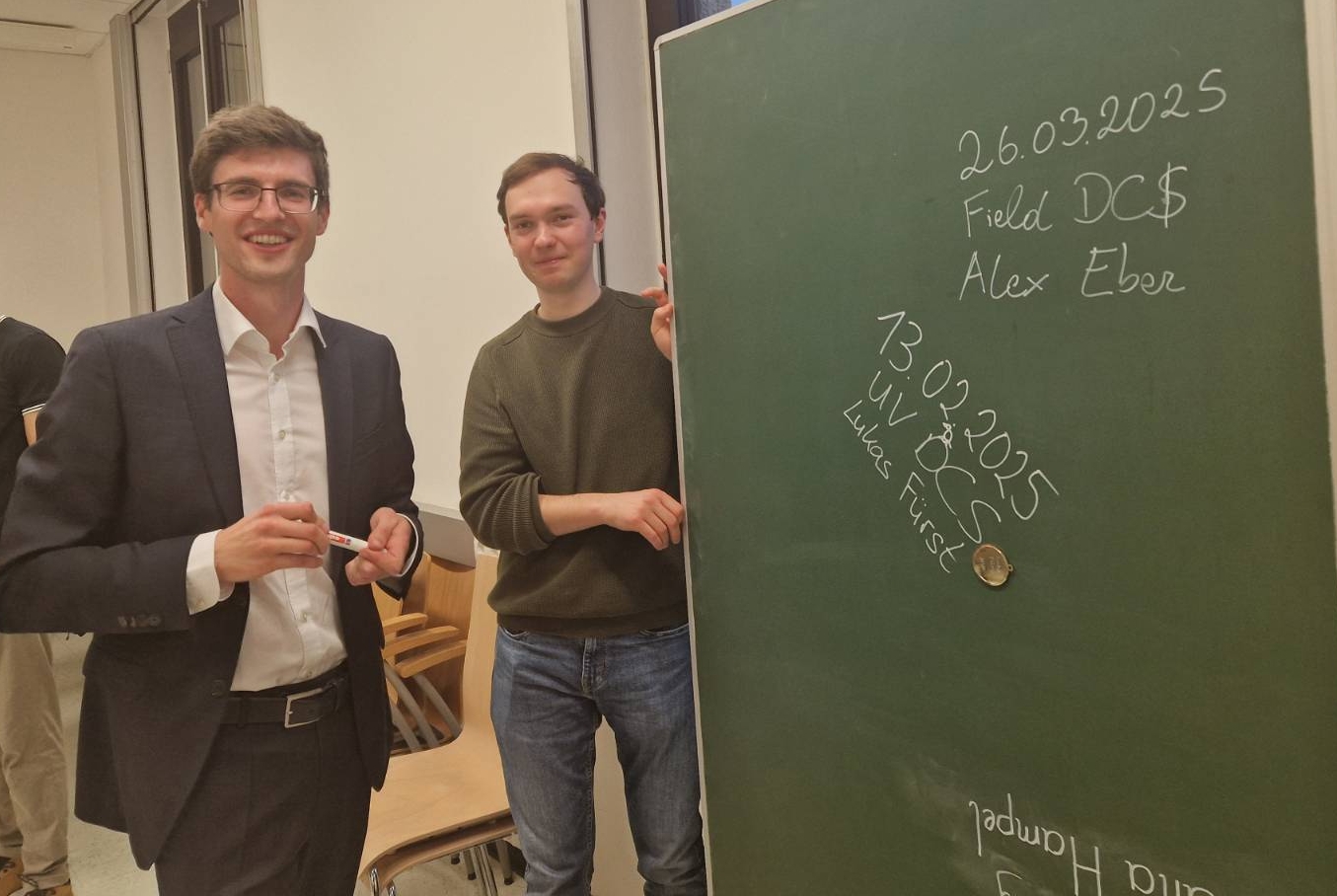
Alexander EBER
Coherent sensing of atmospheric trace gases for environmental monitoring
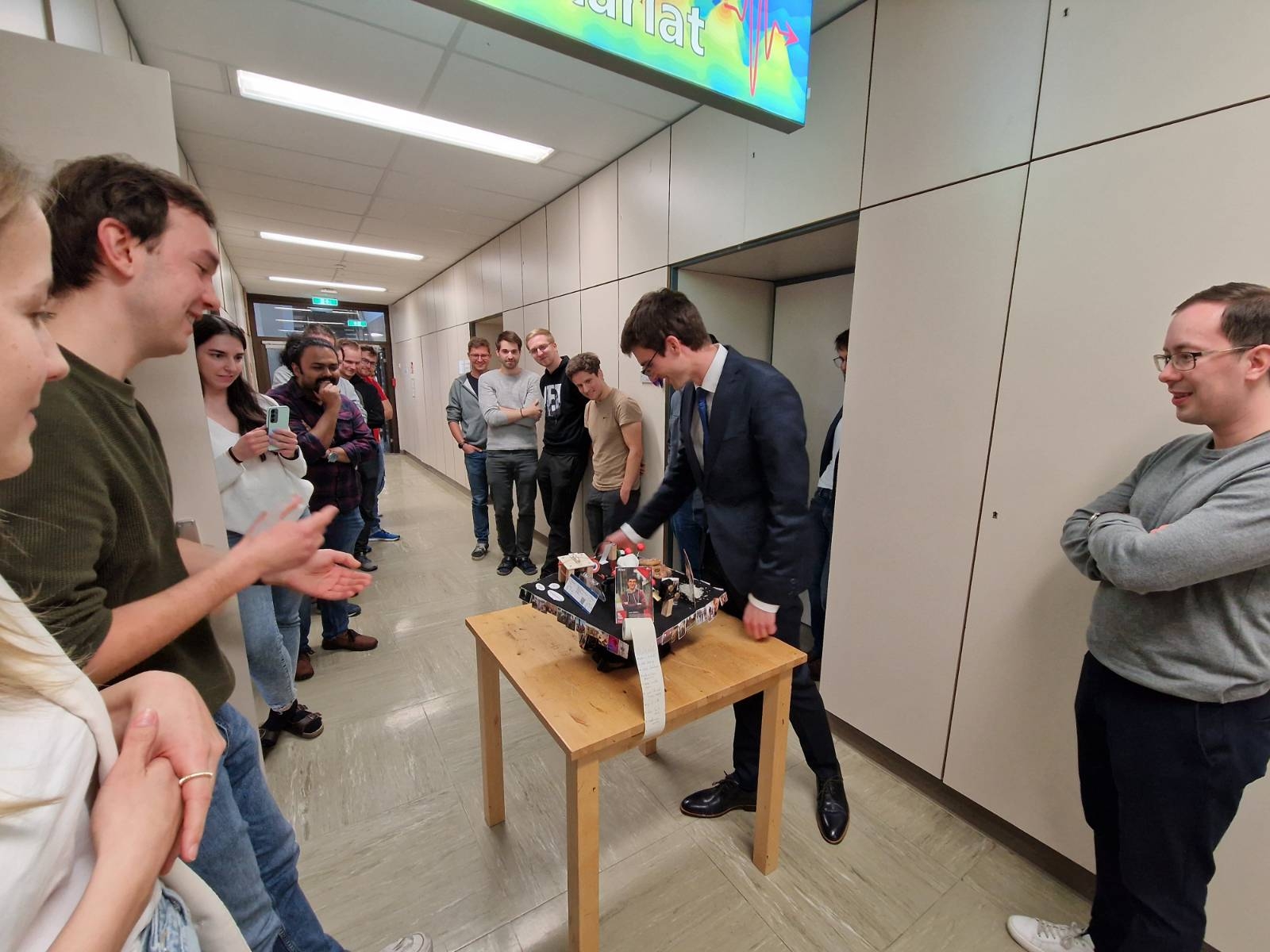
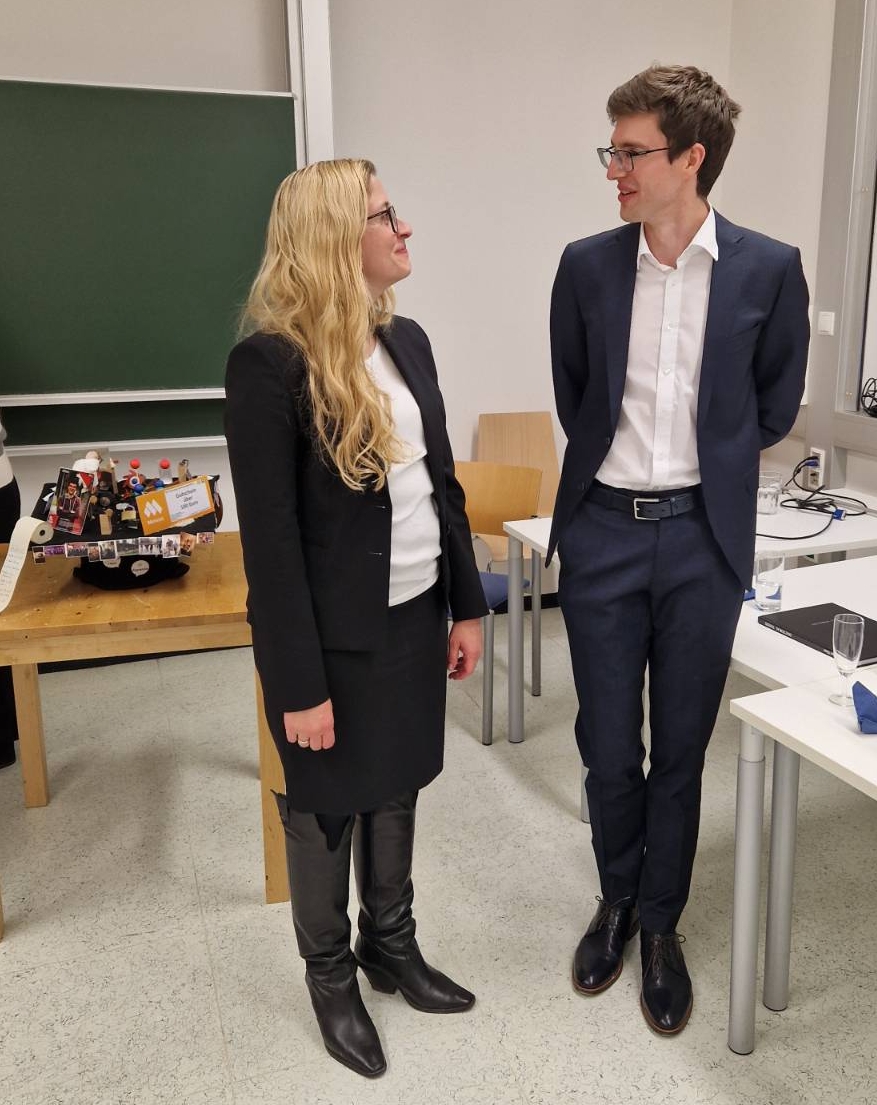
Alexander Eber successfully defended his doctoral thesis „Coherent sensing of atmospheric trace gases for environmental monitoring“ on March 26th 2025. We could invite Prof. Mark Wenig, LMU Munich, to Graz as second reviewer who is an expert on remote sensing of air pollutants and other atmospheric parameters
Congratulations, Alexander!
March 3rd 2025
International Women´s Day
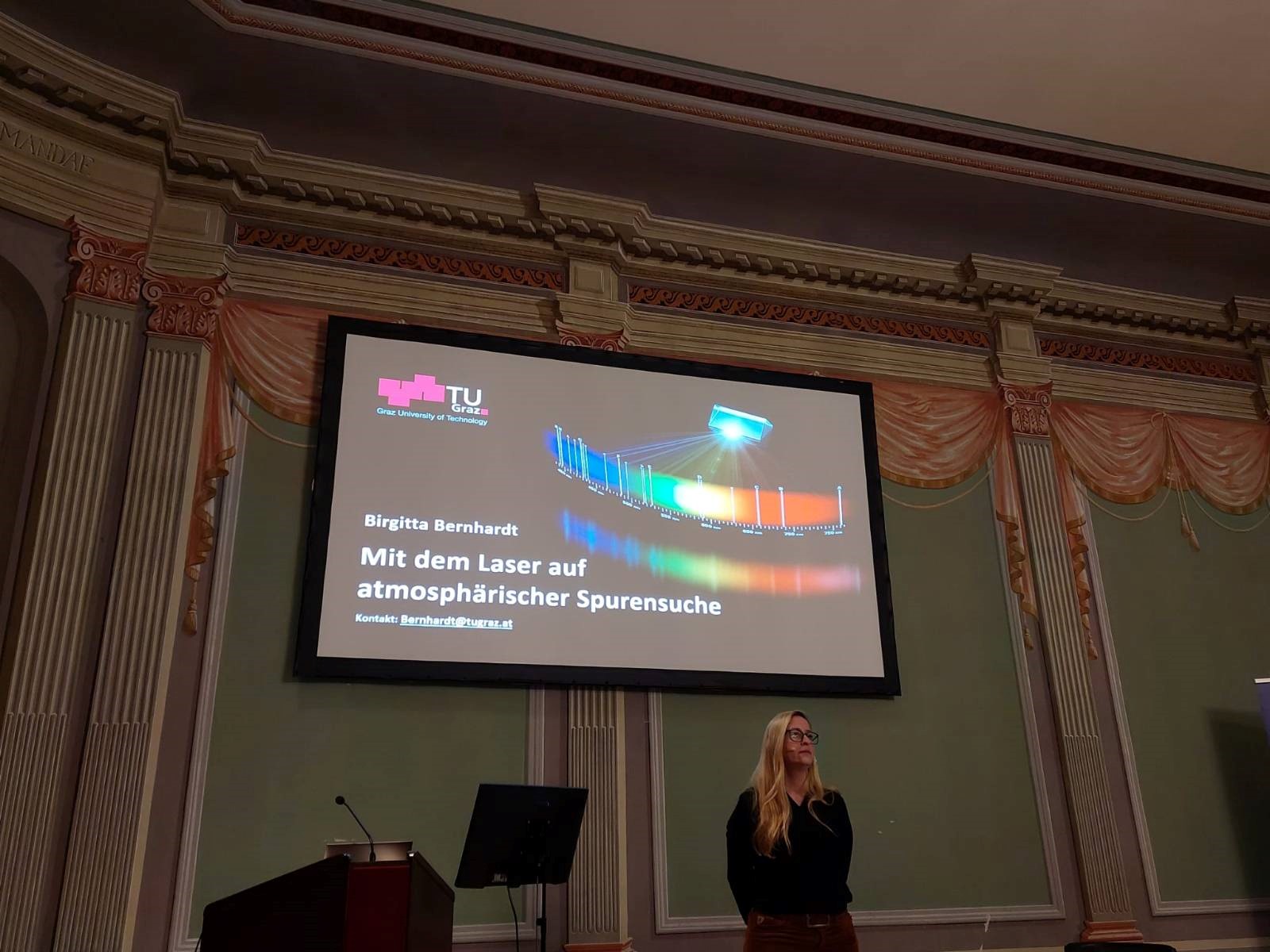
Together with Young Academy Co-Member Jillian Petersen, I got the opportunity to present my research at the Austrian Academy of Sciences in Vienna. "Searching for Trace Gases and Species in the Sea and Atmosphere" was the title of the event on the eve of International Women's Day at the OeAW. It was great to discuss how our complex environment is connected and how we try to learn about it across different scientific disciplines.
An interview (in German) related to this occasion can be found here: Ohne Vorbilder in die Forschung
February 24th 2025
Publication Alert
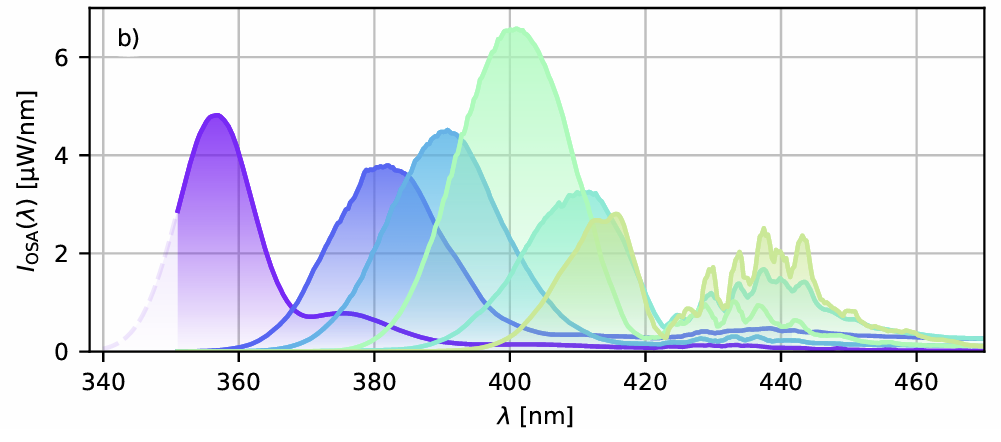
Adrian’s work on “Ultra-broadband UV/VIS spectroscopy enabled by resonant dispersive wave emission of a frequency comb” got published in Optics Express!
Congratulations, Adrian!
Ultra-broadband UV/VIS spectroscopy enabled by resonant dispersive wave emission of a frequency comb
February 13th 2025
RIGOROSUM
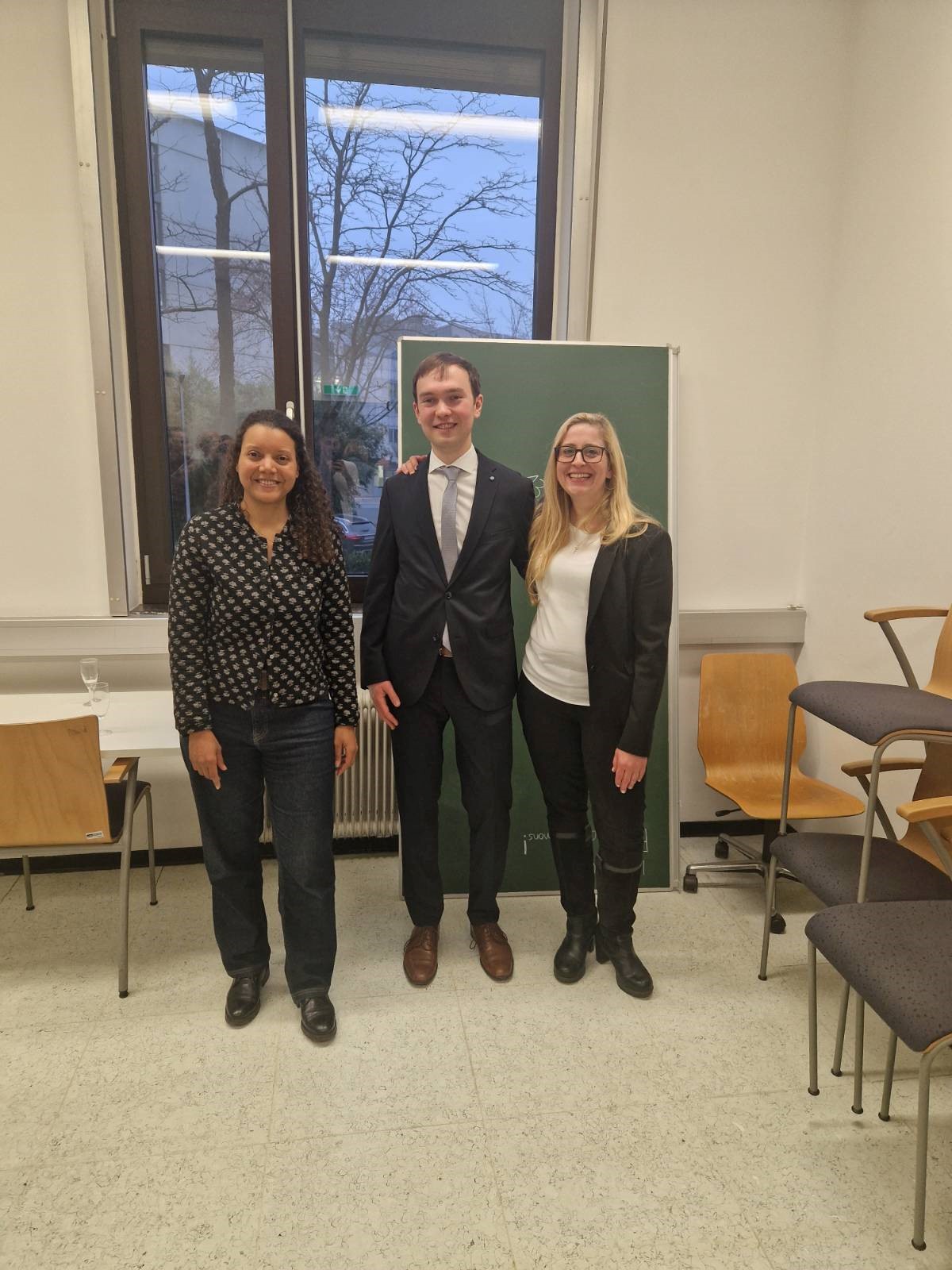
Lukas Fürst
Ultraviolet Dual Comb Spectroscopy
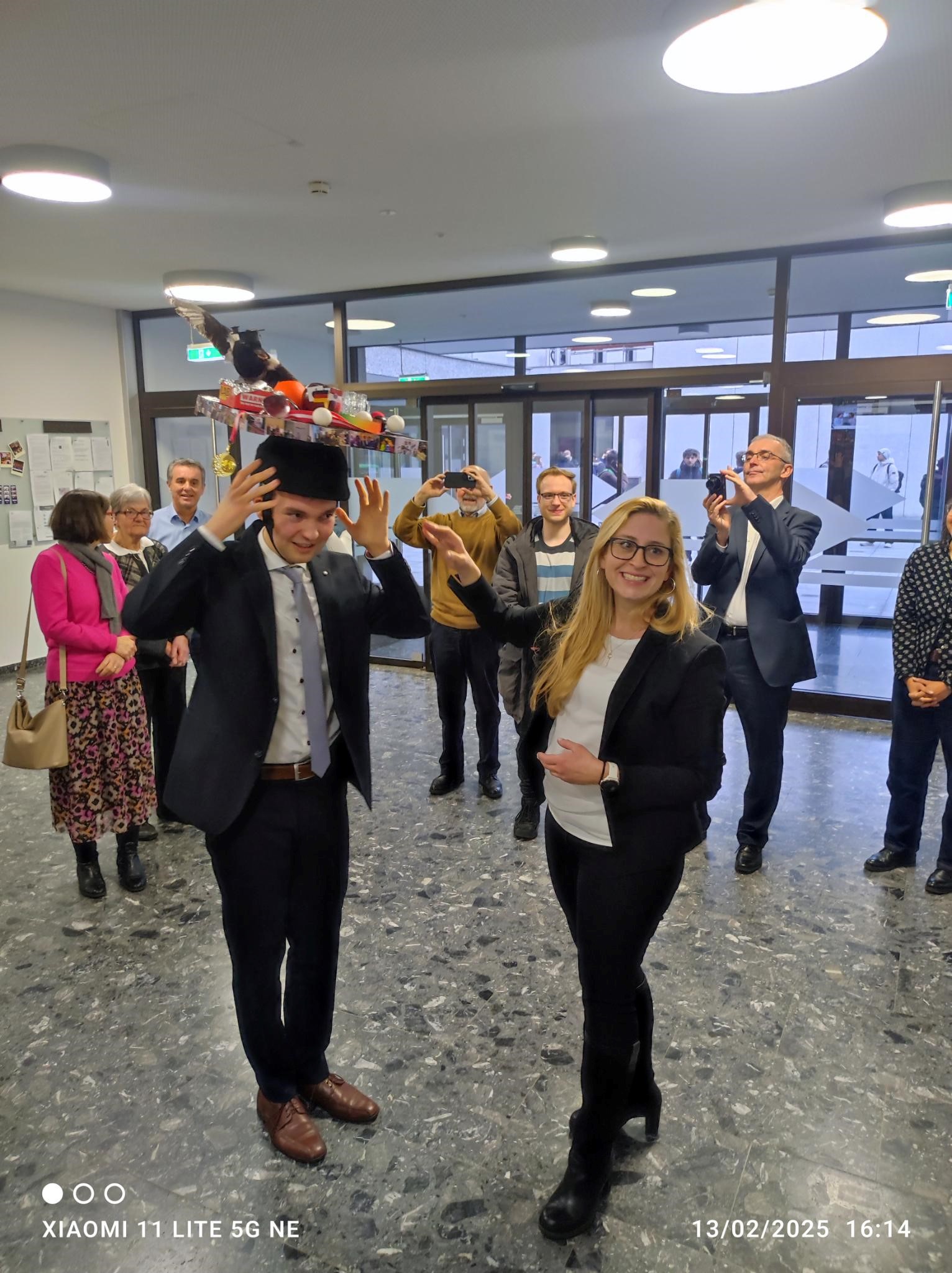
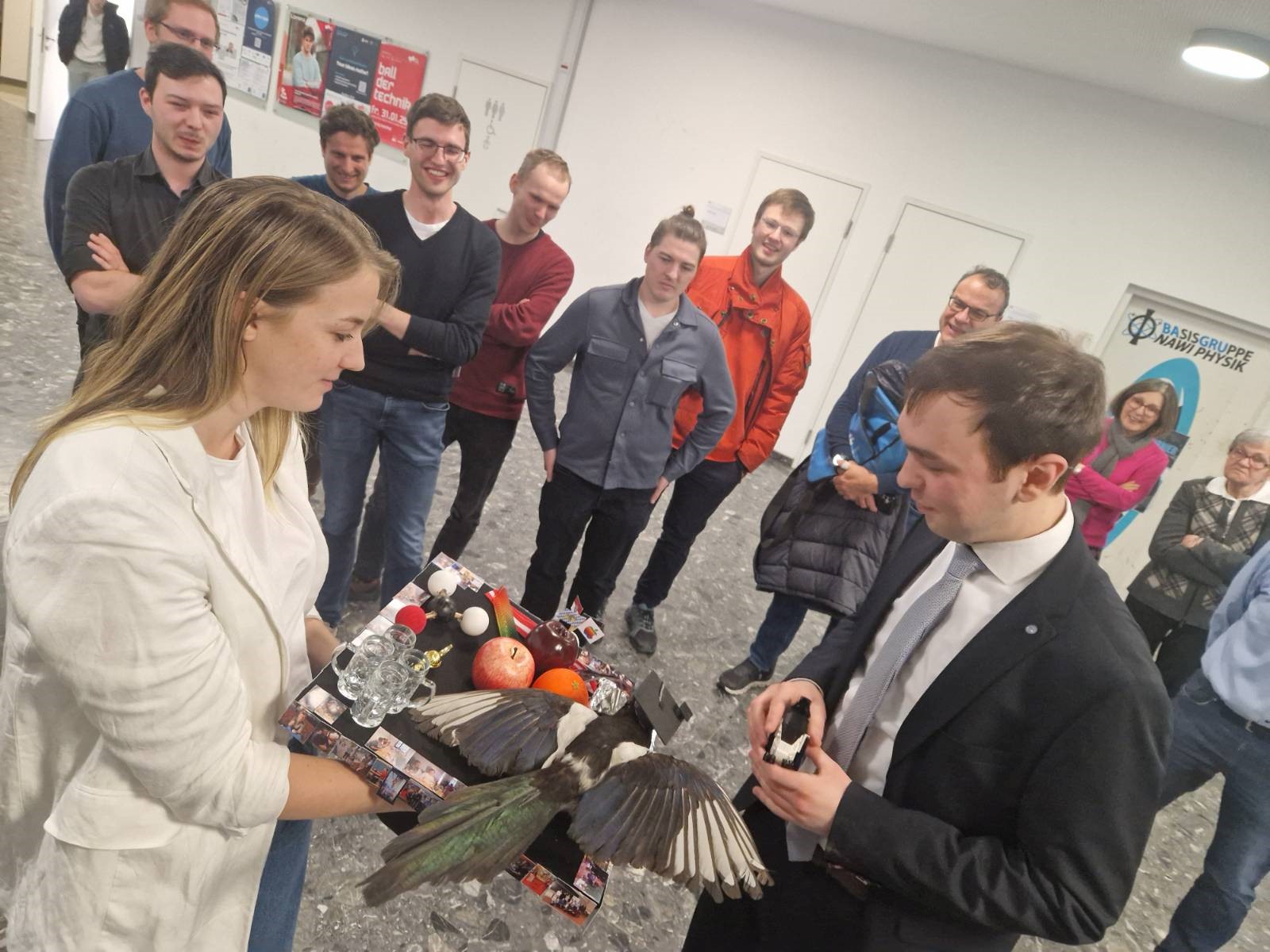
Lukas Fürst successfully defended his doctoral thesis „Ultraviolet Dual Comb Spectroscopy“ on February 13th 2025. We could invite Prof. Sandrine Galtier, Université Claude Bernard Lyon, to Graz as second reviewer.
Congratulations, Lukas!
February 11th 2025
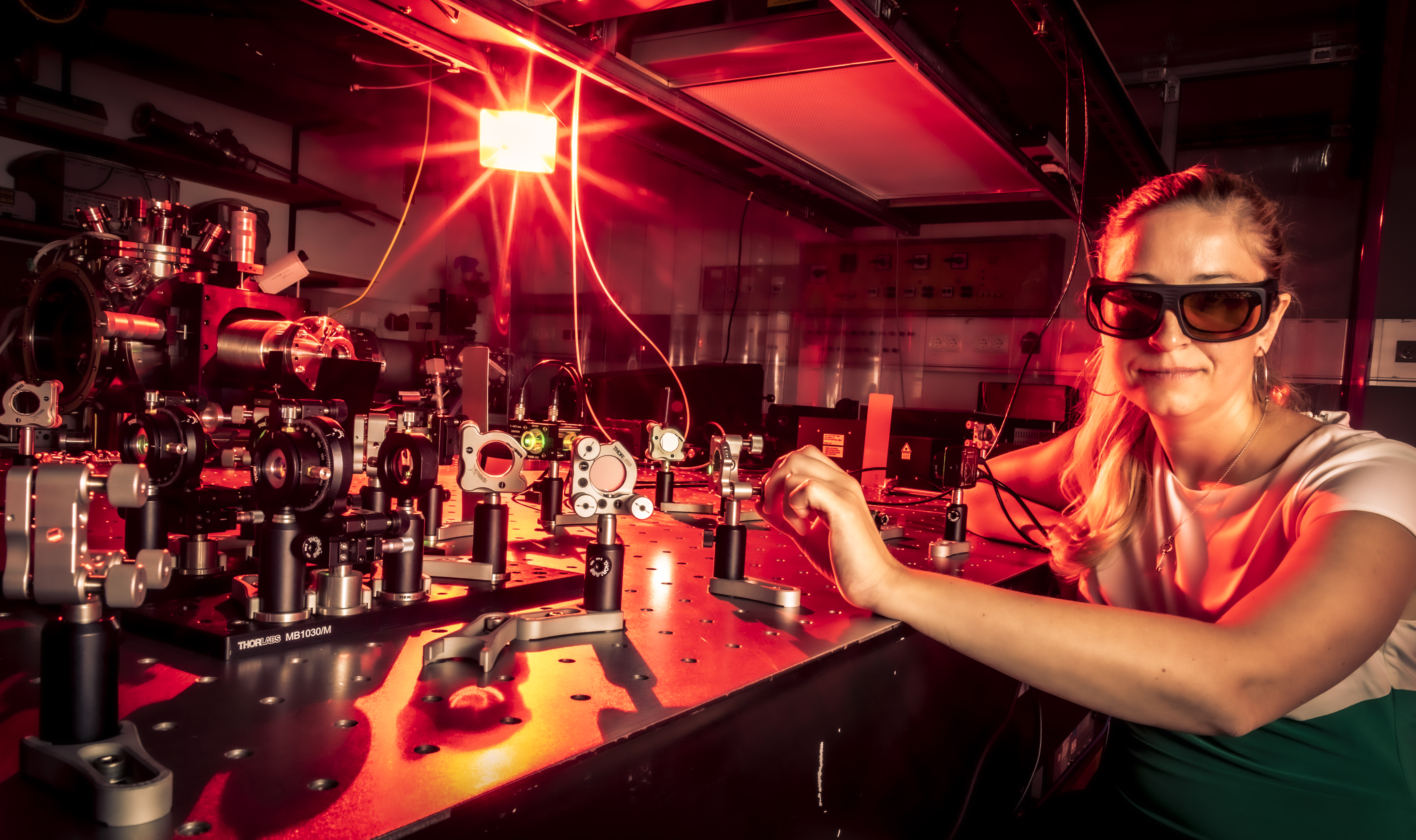
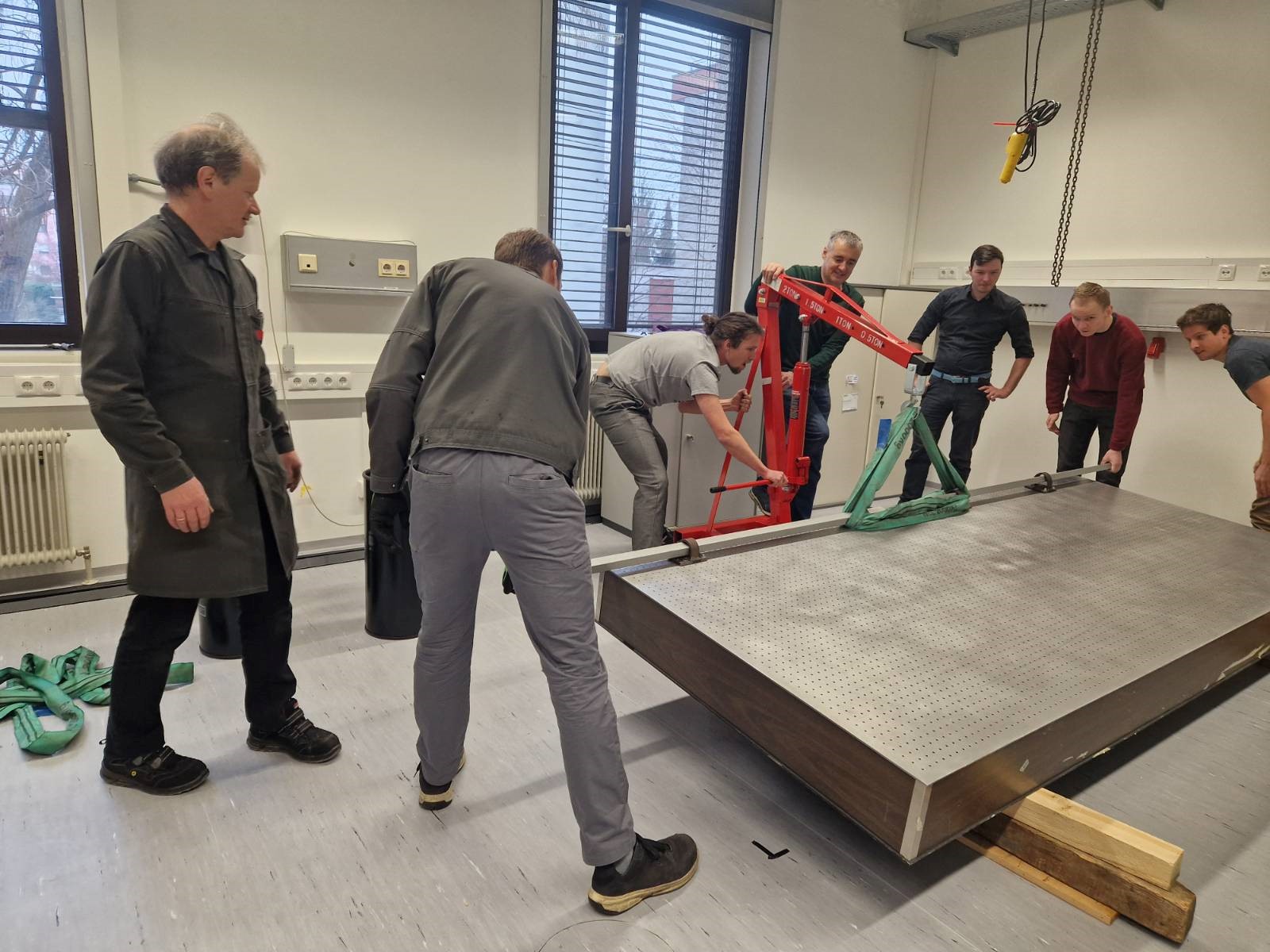
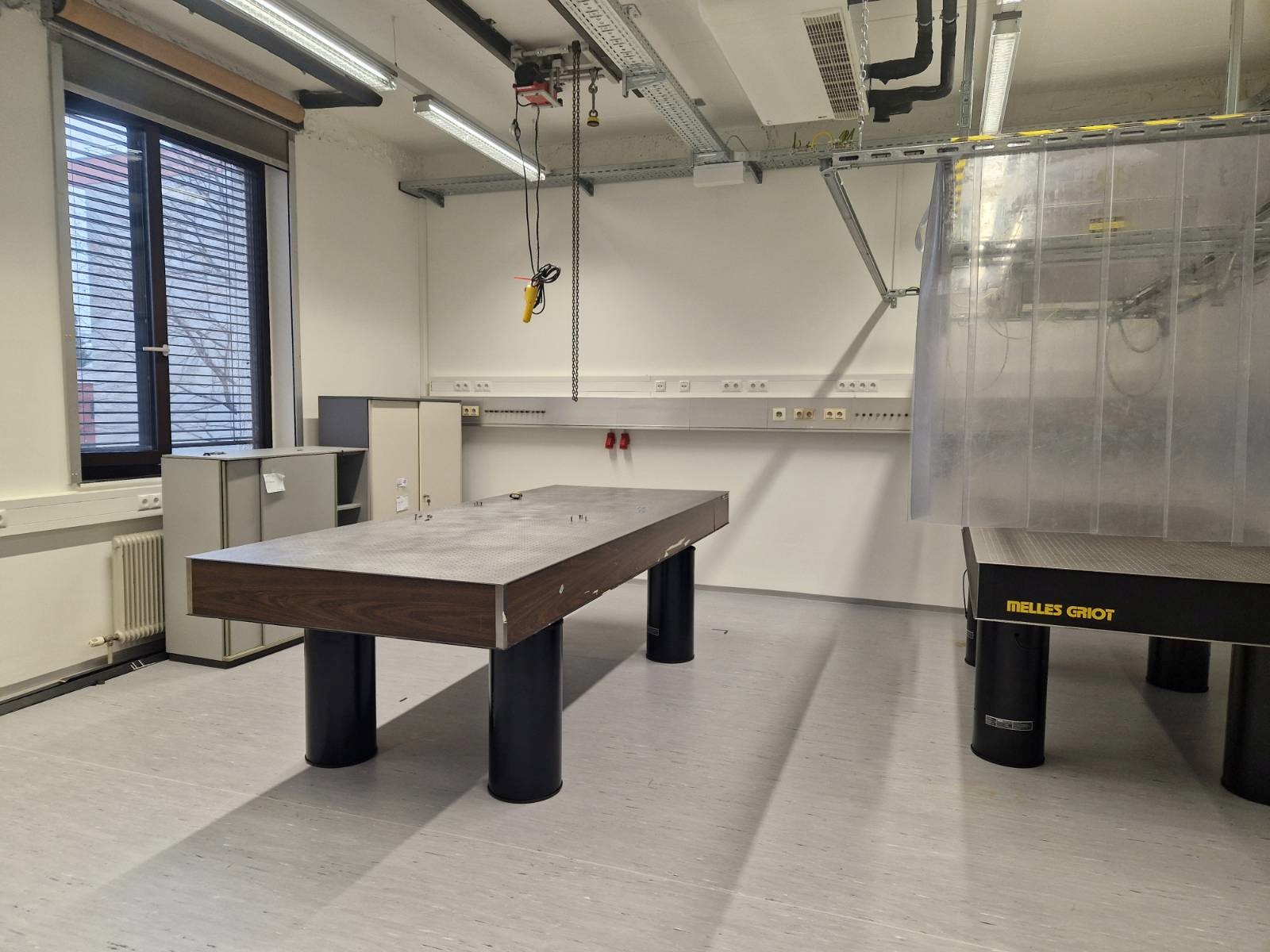
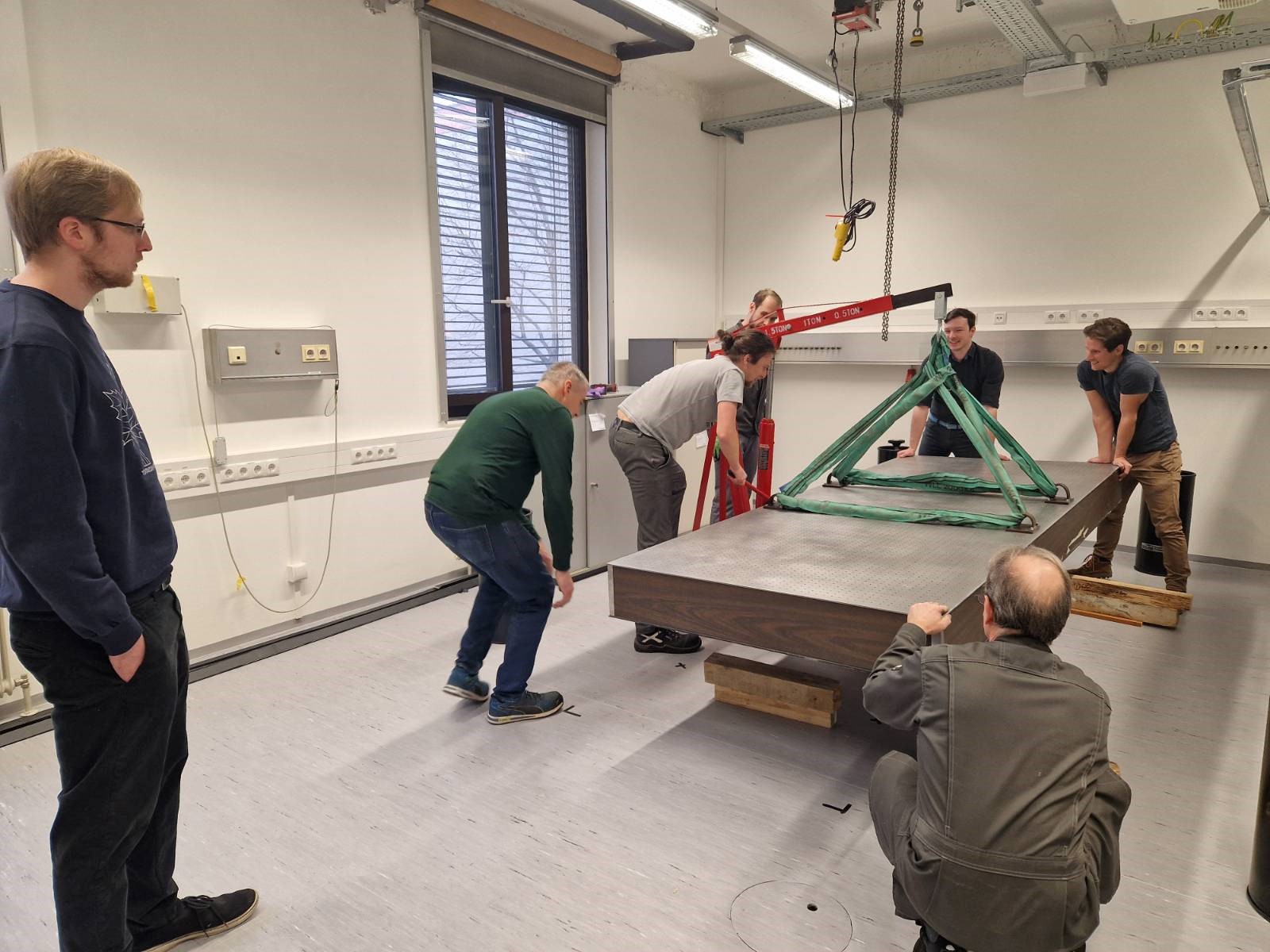
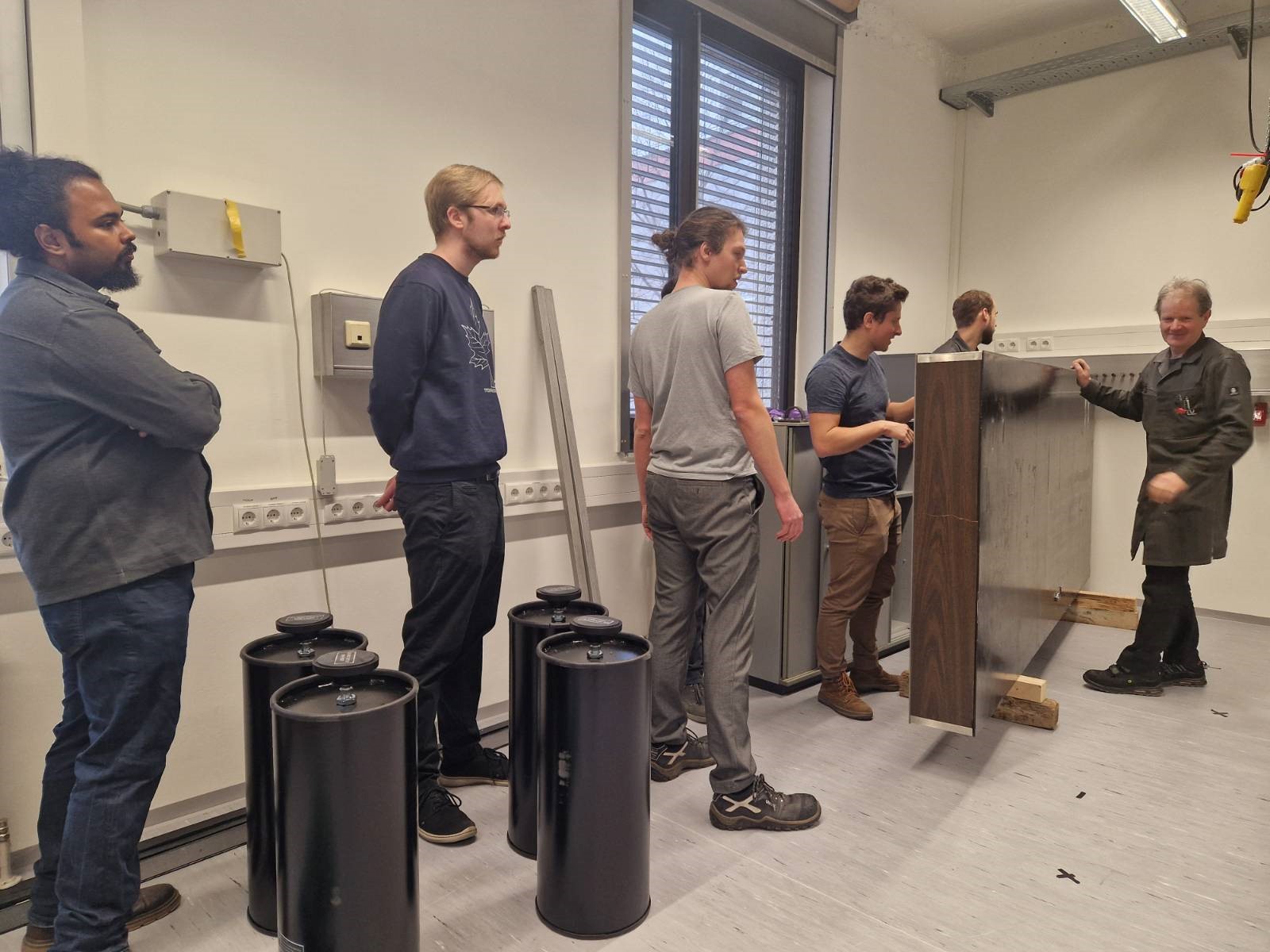
Our Coherent Sensing Lab 4 is now equipped with two optical tables!
Big thanks to Rupert, Christoph, Werner, Adrian, Armin, Elias, Robert and Mithun for implementing the ~ 1 ton optical tables! The Coherent Sensing Lab 4 is ready for spectroscopic equipment.😊
January 2025
Visit from Lille
Arno Mussot from the University of Lille, France, visited us with his postdoctoral fellow Debanuj Chatterjee and some fibers for spectral broadening and pulse compression for the next level of ultra broadband dual comb spectroscopy.
Thanks, Arno and Deb, for your visit! We had lots of fun with you in the lab and in the Wirtshaus!😊
December 2024
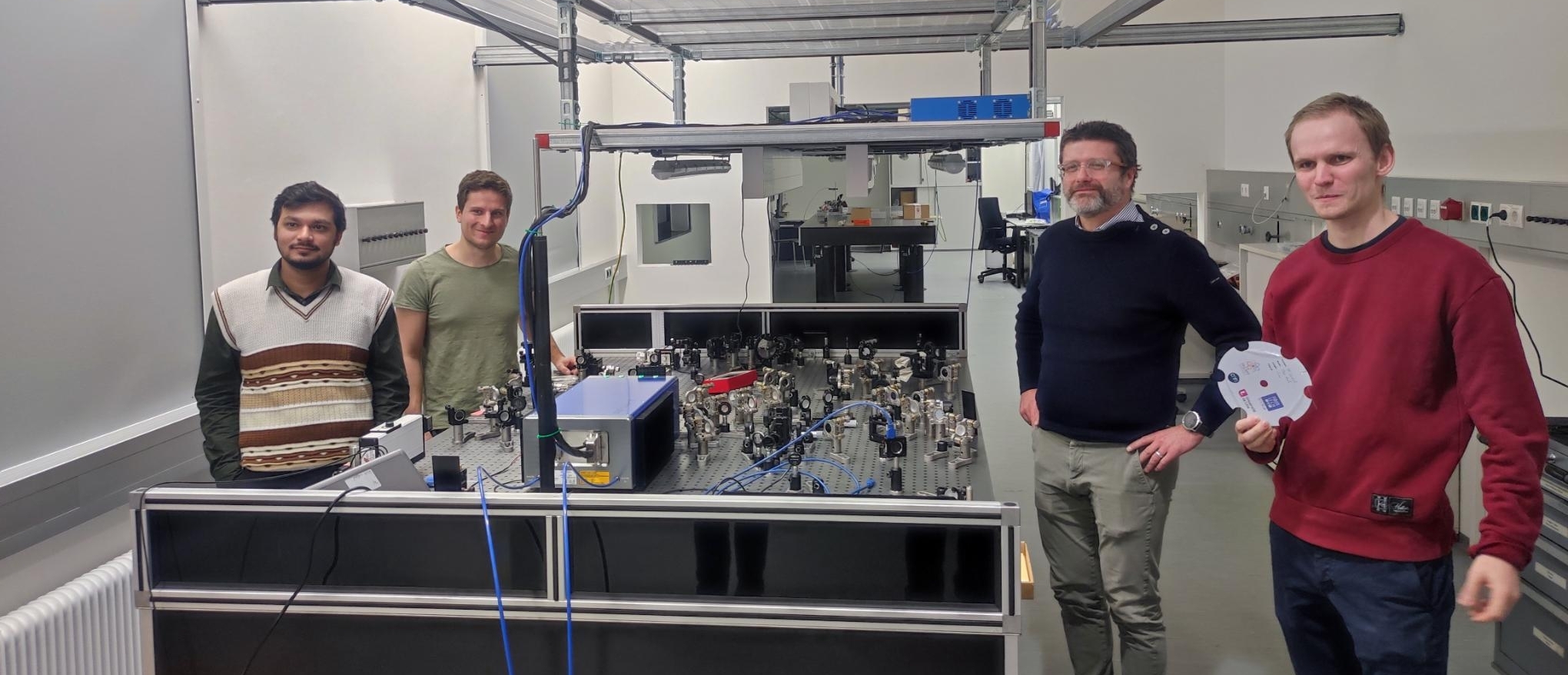
Full house with Ferenc Krausz
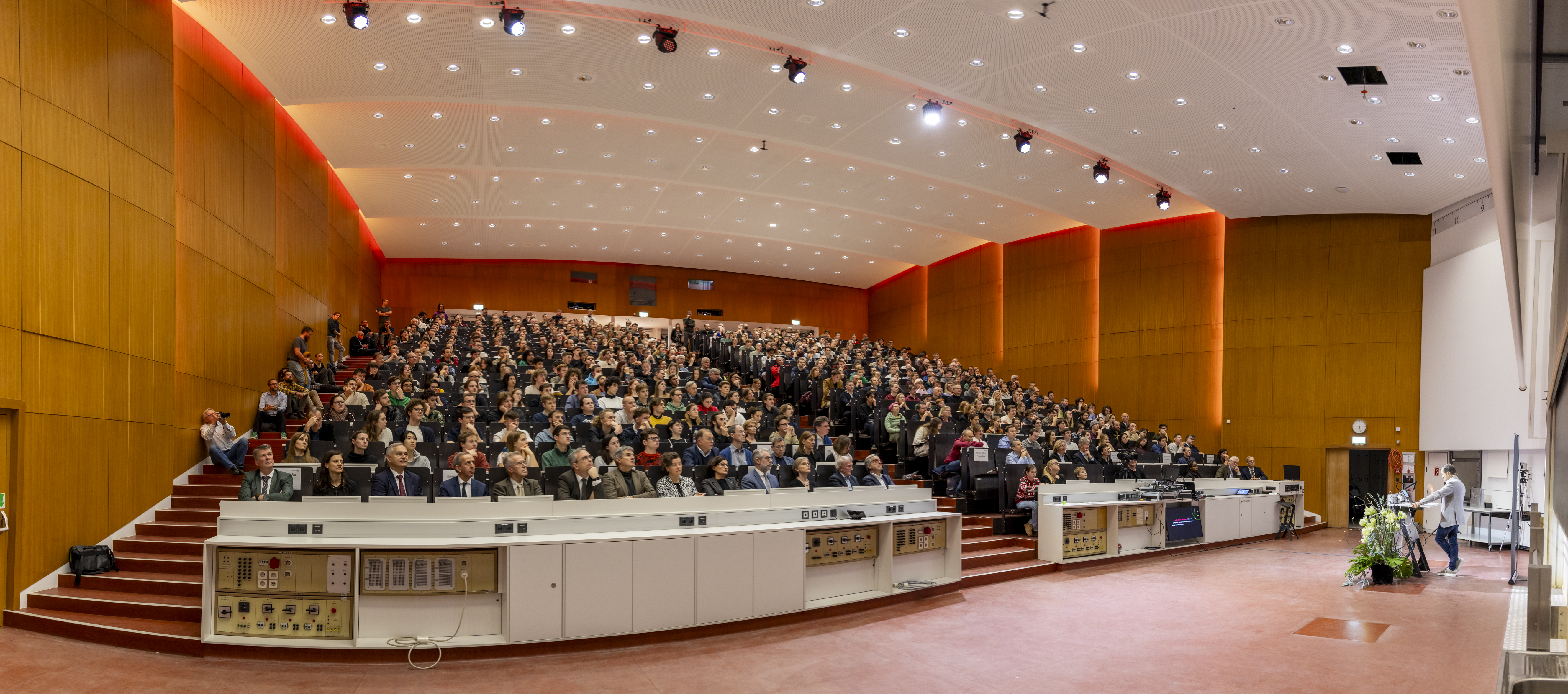
Nobel laureate Ferenc Krausz visited Graz and the IEP in December 2024. We were so proud while giving him a lab tour! This exceptional day peaked in Ferenc’s inspiring evening talk “Sub-atomic motions probe human health”, this year’s BioTechMed Nobel lecture. We counted more than 500 visitors, our grand lecture hall P1 was too small for so many science enthusiasts.
Thank you so much for coming!
September 23rd 2024
Wolf Outstanding Student Paper Prize
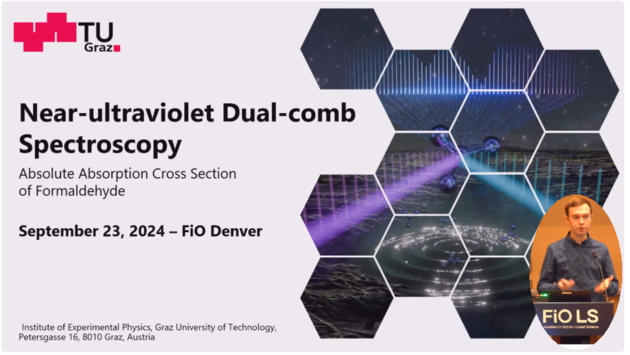
Lukas receives the Wolf Student Paper Prize at the Frontiers in Optics (FIO) Conference in Denver for the work entitled
"Near-ultraviolet Dual-comb Spectroscopy / Absolute Absorption Cross Section of Formaldehyde"
Congratulations, Lukas!
April 10th 2024
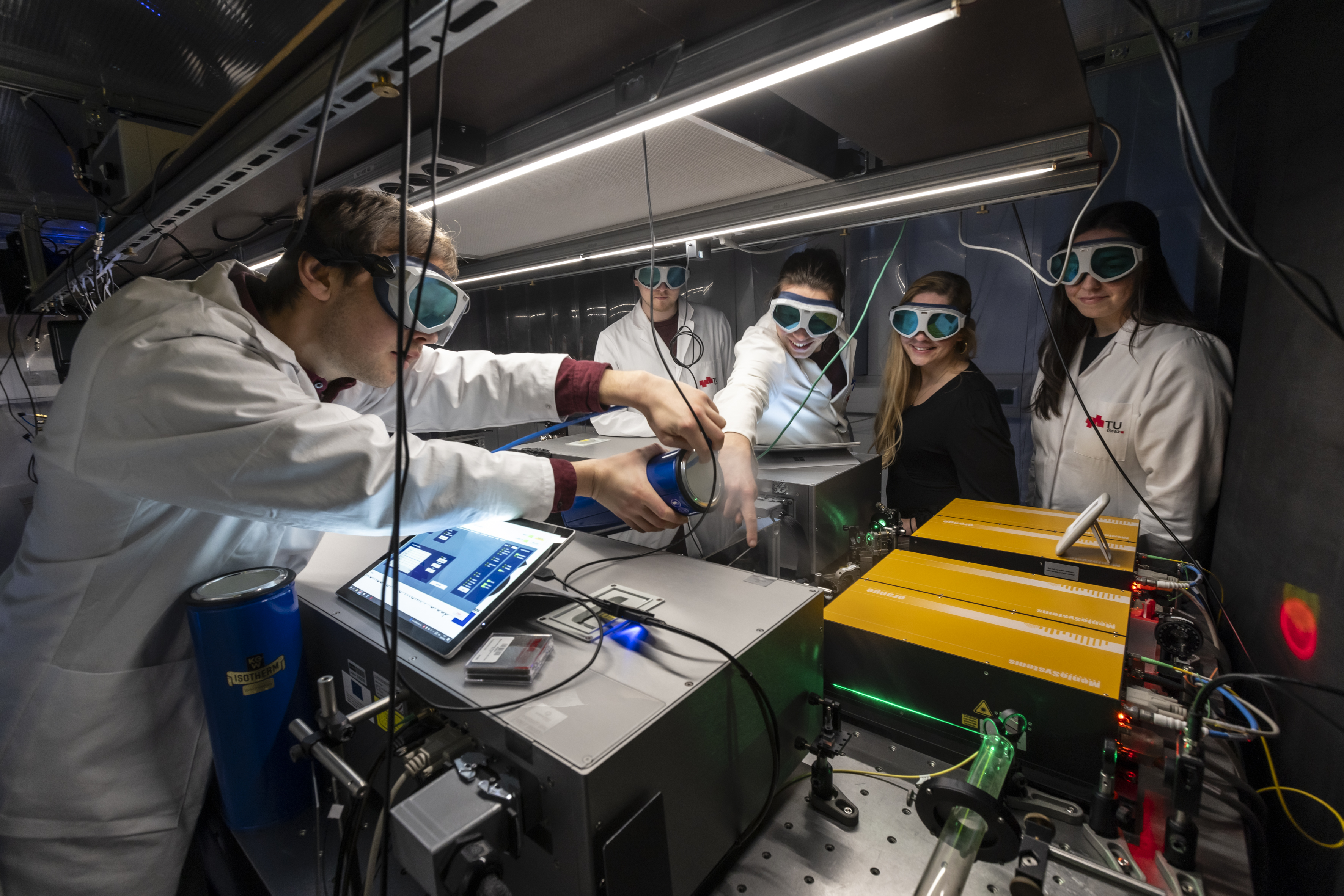
Our novel broadband UV dual comb spectrometer becomes official!
Congratulations, Lukas!
The world’s first broadband UV dual comb spectrometer revolutionizes air pollutant analysis. It enables real-time tracking of pollutants and their reactions with the environment. The work got now published in OPTICA.
Check out more details
Press release:
Novel UV Broadband Spectrometer Revolutionises Air Pollutand Analysis
Puplication:
Broadband near-ultraviolet dual comb spectroscopy
February 12th 2024
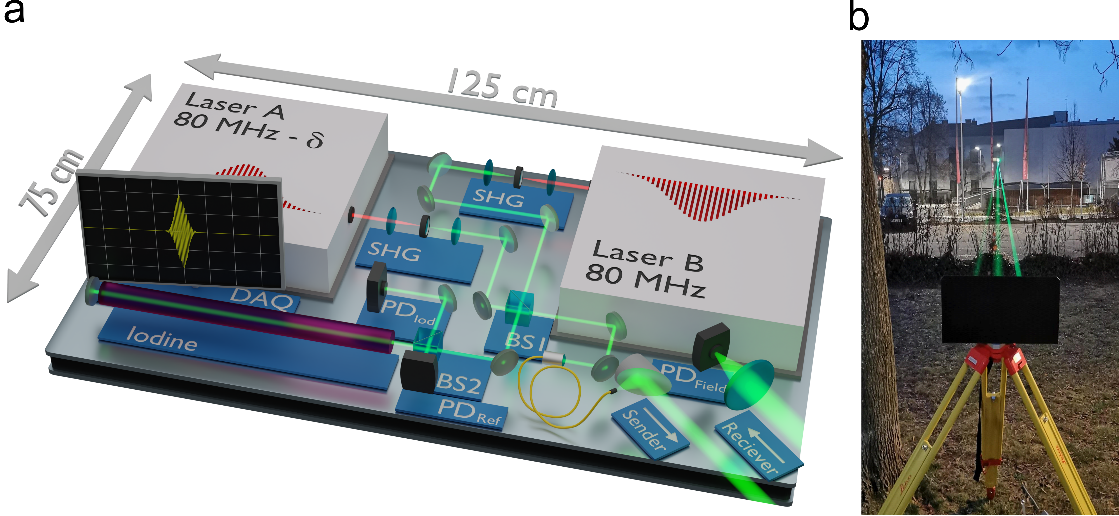
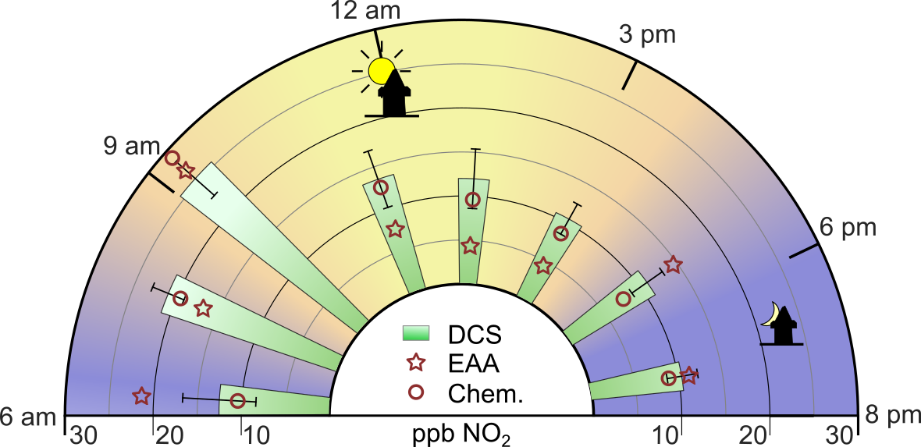
The work of our first field deployed dual comb spectrometer got published!
Congratulations, Alex!
We successfully tracked the concentration of nitrogen dioxide in the city of Graz. We achieved a temporal resolution of one minute and a detection sensitivity of only 5 ppb.
To our knowledge, this is the first mobile dual comb spectrometer capable of measuring NO2.
Check out more details:
Coherent field sensing of nitrogen dioxide (optica.org)
February 8th 2024
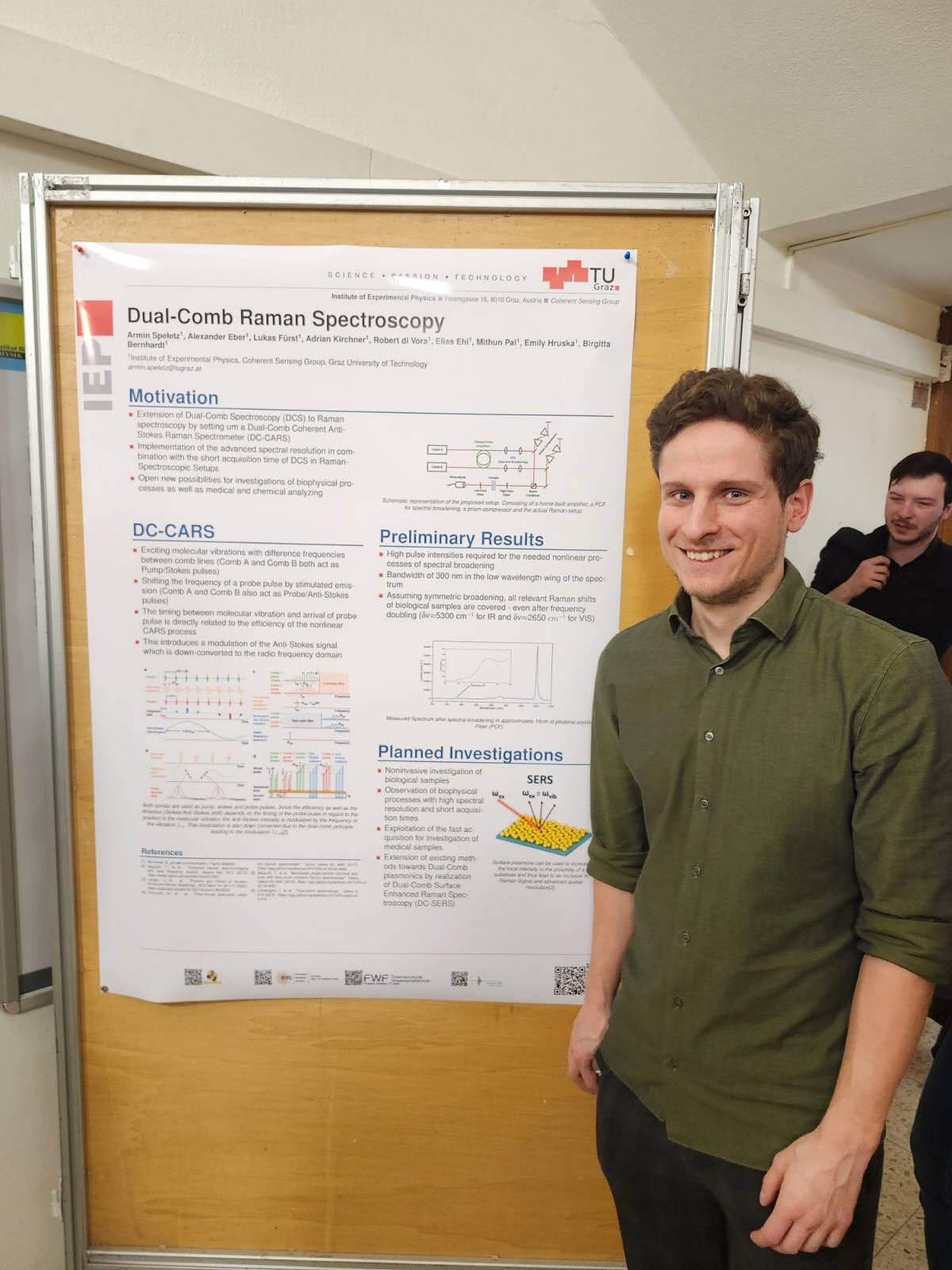
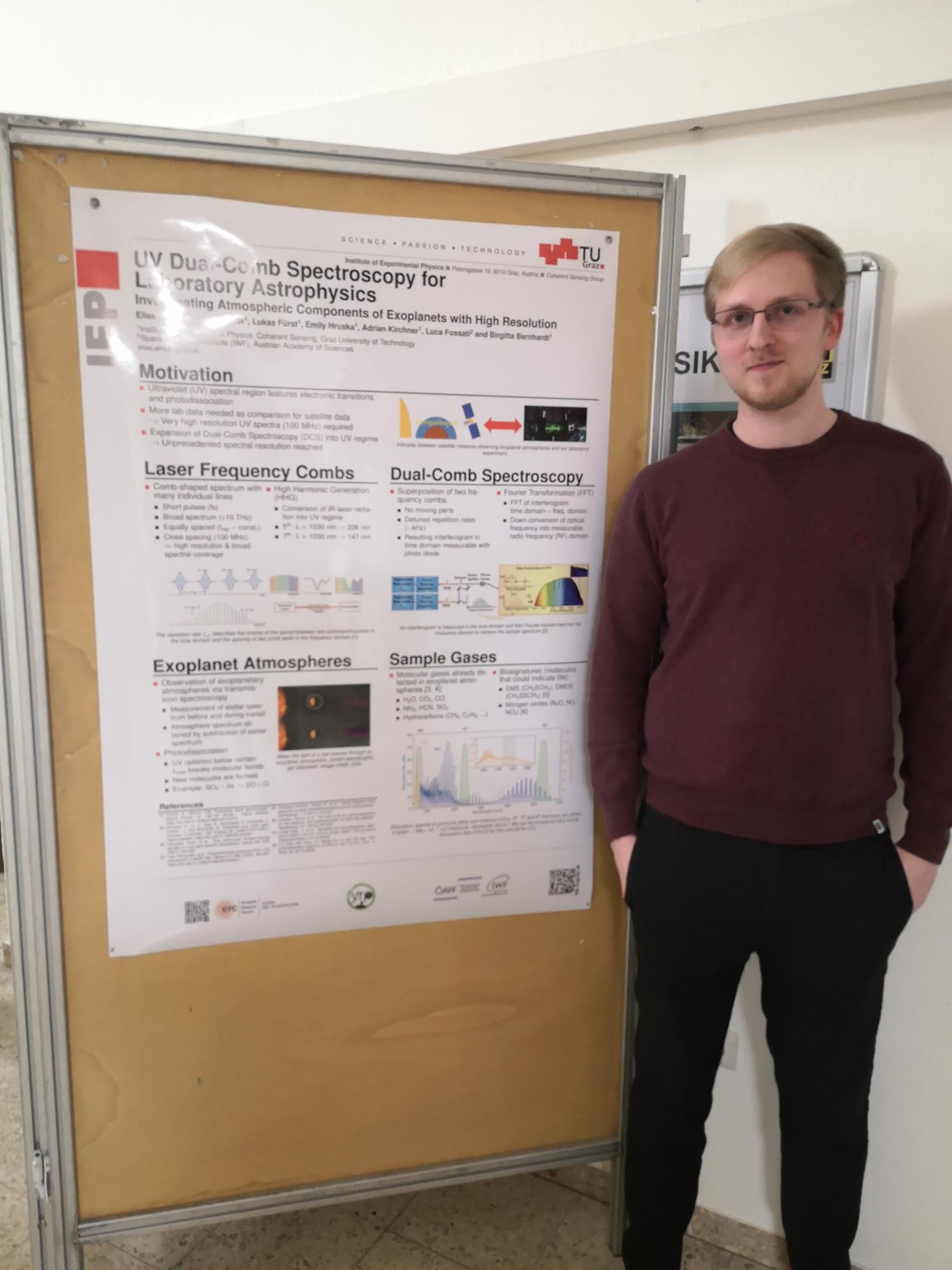
Dual Poster Presentation on Dual Comb Spectroscopy
Armin and Elias show their posters in parallel on this year`s first DocDay!
January 29th 2024
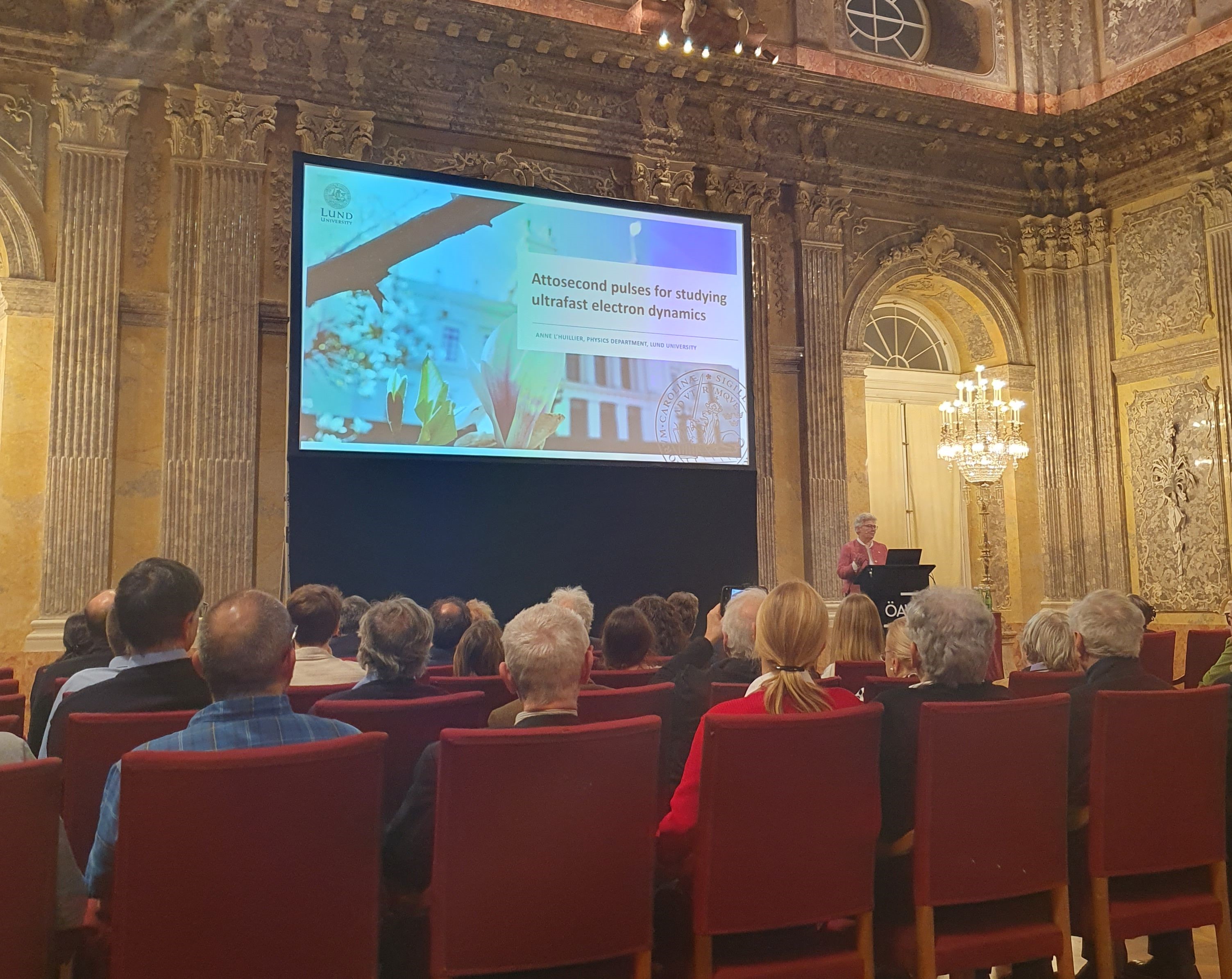
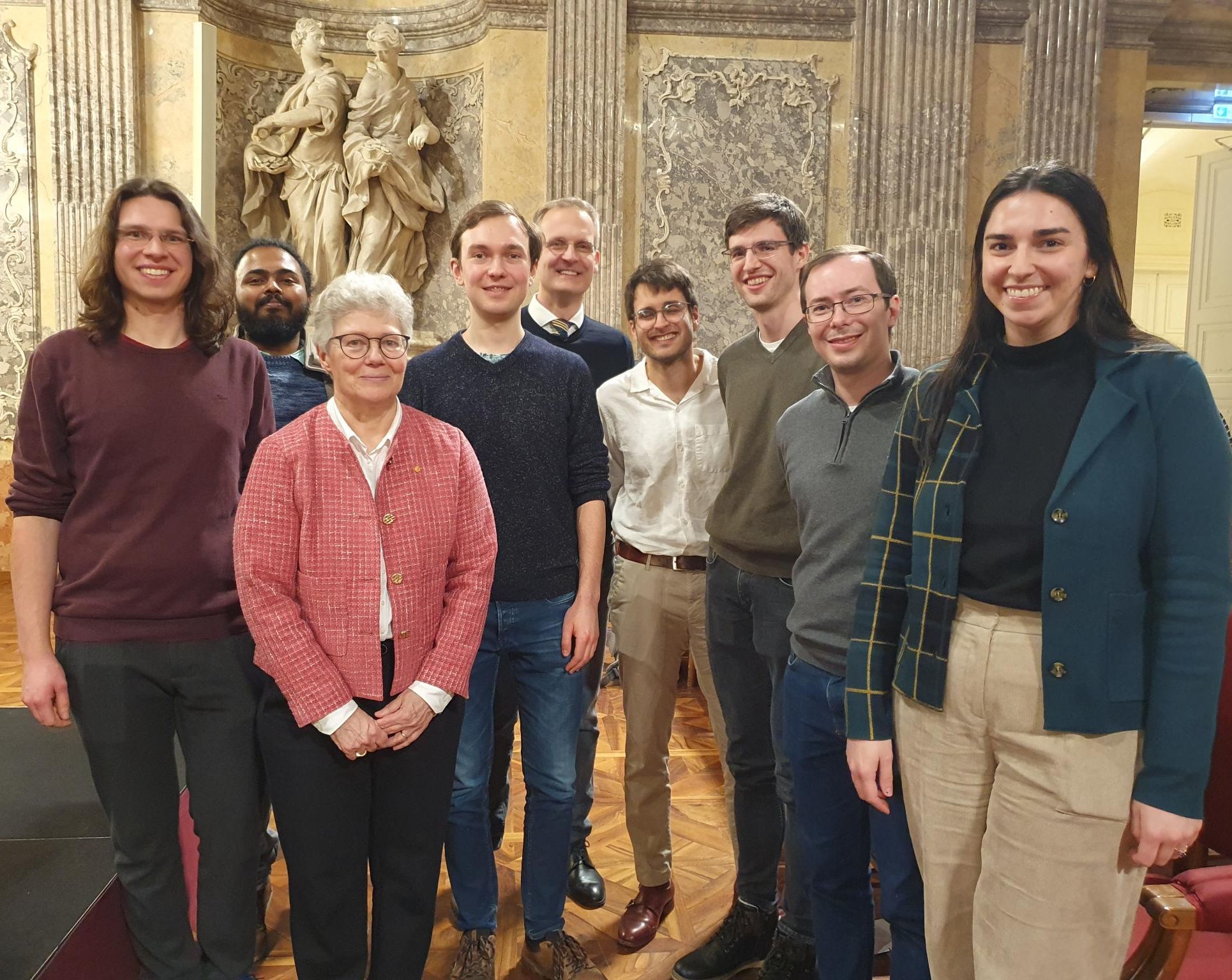
Coherent Sensing Group meets Anne L’Huillier
Group Excursion to the Austrian Academy of Sciences (ÖAW) in Vienna for this year’s ISTA Lecture:
Anne L’Huillier talked about “Attosecond Pulses For Studying Ultrafast Electron Dynamics”. The most important step towards attosecond pulses is high harmonic generation that has been studied extensively by Anne L’Huillier and that plays also a crucial part in our Project ELFIS, funded by the ERC.
January 26th 2024
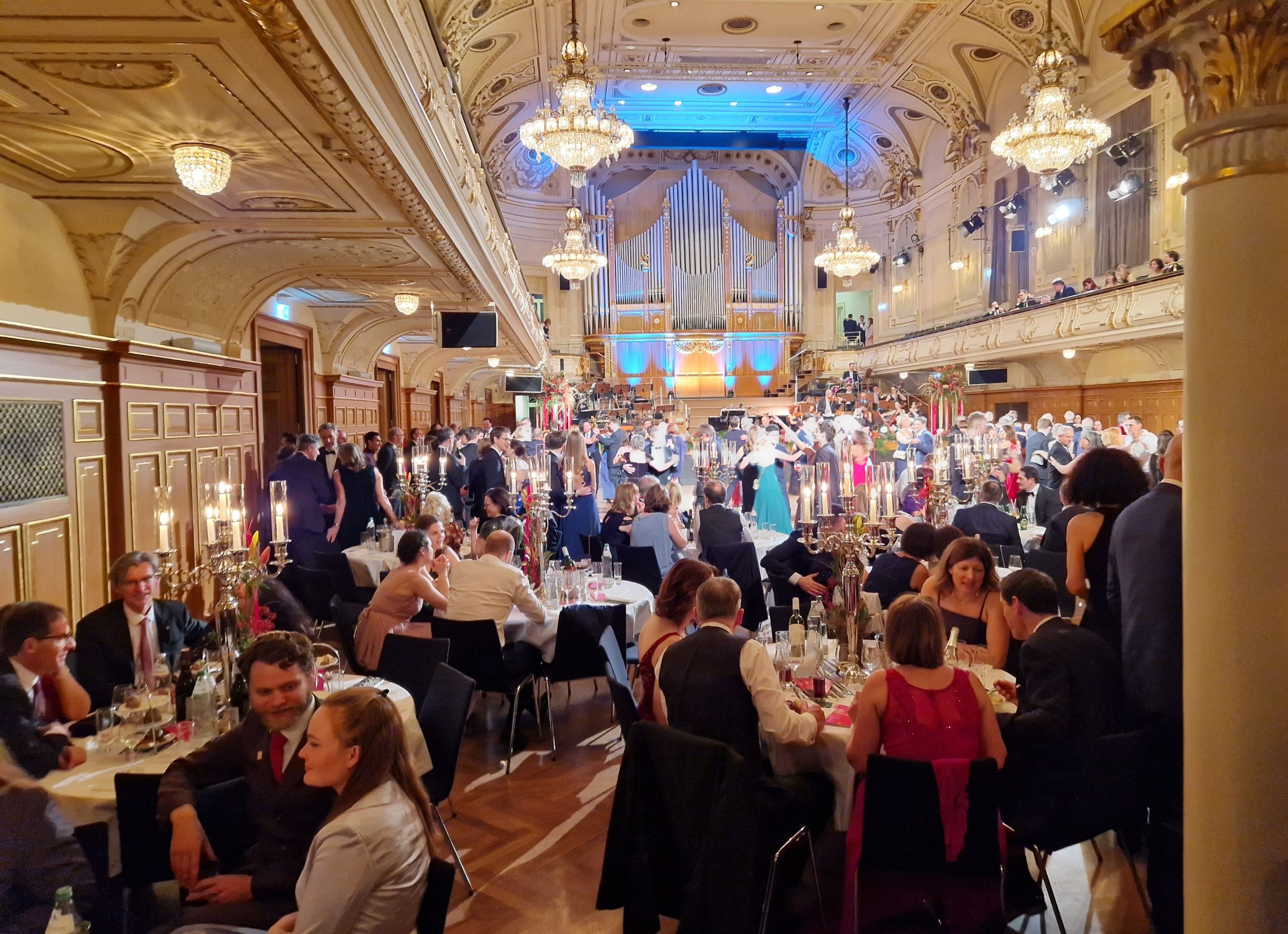
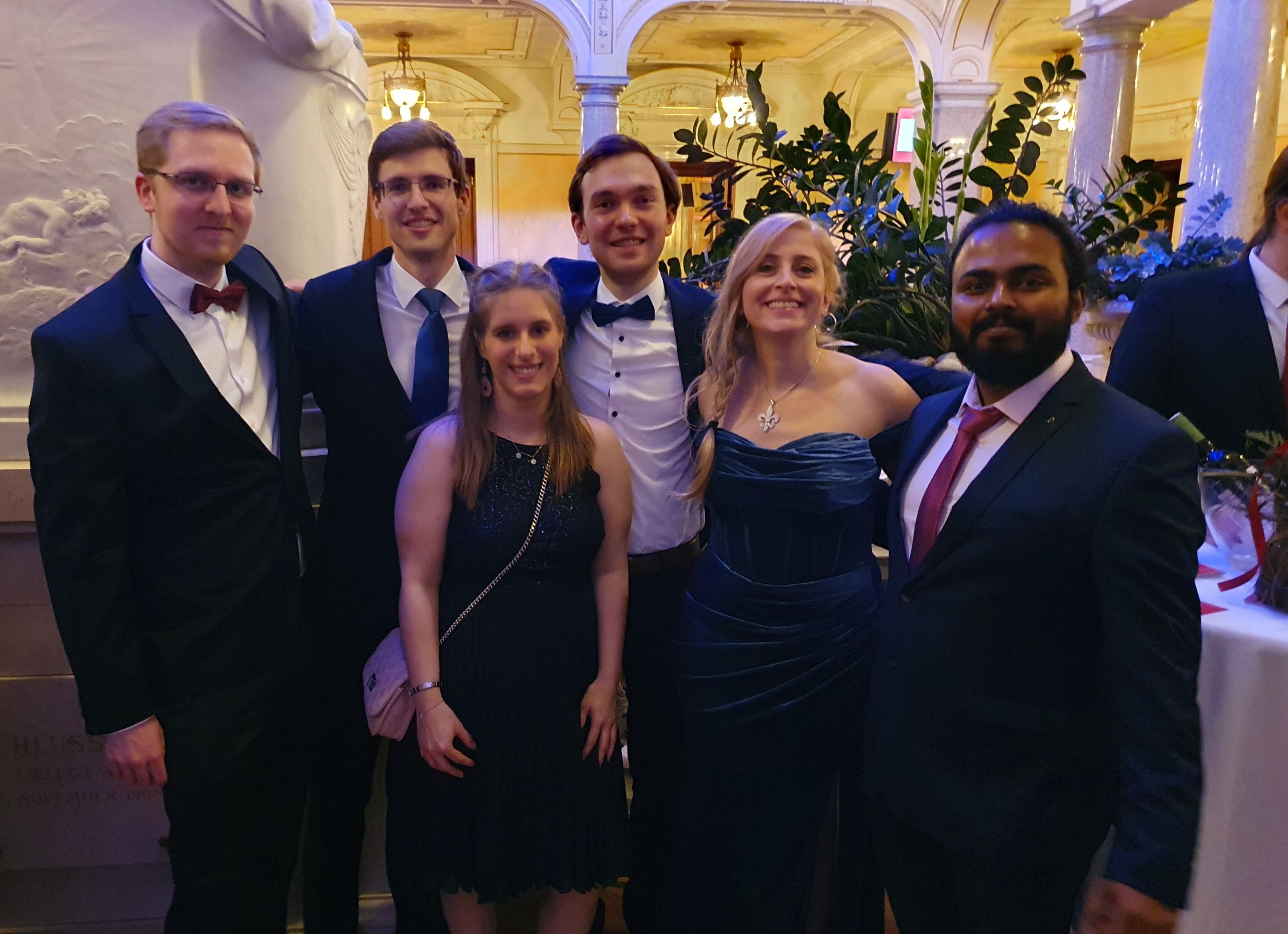
Coherent Sensing Group visits Ball der Technik
Part of the team entered “one of the nicest balls of Austria”!
Lab Fotos