Making::Simulations::Work
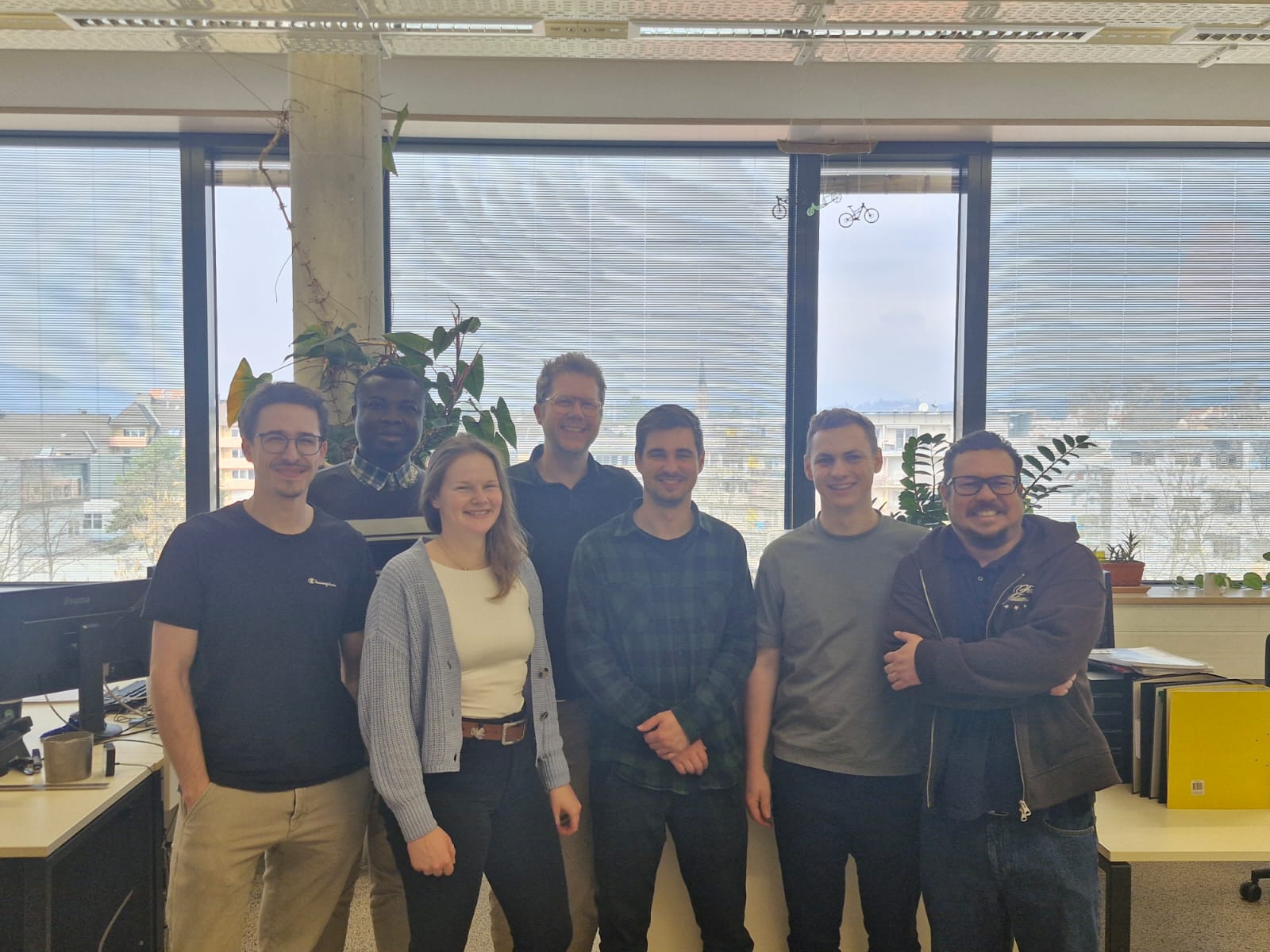
We are an international group of researchers with backgrounds in chemical and mechanical engineering, as well as chemistry. We aim on simulation projects in the field of complex fluid flow (mainly polymer melts, and granular materials), multiphase flow (e.g., bubbly flows, gas-particle suspensions, 3-phase flows), as well as reactive flows. Our simulation philosophy is based on a bottom-up strategy, i.e., we aim on a systematic understanding of small-scale phenomena to obtain scientifically-sound closures for larger scales. For this purpose, we use simulations at various scales, but only a limited set of experiments, to advance science in our field.
Our vision is "Making::Simulations::Work": in collaboration with our partners, we establish simulation tools that are useful to a wide range of scientists and industry partners.
We are embedded into a international network of researcher, and frequently interact with national and international companies. We are eager to tackle new challenges and start new collaborations! Feel free to contact us!
Libraries for spatial filtering, closure development for "coarse grained" models, development of tools for "difficult" granular materials such as shredded batteries or waste, innovative approaches for the simulation of hydrogels.
Modeling processes along the battery system value chain: Both electrode manufacturing and the handling of shredded battery recyclate involve systems with complexly shaped particles. Our methods can make a crucial contribution to optimizing process parameters in these areas. Furthermore, we model thermal runaway processes, which play a critical role in the safety of battery systems.
Simulation of transport properties (especially diffusion coefficient) of materials (e.g. polymers) using the Molecular Dynamics code "LAMMPS".
Flows featuring homogeneous and/or heterogeneous chemical reactions, as well as heat and mass exchange
CFD simulations of flows in clean environments (i.e., flows in clean rooms, locks, isolators, decontamination devices) enable an optimal design and can help to solve problems in the operation of these processes. Our group has many years of experience with these simulations and is happy to support industrial customers with their questions.
Alumni (PhDs only)
Design of Multiphase Flow Processes Course 2024
Link to all other courses of Stefan Radl