
Herbert Eichholzer Awards 2025—“The Resilient House: Measuring Instead of Estimating”
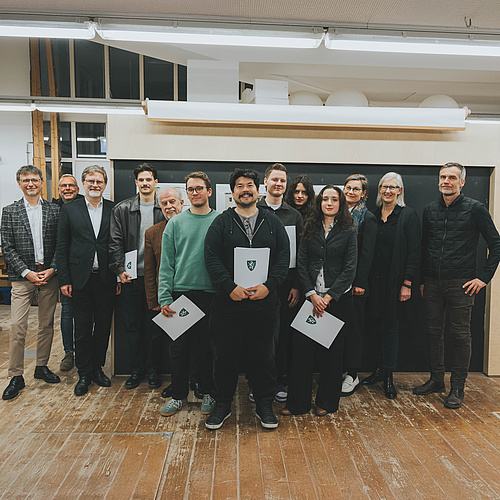
The subject of this year’s Herbert Eichholzer Awards was the Haus Mudri in the Graz district of Andritz, designed and built by Herbert Eichholzer and Viktor Badl in 1934–35. The student competition posed a central question: How might this building be conceived and constructed today, under contemporary requirements? Participants were invited to reinterpret the original plans in a contemporary manner and to submit 1:10 scale models for evaluation. Architectural qualities such as materiality, structure, expression, form, composition, originality, and precision served as assessment criteria. Structural, material, and conceptual resilience was tested through simulated load scenarios—including fire, precipitation, and weight—followed by the determination of a performance index: the higher the score, the better the result. The jury—Markus Bogensberger (Province of Styria), Andreas Gratl (independent architect), Stefan Peters and Antje Senarclens de Grancy (both Graz University of Technology), and Alexandra Würz‑Stalder (City of Graz)—summarized its decision as follows:
1. Prize
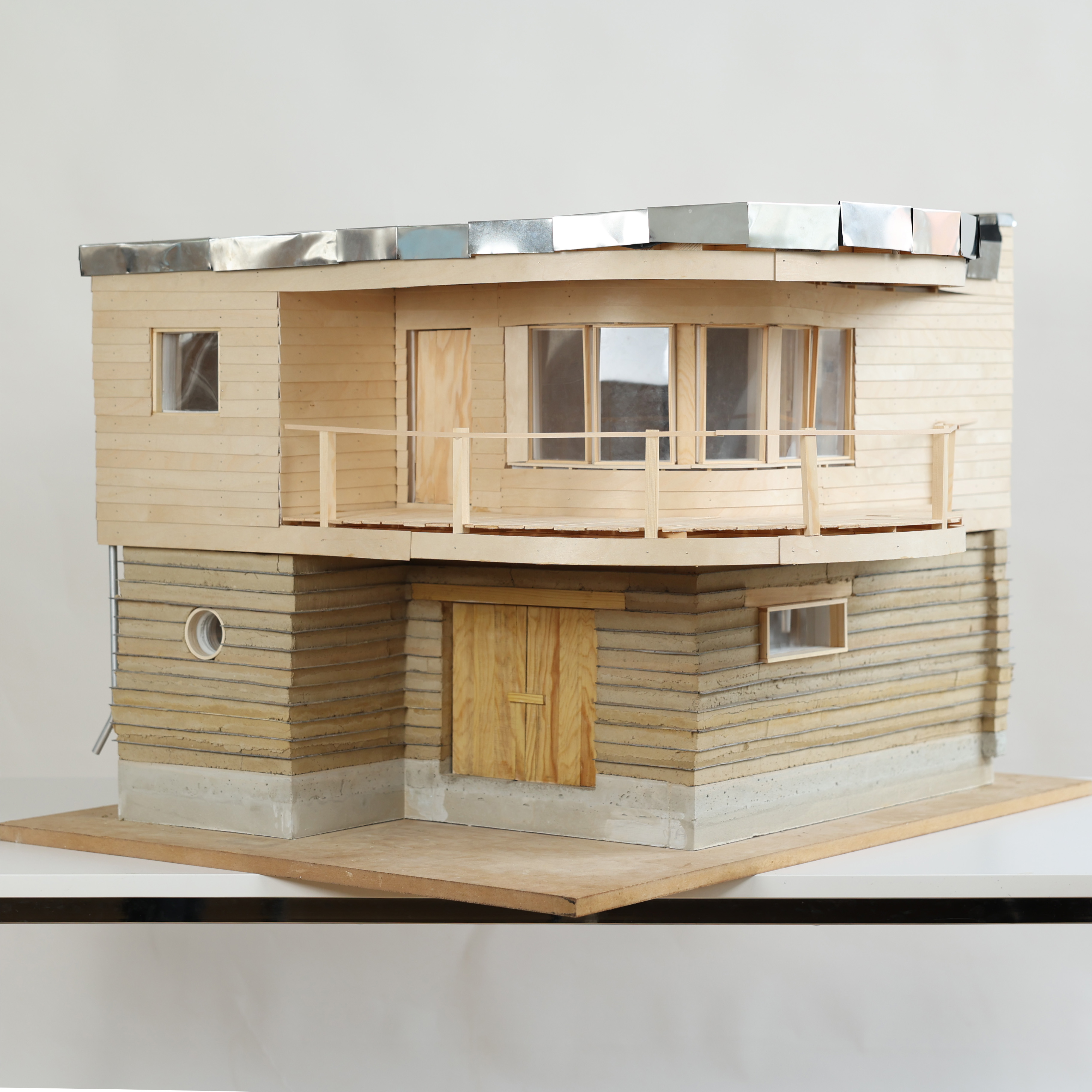
The first‑place submission by Fabian Obenaus and Leonhard Rump convinces through a precise and carefully considered reinterpretation of the building’s components. These were further developed in ecological and structural terms and assembled into a coherent overall design. The result is an architecturally sophisticated proposal that is likely to meet current technical standards. In the jury’s view, this project most convincingly translates Herbert Eichholzer’s reference building into the present while fulfilling all evaluation criteria.
2. Prize
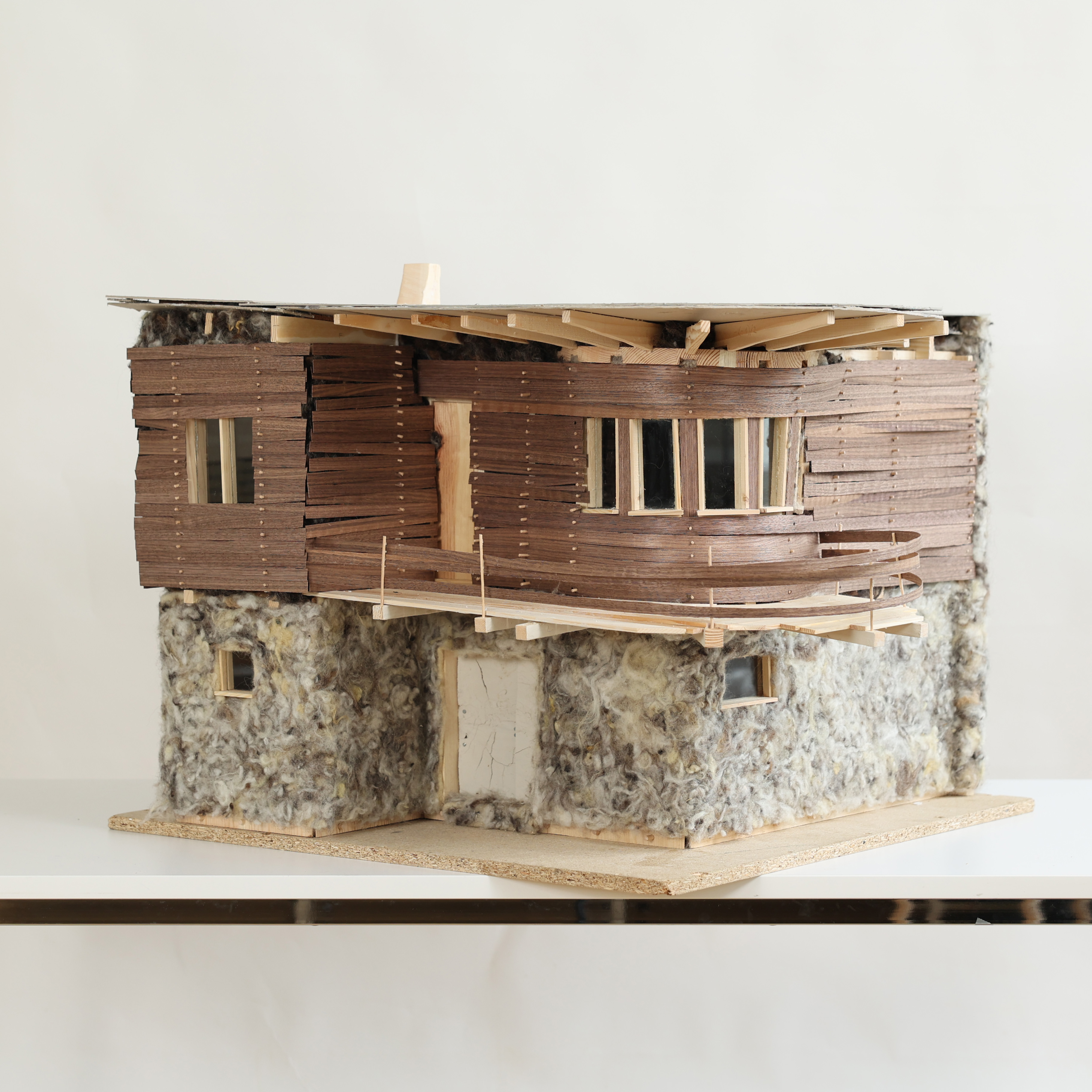
Mara Tolpeit and Sára Anna Tóth demonstrate strong commitment to ecological approaches and remarkable courage in originality. This commitment becomes visible through the project’s striking model appearance. The design engages sensitively with the defining characteristics of the competition subject and seeks to translate them into contemporary construction. However, the ‘Heavy Duty’ load test also revealed the limits of the approach. This highly ambitious and exceptionally original contribution receives the second prize.
3. Prize
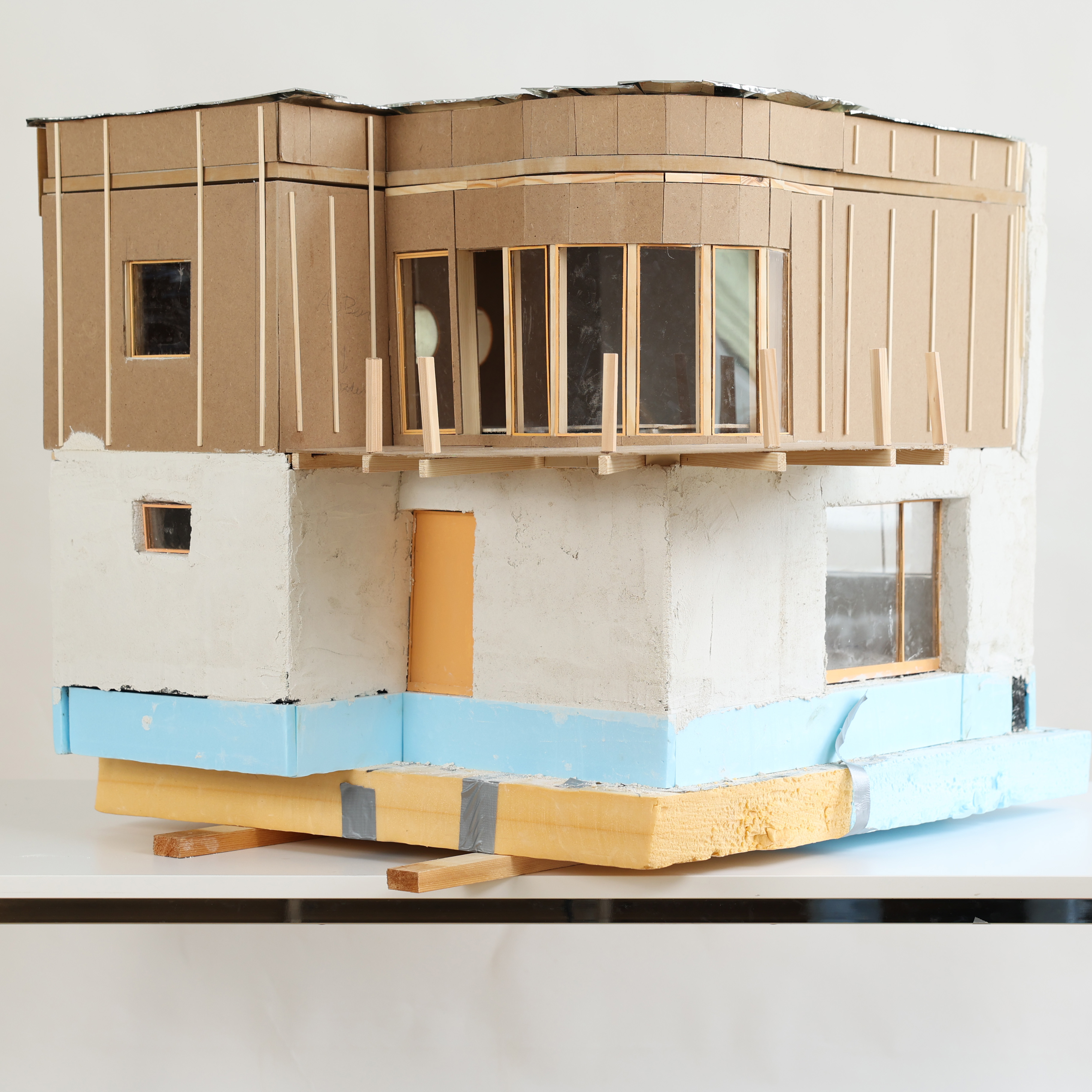
For their contemporary interpretation of Haus Mudri, the third prize is awarded to Tobias Manegold, Thomas Schaumberger, Bendjamin Udomkaewkanjana, and Jakob Weingartner. Their choice of materials and the redesign of certain building elements—such as the full‑height terrace openings—point to contemporary solutions in single‑family house construction. The jury could not determine whether the incomplete constructive details in the model are to be considered a deliberate critical reflection on standard building practices.


The awards—jointly presented by the City of Graz and the Faculty of Architecture—were conferred on December 10, 2025, at a ceremony attended by City Councilor Georg Topf. Established in 1992 and awarded every two years, the Herbert Eichholzer Awards honor Eichholzer’s importance as a representative of architectural modernism and as a figure of resistance against National Socialism. This year’s award process was organized by the Institute of Spatial Design.
Franziska Hederer