
Faculty of Architecture
Architecture is a cultural practice. It affects all areas of our lives and therefore carries great social responsibility. Since its inception as a practical and academic discipline, it has combined technical, humanistic, economic, political, and artistic fields. Architecture always engages with our (built) environment in an integrative manner.
Design as a Core Competence
Architectural design lies at the heart of this endeavor. Conveying and advancing its synthetic capacity is central to the teaching and research at the Faculty of Architecture at Graz University of Technology. This includes the formal, morphological studies of buildings as well as urban and architectural spaces, their historical and theoretical contexts, and an engineering-based engagement with structural developments and planning processes. Design is based on professional practical experience, knowledge gained from scientific research, and personal artistic and socio-political stances. The teaching objective of the bachelor’s and master’s program is to educate strong designers with extensive specialist knowledge who can responsibly take on the complexity of architectural practice across a wide range of building tasks.
We Are Seeking Answers to the Following Questions:
At the Faculty of Architecture at Graz University of Technology, we are seeking answers to the most pressing questions of today in research and teaching: Through which architectural and structural solutions can the construction industry contribute to the energy transition and decarbonization in the age of climate change? How can a city of the future, committed to sustainable mobility, be realized? How can the ongoing urban sprawl, soil sealing, and the destruction of landscapes and living environments be countered? How will new buildings and existing structures respond to the ongoing digitalization and virtualization of all areas of life? In times of unbridled commercialization, mass tourism, and demand for energetic optimization, how can existing buildings be rehabilitated and preserved as cultural and energy resources? In an environment that is largely aesthetically unappealing and organized purely along economic, functionalist, and standardized principles, how can the need for beauty be satisfied?
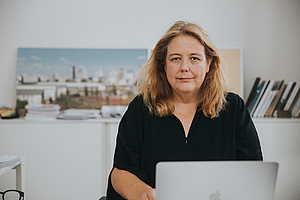
Petra Petersson
Dean
DiplArch BDA Univ.-Prof.
Institute of Construction and Design Principles
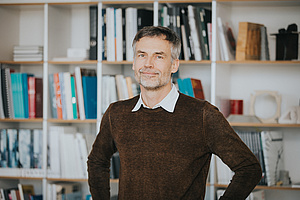
Stefan Peters
Vice Dean
Univ.-Prof. Dr.-Ing.
Institute of Structural Design
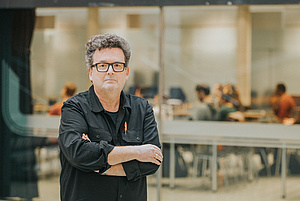
Matthias Castorph
Dean of Studies
Univ.-Prof. Dr.-Ing. Architekt Stadtplaner
Institute of Design in Existing Structures and Architectural Heritage Protection
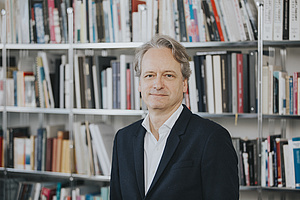
Anselm Wagner
Vice Dean of Studies
Univ.-Prof. Mag.phil. Dr.phil.
Institute of Architectural Theory, Art History and Cultural Studies