
Excellent Research at the Faculty of Architecture
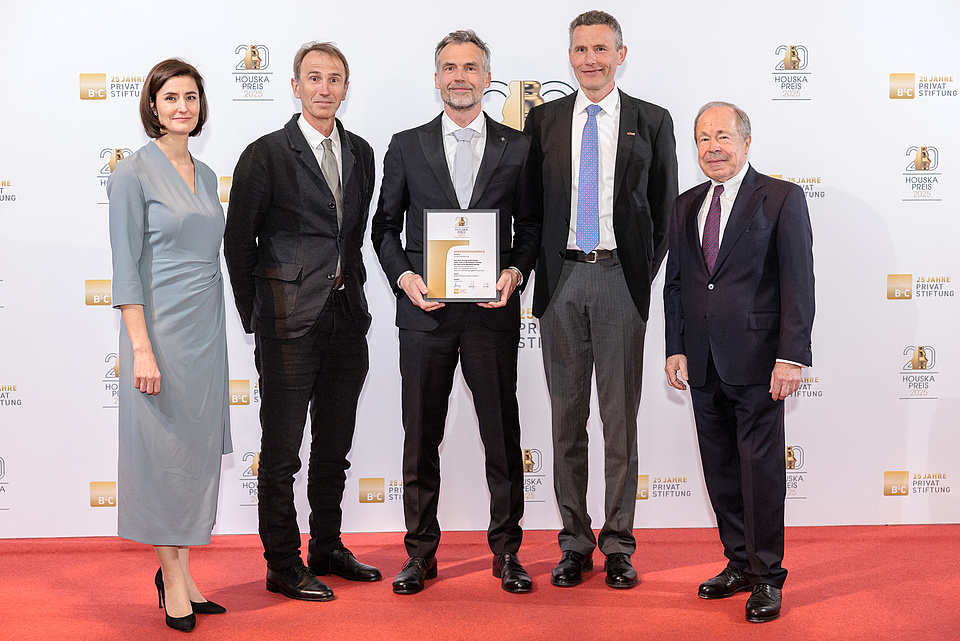
Across the Faculty of Architecture, numerous research initiatives were recognized in 2025 for their achievements. The Institute of Structural Design (ITE) and the Laboratory for Structural Engineering (LKI) at Graz University of Technology are jointly developing innovative approaches to reducing material consumption in reinforced‑concrete construction within the project “Materialeffizient bauen mit Beton” (Material‑Efficient Building with Concrete). This application‑driven, interdisciplinary collaboration received a Recognition Award in the category “University Research” at the 2025 Houska Prize. Focusing on reinforced‑concrete supporting structures in building construction, the team—led by Stefan Peters and Andreas Trummer (ITE) and Bernhard Freytag (LKI)—developed new construction and fabrication methods for roofs, slabs, and facades that reduce the need for concrete by 35 percent and the use of reinforcing steel by 20 percent. A digitally adjustable formwork table for producing doubly curved molds, combined with a specialized concrete 3D printing process and patented extrusion reinforcement, enables the economical and efficient production of slender, lower‑emission concrete elements for roofs and facades. Geometrically optimized ribbed reinforced‑concrete slabs, made with thin‑walled 3D printed concrete formwork, have already proven both technically and economically successful in practice.
Nicolas Alaux received the Award of Excellence 2025 for his doctoral dissertation “Identification of Future Trajectories for Carbon Budget Compliant Buildings: An Austrian Perspective.” The Austrian Federal Ministry of Women, Science and Research awarded this thesis—supervised by Alexander Passer and Marcella Ruschi Mendes Saade from the Institute of Structural Design—Sustainable Construction—one of its national prizes for the best dissertations. Alaux’s research addresses the urgent challenge of decarbonizing the built environment, which accounts for approximately 37 percent of global CO2 emissions. His work examines how Austria’s building stock can align its life‑cycle emissions with climate targets between 2023 and 2050. A comprehensive model integrates dynamic material‑flow analysis with a forward‑looking life‑cycle assessment of construction, operation, and demolition, offering evidence‑based strategies for achieving a climate‑neutral building sector.
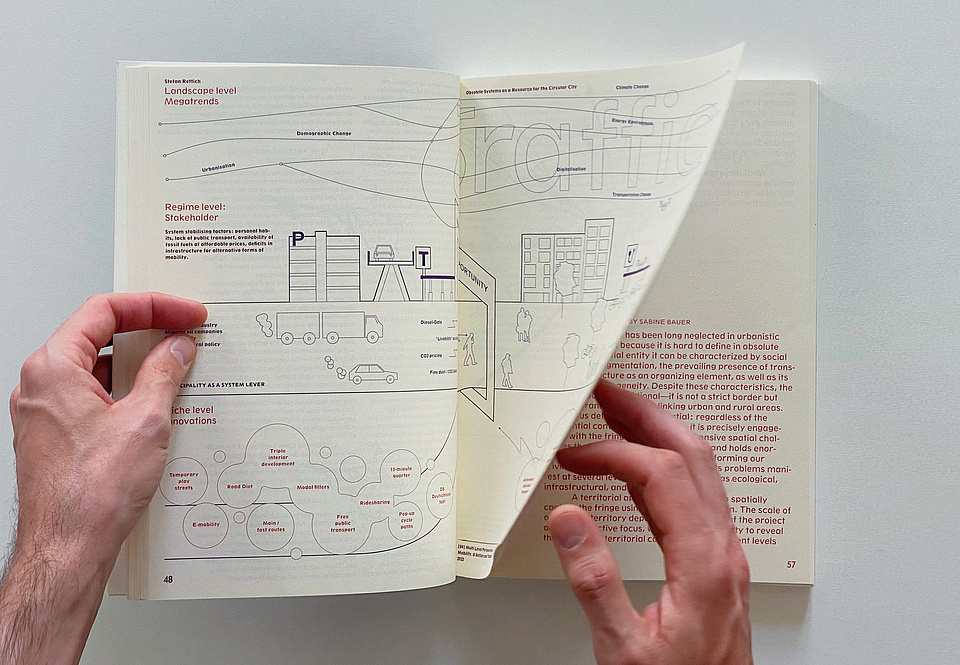
Another national award was presented to the Institute of Urbanism: the publication Territorial Urbanism Now! was honored in the competition “Die schönsten Bücher Österreichs” (Austria’s Most Beautiful Books) by the Austrian Federal Ministry of Housing, Arts, Culture, Media and Sport and the Hauptverband des Österreichischen Buchhandels (Austrian Publishers and Booksellers Association). As the jury noted: “Through refined color choices, unconventional production methods, and precise typography, the design of the book both distinguishes and unifies its rich collection of materials, inviting readers to engage with the subject in an open and inquisitive way.” Territorial Urbanism Now! advocates for a paradigm shift in how urban transformation is conceptualized and calls for the development of sustainable systems capable of collectively addressing the challenges presented by climate change.
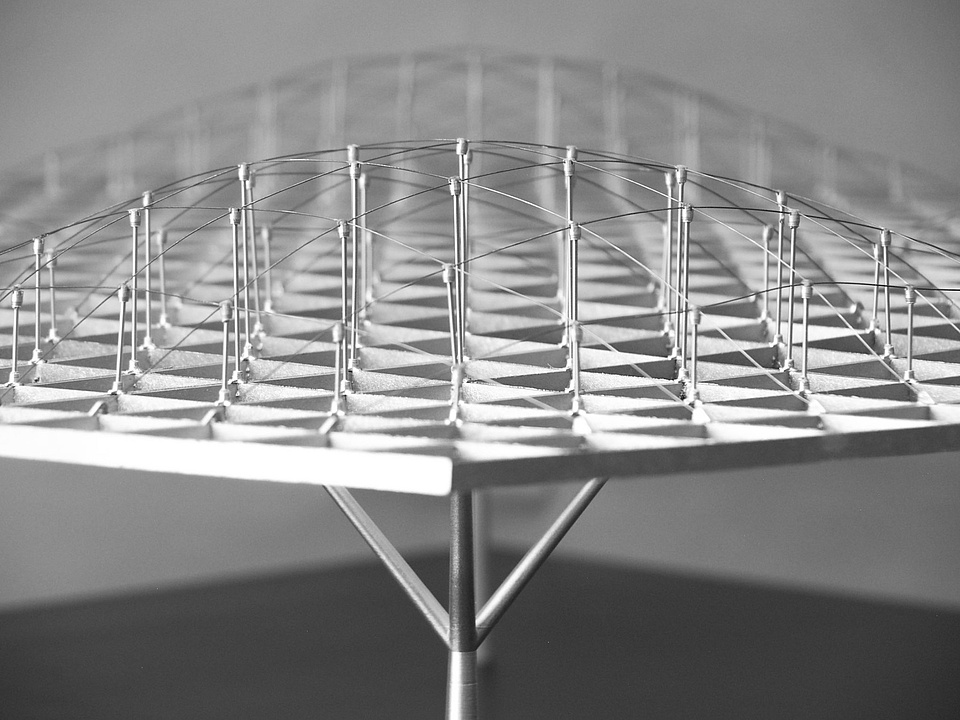
Elena Kull and Andreas Nätscher received a Recognition Award as part of the Österreichischer Stahlbaupreis für Studierende (Austrian Steel Construction Prize for Students) for their project “weit / über / unter // spannen” (far / over / under // spanning). Their innovative design approach explores long‑span supporting structures through a finely articulated hall roof; it stretches 30 meters without supports and it cantilevers 12 meters on either side. By combining a cushion‑like tensioning system at the columns with a cross‑shaped underspanning at the center of the hall, it was possible to reduce the steel girder grillage to slender hollow‑section elements. Resting on four branching columns that distribute loads evenly and incorporate drainage, the structure achieves both technical elegance and structural efficiency. The jury praised the project as an exemplary synthesis of architectural ambition and structural engineering education.
Cornelia Ott received two awards this year. The Graz University of Technology’s Forum for Technology and Society honored her master’s thesis “Biomaterial for Architectural Acoustics: Alginate‑Based Foils and Matrices in Bio‑Composites”—supervised by Milena Stavrić from the Institute of Architecture and Media—with the “Ingenieurinnen gestalten” (Women in Engineering) prize. In addition, the Chamber of Labor Styria presented her with a research grant for her investigation into the potential of alginate—a biopolymer derived from brown algae—as a sustainable alternative in architectural acoustics. The Faculty of Architecture warmly congratulates all award recipients.
Moritz Müller