Wireworm-Associated Microbial Communities and their Implications on Biological Control
By Adrian Wolfgang, 13.01.2026
Link to Publication
Wireworms – What are they?
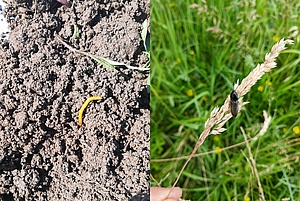
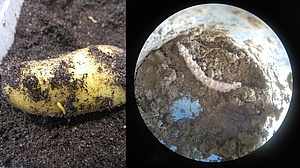
Many farmers and home gardeners are familiar with wireworms as pests of crops. Wireworms aren't actually worms, but rather the larvae of various click beetle species, so they are actually insects. Wireworms live in the soil for several years, feeding on living plant roots. During winter, wireworms burrow into deeper soil layers. When temperatures rise again, driven by hunger, they move to higher soil layers and feed on the delicate seedlings of crops such as lettuce, corn, or sugar beets, often leading directly to the death of the young plants or to infections. Wireworms are also sensitive to dehydration, which is why they burrow in crop tubers like potatoes during the increasingly hot and dry summer months. Therefore, controlling wireworms is especially important in the cultivation of corn, sugar beets, and potatoes.
How can you control wireworms?
Wireworm management has traditionally relied on chemical insecticides; however, the use of such chemicals needs to be substantially minimized in the near future. A biological alternative to chemical insecticides is the usage of so-called entomopathogenic fungi: these fungi can attach themselves to wireworms as spores, infect them, and subsequently kill them. Such fungi are not exotic; they are also common in European soils. However, the intensive cultivation practices of many arable lands are often detrimental to these fungi. Furthermore, certain wireworm species appear to be more resilient to entomopathogenic fungi than others. But how do they manage to survive for so long, even in soil where entomopathogenic fungi are present?
Bacteria and fungi in insects?
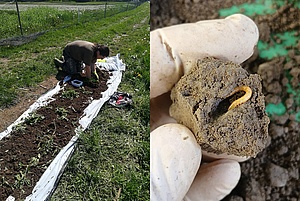
As in humans, a multitude of bacteria and fungi colonize the bodies of insects. But do they play a role in the health and disease of wireworms, and thus also in their biological control? As early as 2020, we began investigating wireworms in this regard at the UBT in the Graz area in Southeast Austria. The COVID-19 pandemic significantly impacted laboratory work, necessitating the complete redesign of numerous planned experiments. To make the most of the repeated lockdowns, we conducted wireworm sampling over an unprecedentedly long period.
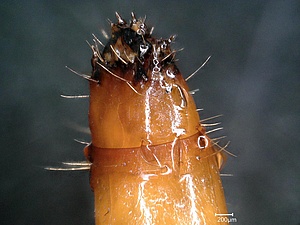
And what lives inside wireworms?
Our investigations yielded several surprising findings. Of the four wireworm species tested, two could not be distinguished morphologically, but only genetically. However, these wireworm species differed significantly in the microbes that colonized them. This may account for the variation in efficacy of entomopathogenic fungi in controlling different wireworm species; biocontrol may depend on the specific wireworm species present in the field. The microbial communities in wireworms remained stable; even after molting, the wireworms' bodies were recolonized by similar microbial species. Furthermore, if these microbial communities changed too drastically, the likelihood of pathogens killing them increased. The most surprising finding, however, was that the DNA sequences of entomopathogenic fungi and other potential pathogens were also found in a large proportion of the seemingly healthy wireworms. Did this mean that these wireworms were, as it were, "vaccinated" against pathogens?
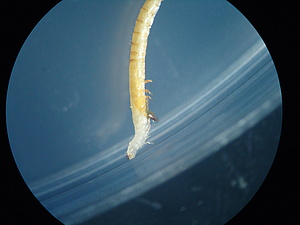
Defense Strategies of Wireworms
The insect immune system is less complex than that of humans and remains an area with considerable potential for further research. We tested whether a small amount of entomopathogenic fungi in the soil would increase the survival rate of wireworms when challenged with pathogens. This effect is called immune priming. During immune priming, the insects' immune system is on alert, enhancing their ability to combat pathogens. Our findings suggest that wireworms employ two distinct defense mechanisms against entomopathogenic fungi. If the wireworm's immune system is already familiar with the fungus, they begin to molt more frequently at high spore concentrations. Presumably, the wireworms' immune system can detect the impending threat, allowing them to shed the spores adhering to their skin. Wireworms exposed to high spore concentrations of a less aggressive fungal strain have a higher survival rate, suggesting immune priming.