Hazard Urbanism
Mario Stefan
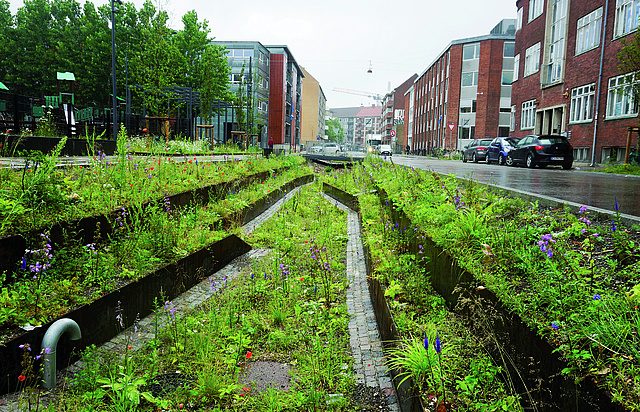
Climate change has a particularly pronounced effect in peri-urban areas. Sealing, low shade, car-oriented settlement structures, and limited public open spaces mean that heat waves, heavy rainfall events, and dry spells are becoming increasingly noticeable here. At the same time, the public space available for adaptation measures is often scarce, so solutions must not only be climatically effective but also improve quality. Blue-green infrastructure and nature-based solutions play a central role here, as they can simultaneously improve cooling, water retention, biodiversity, and quality of life.
At the same time, the question arises: Who are we designing for? Demographic developments in the European Union show a clear picture. The population is ageing significantly, while migration is increasingly becoming the most important factor in population development (European Commission 2022; Eurostat 2025). Studies on peri-urban areas show that the social composition of the population is becoming more diverse and that migration and ageing are key trends (ESPON DEMIFER; ESPON Peri-Urbanisation in Europe). Older people, those in need of care, and migrant families in particular have specific requirements in terms of open space design, which are often insufficiently taken into account in universal design approaches.
The seminar therefore focuses on the needs of these user groups, best practice examples, and graphical representation. The aim is to combine the requirements of different user groups with strategies for climate change adaptation in peri-urban areas.
End of course: 13.5.26
Foto: durchgeblueht.de